Overview
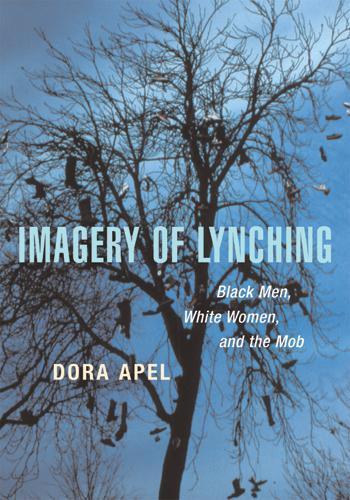
Outside of the classroom and scholarly publications, lynching has long been a taboo subject. Nice people, it is felt, do not talk about it, and they certainly do not look at images representing the atrocity. In Imagery of Lynching, Dora Apel contests this adopted stance of ignorance. Through a careful and compelling analysis of over one hundred representations of lynching, she shows how the visual documentation of such crimes can be a central vehicle for both constructing and challenging racial hierarchies. She examines how lynching was often orchestrated explicitly for the camera and how these images circulated on postcards, but also how they eventually were appropriated by antilynching forces and artists from the 1930s to the present. She further investigates how photographs were used to construct ideologies of ""whiteness"" and ""blackness,"" the role that gender played in these visual representations, and how interracial desire became part of the imagery. Offering the fullest and most systematic discussion of the depiction of lynching in diverse visual forms, this book addresses questions about race, class, gender, and dissent in the shaping of American society. Although we may want to avert our gaze, Apel holds it with her sophisticated interpretations of traumatic images and the uses to which they have been put.
Full Product Details
Author: Dora Apel
Publisher: Rutgers University Press
Imprint: Rutgers University Press
Dimensions:
Width: 17.80cm
, Height: 2.00cm
, Length: 25.40cm
Weight: 0.626kg
ISBN: 9780813534596
ISBN 10: 0813534593
Pages: 304
Publication Date: 03 September 2004
Audience:
General/trade
,
General
Format: Paperback
Publisher's Status: Active
Availability: Awaiting stock

The supplier is currently out of stock of this item. It will be ordered for you and placed on backorder. Once it does come back in stock, we will ship it out for you.
Reviews
[Apel's] book provides an important complement to social and political studies of lynching that generally ignore the role of the artist in attempting--however futilely--to awaken the public conscience. --Frances K. Pohl Southern Historical Association Apel has written a very engaging study on a difficult part of American visual history. She has succeeded in using a case study format to thoroughly address the breadth of social, political, and economic issues that have affected lynching and its representation in the last century....Apel offers astute analyses of an array of documentary and fine art images, revealing how they have reflected and influenced American attitudes about race, racism, sexuality, mob violence, and their pathology....Highly recommended. --Richard Meyer Choice Dora Apel mounts a careful and convincing analysis of a set of extremely difficult, often literally terrifying, images and provides the necessary contexts for readers to understand the practice of lynching and the terms of its representation by photographers and artists. --Richard Meyer, author of Outlaw Representation: Censorship and Homosexuality in Twentieth-Century American Art Southern Historical Association In concise and compelling language, Dora Apel traces the origins and histories of images of lynching in order to foreground their role in both normalizing and challenging particular concepts o racial and national identity. She forces us to look at scenes most would prefer to ignore, and exposes the horror and logic of torture. At a time when grotesque deaths are increasingly framed as 'entertainment' by today's news media, Apel's book is a sober reminder of the political expediency and personal pain behind such graphic displays. --Frances K. Pohl, author of Framing America: A Social History of American Art The Historian The visuals in Imagery of Lynching are disturbing and graphic, but deserve the reader's attention. Apel painstakingly and effectively discusses the strength of these images and details the controversies that often followed their public displays. -- The Historian This book makes a major contribution to the scholarship on both lynching and the artistic representation of racism in the United States. It will undoubtedly be a foundational work for subsequent research by historians and art historians alike. --Fitz Brundage, author of Under Sentence of Death and Lynching in the New South The Historian Apel has written an important book. It synthesizes the history of spectacle lynching and dissects the photographs and artworks used to sustain and challenge racial violence. It contributes to understanding the symbolic and ideological power of these images for past--and present. Imagery of Lynching is a must read for anyone interested in racial violence in the United States. --Frances K. Pohl The Journal of American History This book makes a major contribution to the scholarship on both lynching and the artistic representation of racism in the United States. It will undoubtedly be a foundational work for subsequent research by historians and art historians alike. --Fitz Brundage author of Under Sentence of Death and Lynching in the New South In concise and compelling language, Dora Apel traces the origins and histories of images of lynching in order to foreground their role in both normalizing and challenging particular concepts o racial and national identity. She forces us to look at scenes most would prefer to ignore, and exposes the horror and logic of torture. At a time when grotesque deaths are increasingly framed as 'entertainment' by today's news media, Apel's book is a sober reminder of the political expediency and personal pain behind such graphic displays. --Frances K. Pohl author of Framing America: A Social History of American Art Dora Apel mounts a careful and convincing analysis of a set of extremely difficult, often literally terrifying, images and provides the necessary contexts for readers to understand the practice of lynching and the terms of its representation by photographers and artists. --Richard Meyer author of Outlaw Representation: Censorship and Homosexuality in Twentieth-Century American Art Apel has written an important book. It synthesizes the history of spectacle lynching and dissects the photographs and artworks used to sustain and challenge racial violence. It contributes to understanding the symbolic and ideological power of these images for past--and present. Imagery of Lynching is a must read for anyone interested in racial violence in the United States. --Frances K. Pohl, author of Framing America: A Social History of American Art The Journal of American History [Apel's] book provides an important complement to social and political studies of lynching that generally ignore the role of the artist in attempting--however futilely--to awaken the public conscience. --Frances K. Pohl, author of Framing America: A Social History of American Art Southern Historical Association
This book makes a major contribution to the scholarship on both lynching and the artistic representation of racism in the United States. It will undoubtedly be a foundational work for subsequent research by historians and art historians alike.
Author Information
Dora Apel is the W. Hawkins Ferry Chair in Modern and Contemporary Art at Wayne State University. She is the author of Memory Effects: The Holocaust and the Art of Secondary Witnessing.