|
|
|||
|
||||
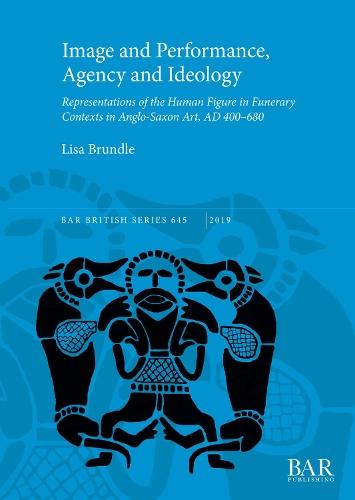
OverviewThis book investigates the topic of human imagery and hybrid human imagery rendered on metalwork of early Anglo-Saxon date recovered within eastern England (Cambridgeshire, Lincolnshire, Suffolk and Norfolk), AD 400-680. It presents the first definitive catalogue of its kind for this region and timeframe. Taking inspiration from recent transitions in thinking on early medieval mortuary archaeology and art, the author considers such topics as the interrelationship between image, object and the user, the changing portrayal of human representation and the social implications of such developments and the emergence of new bodily gestures in representational art. These key themes may provide an understanding of how and why human imagery changed as it did, how and by whom it was deployed in life and death and the role that this type of imagery performed in the construction and presentation of social identity. Full Product DetailsAuthor: Lisa BrundlePublisher: BAR Publishing Imprint: BAR Publishing Weight: 1.149kg ISBN: 9781407316512ISBN 10: 1407316516 Pages: 288 Publication Date: 28 January 2019 Audience: Professional and scholarly , Professional & Vocational Format: Paperback Publisher's Status: Active Availability: Available To Order We have confirmation that this item is in stock with the supplier. It will be ordered in for you and dispatched immediately. Table of ContentsList of Figures List of Tables List of Abbreviations 1. Introduction 1.1 Introduction 1.2 Anglo-Saxon Art Past and Present 1.3 Aims and Objectives 1.4 Chronological Context 1.5 Study Regions 1.5.1 Geography/geology 1.5.2 Political framework 1.5.2.1 Anglo-Saxon and British 1.5.2.2 Characteristic archaeology 1.5.2.3 Excavations, major protagonists, recent developments including PAS 1.5.2.4 Conversion and Anglo-Saxon kingship 1.5.2.5 'Golden age of East Anglia' 1.5.2.6 Cognitive archaeology 1.6 Regional Publications and the PAS 1.7 Surviving and Recovered Metalwork 2. Theoretical Perspectives and Approaches 2.1 Introduction 2.2 Identity 2.2.1 Dress and identity 2.2.2 Objects and funerals 2.2.3 Imagery and ideology 2.2.4 Gendered expressions 2.3 The Human Form 2.3.1 Full-bodied figures 2.3.2 Masks and faces 2.3.3 Raised hand 2.3.4 Transforming bodies 2.3.5 Treatment of the body 2.3.6 Gesture and bodily metaphor 2.3.7 Analogy 2.4 Summary 3. Methodology 3.1 Introduction 3.2 Sources 3.2.1 PAS data 3.3 Limitations and Issues 3.3.1 Find context 3.3.2 Recovery in cemeteries 3.3.3 Burial preservation (external structure, organic material) 3.3.4 Grave good preservation 3.3.5 Mortuary practice 3.3.6 Conservation techniques 3.3.7 Regional variation in the chronology 3.4 Identifying Human Imagery 3.4.1 Established style terminology 3.4.2 New style categorisation 3.4.3 Non-figurative designs 3.4.4 Human designs and other motifs 3.5 Summary 4. Human Motifs and Designs in Eastern England 4.1 Introduction 4.2 Full and Partial Human Bodies 4.2.1 Two-dimensional motifs 4.2.2 Three-dimensional renderings 4.3 Transforming Human Figures 4.4 Human Figures Wearing Animal Costume 4.5 Bodily Gesture - Hand Gesticulations 4.5.1 Raised hand near the face 4.5.2 Weapon-bearing figures and martial performance 4.5.3 Hand on chest and waist 4.5.4 Folded arms and hands on hips 4.5.5 Hands positioned near genitalia 4.5.6 Stroking or pulling beard 4.6 Facial Expressions 4.6.1 Ectoplasmic forms 4.7 Human Heads 4.7.1 Heads that metamorphose (double entendre 4.7.2 Florid cruciform imagery 4.7.3 Addorsed (back-to-back), affronté (face-to-face) and face-to-scalp frontal-faced heads 4.7.4 Facial details 4.7.5 Scalp and facial hair 4.7.6 'Biting beasts' 4.8 Headdresses 4.9 Garments 4.10 Manipulated Human Imagery 4.10.1 Split representation 4.10.2 (Faux) material, texture and technique 4.11 Display and Presentation of Imagery 4.11.1 Layout and structural bars 4.11.2 Panelling 4.11.3 Frames 4.12 Conclusion 5. The Archaeological Context of Human Imagery in Eastern England 5.1 Introduction 5.2 Cemetery Type 5.3 Location 5.4 Frequency of Metalwork in Cemeteries 5.5 Frequency of Graves Containing Objects with Human Representation 5.6 Frequency of Object Types Carrying Human Representation 5.7 Position within the Cemetery 5.7.1 Morningthorpe (App. 5.3 Cemetery Plan A) 5.7.2 Bergh Apton (App. 5.3 Cemetery Plan B) 5.7.3 Snape 5.7.4 Linton Heath 5.7.5 Sleaford 5.7.6 Edix Hill (Barrington A) and Hooper's Field (Barrington B) 5.7.7 Little Eriswell and RAF Lakenheath 5.7.8 Holywell Row (App. 5.3 Cemetery Plan C) 5.7.9 Castledyke South (App. 5.3 Cemetery Plan D) 5.8 Assemblage 5.9 Wear/Repair - and Care? 5.10 Age and Gender 5.10.1 Changes over time 5.10.2 Issues with the data 5.10.2.1 The identification of biological sex 5.10.2.2 Discrepancies in terminology used in cemetery reports 5.10.2.3 Limited number of aged skeletons 5.10.3 Summary 5.11 Objects within the Grave 5.12 Conclusions 6. Object, Art and the Human Body 6.1 Introduction 6.2 Body Imagery and Production 6.2.1 Ribs and frames 6.2.2 Clasps 6.2.3 Casting 6.2.4 Clasping 6.2.5 Fastening 6.2.6 Containing 6.3 Imagery and the User 6.3.1 Weaving and binding metaphors 6.3.2 Body metaphor 6.4 Imagery and the Female 6.4.1 Female specialists 6.4.2 Peace-weavers and diplomacy 6.4.2.1 Textiles in burials 6.4.2.2 Women in mortuary ritual 6.4.2.3 Supernatural roles 6.5. Conclusions 7. Human Representation and its Changing Portrayal 7.1 Introduction 7.2 Shifting Animal-Human Relationships 7.2.1 Flaring horse nostrils, human heads and omens 7.3 Bodily Substances and Orifices 7.3.1 Regurgitating symbols? 7.4 Emergence of Bodily Detail 7.4.1 Development of costume 7.4.2 Facial and bodily gestural expressions 7.5 Development of Full-Bodied Imagery 7.5.1 Sexualised imagery 7.5.2 Gesture and biological sex 7.5.3 Potential stylistic influences 7.5.4 Costume 7.6 Transformations and Body-Lore 7.6.1 The body in textual sources (Law Codes) 7.6.2 Bodily display in funerary ritual 7.6.3 Body law, politics and power 7.7 Conclusions 8. Gesture and Art 8.1 Introduction 8.2 Gestural Art 8.3 Ritual, Religion and Gestural Art from Funerary Contexts 8.3.1 Orans, epiphany or raised hand gesture 8.3.2 Hands on the chest and the waist 8.3.3 Contemporary parallels 8.3.3.1 Gestural art frReviews'The examination of representations of the human form within this theoretical framework is new and exciting. . In my view, this represents an important contribution to early medieval research.' Dr Rebecca Gowland, Durham University 'This is a timely contribution to early medieval studies, and studies of the body and of material culture. . It is a very worthy, exciting, unique and innovative piece of work.' Dr Ruth Nugent, University of Chester 'The examination of representations of the human form within this theoretical framework is new and exciting. . In my view, this represents an important contribution to early medieval research.' Dr Rebecca Gowland, Durham University 'This is a timely contribution to early medieval studies, and studies of the body and of material culture. . It is a very worthy, exciting, unique and innovative piece of work.' Dr Ruth Nugent, University of Chester Author InformationDr Lisa Brundle completed her PhD at Durham University, specialising in early Anglo-Saxon art and mortuary practices. Since then she has been actively working in commercial field archaeology, lecturing at Canterbury Christ Church University, undertaking an internship with the Lincolnshire PAS and writing up an early Anglo-Saxon cemetery report. Tab Content 6Author Website:Countries AvailableAll regions |
||||