Overview
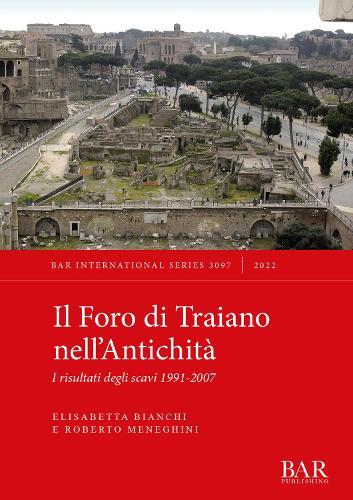
Questo libro illustra i risultati degli scavi realizzati dal Comune di Roma sull'area del Foro di Traiano fra il 1991 e il 2007. In particolare il volume descrive le strutture murarie superstiti del monumento rimesse in luce durante le campagne di scavo di quegli anni nel settore centro meridionale di esso. La parte iniziale del libro presenta una storia degli studi recenti e le ipotesi ricostruttive del complesso prima dei nuovi scavi. Il secondo e il terzo capitolo analizzano nel dettaglio i resti dei settori del Foro scoperti durante i nuovi scavi in corrispondenza della piazza e del suo limite meridionale sino all'adiacente Foro di Augusto. Il quarto capitolo contiene lo studio del sistema fognante e idraulico del monumento mentre il quinto esamina il complesso dei bolli laterizi rinvenuti durante le indagini. Il capitolo conclusivo offre spunti e osservazioni sulle scoperte anche alla luce degli studi preliminari effettuati su di esse. This book illustrates the results of the excavations carried out by the Municipality of Rome on the area of the Forum of Trajan between 1991 and 2007. In particular, the volume describes the surviving wall structures of the monument brought to light during the excavation campaigns in the central southern sector. The introductory section presents a history of recent studies and the reconstructive hypotheses of the complex before the new excavations. The second and third chapters analyse the remains of the sectors of the Forum discovered during the new excavations in correspondence with the square and its southern boundary adjacent to the Forum of Augustus. The fourth chapter contains the study of the sewerage and hydraulic system of the monument, while the fifth examines the brick stamps found during the investigations. The concluding chapter offers insights and observations on the discoveries in light of the preliminary studies carried out.
Full Product Details
Author: Roberto Meneghini ,
Elisabetta Bianchi
Publisher: BAR Publishing
Imprint: BAR Publishing
Weight: 1.432kg
ISBN: 9781407360034
ISBN 10: 1407360035
Pages: 359
Publication Date: 31 October 2022
Audience:
Professional and scholarly
,
Professional & Vocational
Format: Paperback
Publisher's Status: Active
Availability: Available To Order

We have confirmation that this item is in stock with the supplier. It will be ordered in for you and dispatched immediately.
Language: Italian
Reviews
'This is a major achievement because assembling all this information and analysing it within the framework of the historical studies of Trajan's Forum is a feat of scholarship. It is not only original, but provides an overview of all previous excavations, mostly not reported in full, on this canonical building. It adds great value to the history of Rome's Imperial Fora and complements Meneghini's earlier volume about the post-Roman phases of this area of Rome.' Dr Richard Hodges, Emeritus President, The American University of Rome 'The book is certainly important for all those interested in Roman architecture, the topography of Rome and, more generally, imperial Roman history.' Professor Riccardo Santangeli Valenzani, Universita Roma Tre 'The work is innovative, introducing new and original interpretative elements.' Professor Sauro Gelichi, Universita Ca' Foscari Venice
'This is a major achievement because assembling all this information and analysing it within the framework of the historical studies of Trajan's Forum is a feat of scholarship. It is not only original, but provides an overview of all previous excavations, mostly not reported in full, on this canonical building. It adds great value to the history of Rome's Imperial Fora and complements Meneghini's earlier volume about the post-Roman phases of this area of Rome.' Dr Richard Hodges, Emeritus President, The American University of Rome 'The book is certainly important for all those interested in Roman architecture, the topography of Rome and, more generally, imperial Roman history.' Professor Riccardo Santangeli Valenzani, Università Roma Tre 'The work is innovative, introducing new and original interpretative elements.' Professor Sauro Gelichi, Università Ca' Foscari Venice
'This is a major achievement because assembling all this information and analysing it within the framework of the historical studies of Trajan's Forum is a feat of scholarship. It is not only original, but provides an overview of all previous excavations, mostly not reported in full, on this canonical building. It adds great value to the history of Rome's Imperial Fora and complements Meneghini's earlier volume about the post-Roman phases of this area of Rome.' Dr Richard Hodges, Emeritus President, The American University of Rome 'The book is certainly important for all those interested in Roman architecture, the topography of Rome and, more generally, imperial Roman history.' Professor Riccardo Santangeli Valenzani, Università Roma Tre 'The work is innovative, introducing new and original interpretative elements.' Professor Sauro Gelichi, Università Ca' Foscari Venice
Author Information
Elisabetta Bianchi è archeologa, funzionario presso la Sovrintendenza Capitolina ai Beni Culturali del Comune di Roma. Dal 2000 al 2007 ha preso parte allo scavo dei Fori Imperiali. Ha pubblicato oltre cinquanta saggi scientifici sulle tecniche costruttive di età imperiale e sulla produzione di laterizi bollati rinvenuti negli edifici antichi di Roma e ha curato due volumi sulla Cloaca Massima. Roberto Meneghini è stato funzionario Archeologo presso la Sovrintendenza ai Beni Culturali del Comune di Roma e ha coordinato o diretto gli scavi archeologici nell'area dei Fori Imperiali dal 1991 al 2021. Ha scritto e curato numerosi libri e pubblicato molti saggi scientifici sui Fori Imperiali nell'antichità e nel medioevo. Elisabetta Bianchi is an archaeologist and Officer at the Superintendence of Cultural Heritage of the Municipality of Rome. From 2000 to 2007, she took part in the excavation of the Imperial Fora. Roberto Meneghini was formerly Archaeologist Officer at the Superintendence of Cultural Heritage of the Municipality of Rome, and he coordinated or directed the archaeological excavations of the Imperial Fora from 1991 to 2021. Long version: Elisabetta Bianchi is an archaeologist and Officer at the Superintendence of Cultural Heritage of the Municipality of Rome. From 2000 to 2007, she took part in the excavation of the Imperial Fora. She has published over fifty scientific essays on the construction techniques of the imperial age and on the production of brick stamps found in ancient buildings of Rome. She has also edited two volumes on Cloaca Maxima. Roberto Meneghini was formerly Archaeologist Officer at the Superintendence of Cultural Heritage of the Municipality of Rome, and he coordinated or directed the archaeological excavations of the Imperial Fora from 1991 to 2021. He has written and edited numerous books on the Imperial Forums in antiquity and in the Middle Ages, including Il Foro di Traiano nel Medioevo e nel Rinascimento (BAR Publishing, 2021).