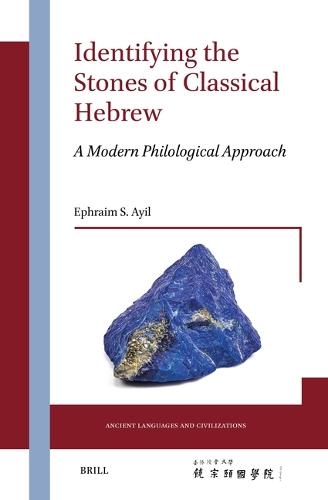
Identifying the Stones of Classical Hebrew: A Modern Philological Approach

Author:   Ephraim S. Ayil
Publisher:   Brill
Volume:   7
ISBN:  

9789004677999


Pages:   250
Publication Date:   29 August 2024
Format:   Hardback
Availability:   Manufactured on demand   Availability explained
We will order this item for you from a manufactured on demand supplier.

Our Price $213.84 Quantity:  
Add to Cart

Share |

Identifying the Stones of Classical Hebrew: A Modern Philological Approach


Overview

Since the translation of the Septuagint in the 3rd century BCE, scholars have attempted to identify the stones that populate the biblical text. This study rejects the long-standing reliance on ancient translations for identifying biblical stones. Despite the evident contradictions and historical inconsistencies, scholars traditionally presumed these translations to be reliable. By departing from this approach, this volume presents a novel synthesis of comparative linguistics and archeogemological data. Through rigorous analysis of valid cognates, it establishes correlations between Hebrew stone names and their counterparts in ancient languages, corresponding to known mineral species. This methodological shift enables a more accurate identification of stones mentioned in biblical texts, thus recovering their true historical context. The research not only advances our understanding of biblical mineralogy but also provides a fresh perspective on the material culture of the Ancient Levant, offering valuable insights for scholars and laymen, linguists and archaeologists alike.

Full Product Details

Author:   Ephraim S. Ayil
Publisher:   Brill
Imprint:   Brill
Volume:   7
Dimensions:   Width: 15.50cm , Height: 2.10cm , Length: 23.50cm
Weight:   0.544kg
ISBN:  

9789004677999


ISBN 10:   9004677992
Pages:   250
Publication Date:   29 August 2024
Audience:   Professional and scholarly ,  Professional & Vocational
Format:   Hardback
Publisher's Status:   Active
Availability:   Manufactured on demand   Availability explained
We will order this item for you from a manufactured on demand supplier.

Table of Contents

Acknowledgements 1 Introduction  1 Methodology  2 Terminology/Scope  3 Limitations/Preface 2 The Ḥōšen—Priestly Breastplate 3 אֹדֶם ʾōḏem—Carnelian  1 Defining Carnelian 4 פִּטְדָה Piṭḏā—Peridot  1 False Etymologies  2 Reexamining an Old Connection  3 Identity 5 בָּרֶקֶת Bāreḳeṯ—Green Jasper  1 Medieval Identifications  2 Previous Etymologies  3 Cognates  4 A Semitic Etymology  5 Possible Identities  6 Putting the Data Together 6 נֹפֶךְ Nōp̄eḵ—Turquoise  1 Derivation from Egyptian mfkꜢt  2 Semantics  3 פּוּךְ Pūḵ 7 סַפִּיר Sappīr—Lapis Lazuli  1 The Biblical Sources  2 Greco-Roman Sources for Σάπφειρος Sappheiros  3 The Supposed Indian Origin  4 Marginal Cognates  5 Akkadian Analogue and a Revised Etymology 8 יָהֲלֹם Yāhălōm 9 לֶשֶׁם Lešem—Amazonite 10 שְׁבוֹ Šəḇō—Agate 11 אַחְלָמָה ʾaḥlāmā—Red Jasper  1 Phonology  2 Ancient Translations 12 תַּרְשִׁישׁ Taršīš—Amber  1 Internal Evidence for the Color of Taršīš-Stone  2 Tars̆īs̆ = Tartessos = A Stone from Tartessos  3 Applying the Philological Method  4 Other Previous Views  5 Conclusion 13 שֹׁהַם Šōham—Onyx  1 The Location of חֲוִילָה Ḥăwīlā  2 Terminological Issues concerning Onyx  3 Chalcedony Onyx in Arabia  4 The Egyptian Word for Onyx  5 Towards an Etymology  6 New Biblical Interpretations 14 יַשְׁפֶה Yašp̄e—Blue Chalcedony  1 Cognates  2 Yaspids in Greek and Mesopotamian Sources  3 The Elamite Yašpu  4 Breaking My Own Rules  5 Cultural Realia, Geography, Mythology: Towards an Etymology  6 Conclusion 15 שָׁמִיר Šāmīr—Emery  1 Cognates  2 The Etymology of שָׁמִיר Šāmīr  3 The Shamir Worm 16 גָּבִישׁ Gāḇīš & אֶלְגָּבִישׁ ʾelgāḇīš—Crystal Quartz, Gypsum & Hail  1 Previous Hypotheses  2 Phonological Analysis  3 Hebrew Sources for Elgavish  4 On גָּבִישׁ Gāḇīš  5 Etymological History in Other Languages  6 Semantics 17 כַּדְכֹּד Kadkōḏ & אֶקְדָּח ʾeḳdāḥ—Garnet  1 כַּדְכֹּד Kadkōḏ  2 אֶקְדָּח ʾeḳdāḥ  3 Greek Ἄνθραξ Anthrax and Latin Carbunculus  4 Ugaritic Pḥm and Akkadian Pēndȗ  5 Historiography 18 צוֹר C̣ōr & חַלָּמִישׁ Ḥallāmīš—Flint/Obsidian  1 צֹר C̣ōr  2 חַלָּמִישׁ Ḥallāmīš  3 Afterword: Implications for the Reconstruction of Ancient Egyptian Phonology  4 Harmonizing the Data 19 שַׁיִשׁ/שֵׁשׁ Šayiš/Šēš & גִּר Gir—Limestone  1 שַׁיִשׁ/שֵׁשׁ Šayiš/Šēš  2 גִּר Gir  3 Afterword 20 Other Classical Hebrew Lithonyms  1 בַּהַט Bahaṭ  2 בֹּחַן Bōḥan  3 גָּפְרִית Gop̄rīt̠  4 דַּר Dar  5 מֶלַח Melaḥ  6 נֶתֶר Neṯer  7 שָׁשַׁר Shāshar 21 Final Analysis  1 Patterns in Borrowing  2 Reconsidering the Septuagint and a Potential Pattern  3 A Theory of the Septuagint  4 Frontiers for Future Research Appendix: Index of Publications concerning Stones in the Bible Bibliography Index of Foreign Words Index of Gemstones & Minerals

Reviews

Author Information

Ephraim S. Ayil (1998) holds a B.A. in Political Science from Touro University, and will be pursuing a J.D. at SMU Dedman School of Law in autumn of 2024. Most recently, he worked at Hillsdale College's Washington, D.C. campus. His research interests span multiple disciplines, reflecting a broad academic interest.

Tab Content 6

Author Website:  

Countries Available

All regions
Latest Reading Guide

NOV RG 20252


Shopping Cart
Your cart is empty
Shopping cart
Mailing List