Overview
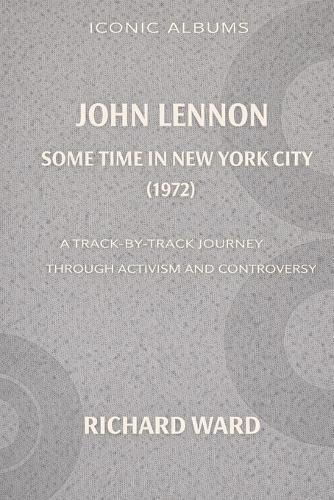
Some Time in New York City is often dismissed as John Lennon's most confrontational, least loved album. This book argues something very different: that it is his most consequential. Released in 1972, the album marks the moment when Lennon stops writing for permanence and starts writing under pressure. Songs become dispatches. Studios become newsrooms. Performance becomes proof. Politics stop being symbolic and start triggering response - from critics, from institutions, and eventually from the state itself. This book reappraises Some Time in New York City on its own terms, not as a failed attempt at timeless art, but as a deliberate act of refusal. Across a full chapter-by-chapter exploration, the book examines how Lennon and Yoko Ono construct a double album that denies comfort at every level: musically, politically, emotionally, and structurally. Lennon names names and events without metaphor. Ono strips sound back to raw transmission, refusing melody as mediation. Together, they produce a record that offers no escape hatch - and pays the price for it. The book explores: Why 1972 matters more than any other post-Beatles year How activism turns into exposure - and art into evidence Why critics felt betrayed, not merely disappointed The political escalation that follows the album's release The role of live performance as verification rather than spectacle Yoko Ono's long-delayed vindication as co-author and architect Why the album was never repeated - burnout, not regret How Mind Games emerges as recalibration after collision Why the album still makes listeners uncomfortable decades later Rather than asking whether the album ""worked,"" this book asks a harder question: what happens when art refuses safety and accepts consequence instead? The answer is not triumph or failure - it is collision. Written in a clear, analytical, and unsentimental style, this book treats Some Time in New York City as a document of pressure rather than a catalogue of songs. It is not an apology for the album, nor a nostalgic rehabilitation. It is a precise reassessment of what Lennon was doing, why it cost him so much, and why nothing that followed makes sense without it. For readers interested in John Lennon, Yoko Ono, protest art, music and politics, or the moment when belief stops being theoretical and starts being dangerous, this book offers a definitive reappraisal. Not failure. Refusal.
Full Product Details
Author: Richard Ward
Publisher: Independently Published
Imprint: Independently Published
Volume: 3
Dimensions:
Width: 15.20cm
, Height: 1.00cm
, Length: 22.90cm
Weight: 0.254kg
ISBN: 9798246855751
Pages: 186
Publication Date: 03 February 2026
Audience:
General/trade
,
General
Format: Paperback
Publisher's Status: Active
Availability: Available To Order

We have confirmation that this item is in stock with the supplier. It will be ordered in for you and dispatched immediately.