|
|
|||
|
||||
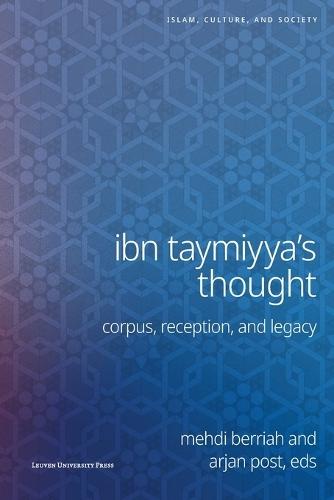
OverviewA fresh reading of medieval thinker Ibn Taymiyya, offering pathbreaking insight into his lasting relevance in debates on Islam, authority, and religious thought. Ibn Taymiyya’s Thought: Corpus, Reception, and Legacy explores the work, influence, and lasting impact of one of the most controversial and prolific figures in Islamic intellectual history: Taqī l-Dīn Aḥmad Ibn Taymiyya (d. 728/1328). Adopting a clear and rigorous approach, this book traces the key strands of Ibn Taymiyya’s thought and shows how his writings have been interpreted, transformed, challenged, and reappropriated over time. It sheds light on the tensions between tradition and renewal, and between religious authority and critical inquiry. Beyond Taymiyyan thought itself, the book offers a deeper understanding of contemporary debates about Islam by situating them within a long and complex intellectual history. Thus, it will appeal both to readers eager to grasp the complex thought of one of medieval Islam’s most controversial scholars and to those interested in the ongoing relevance of his ideas in modern intellectual and religious debates across the Muslim world. This volume makes a vital contribution to the study of Ibn Taymiyya by engaging closely with his texts, and considering them in their original historical context as well as in the diverse settings in which they have been reread and reappropriated, whether directly or indirectly. Full Product DetailsAuthor: Mehdi Berriah (French Institute for the Near East) , Arjan Post (KU Leuven) , Pieter Coppens , Kadir GömbeyazPublisher: Leuven University Press Imprint: Leuven University Press Weight: 0.454kg ISBN: 9789462704961ISBN 10: 9462704961 Pages: 300 Publication Date: 25 March 2026 Audience: College/higher education , Postgraduate, Research & Scholarly Format: Paperback Publisher's Status: Active Availability: In Print This item will be ordered in for you from one of our suppliers. Upon receipt, we will promptly dispatch it out to you. For in store availability, please contact us. Table of ContentsIntroduction. Rethinking the Taymiyyan Phenomenon: Contexts, Corpus, and Reception Mehdi Berriah and Arjan Post Chapter 1. Jinn-s and Exorcism in Ibn Taymiyya Mehdi Berriah Chapter 2. Debates and Controversies Surrounding an Epistle Attributed to Ibn Taymiyya: Qāʿida mukhtaṣara fī qitāl al-kuffār Farid Bouchiba Chapter 3. Omniscience, Causality, and Fatalism: Ibn Taymiyya on the Problem of Petitionary Prayers Safaruk Zaman Chowdhury Chapter 4. The God of the Philosophers: The Refutation of Thābit b. Qurra’s Talkhīṣ of the Metaphysics in Ibn Taymiyya’s Darʾ taʿāruḍ al-ʿaql wa-l-naql Adrien Candiard Chapter 5. Ḥanbalī Theology after Ibn Taymiyya: Positioning Ibn al-Mabrid (d. 909/1503) in the Debate on God’s Attributes Arjan Post Chapter 6. Between Ibn Taymiyya and the Mutakallimūn: Muḥammad b. Aḥmad al-Saffārīnī (d. 1188/1774) on the Attributes of God Sarah Van Eyken Chapter 7. The Taymiyyan Turn in Early Twentieth-Century Islamic Reform and the Controversy over Cursing Muʿāwiya Pieter Coppens Chapter 8. Ibn Taymiyya between Fact and Fiction in Modern Turkey: A Special Reference to Necip Fazıl Kısakürek’s (1905- 1983) Perception of Ibn Taymiyya Kadir Gömbeyaz Chapter 9. From the Shaykh al-Islam to the Intellectual: Reception and Functions of Ibn Taymiyya in Francophone Islamic Literature Daoud Riffi About the Editors and AuthorsReviewsAuthor InformationMehdi Berriah is a researcher in Islamic Studies and Islamic History at the French Institute for the Near East (Ifpo). His work focuses on Muslim thought, theology, jihad, Ibn Taymiyya, and the intellectual, political, military, and social history of the Islamic world. Arjan Post is Associate Professor of Arabic and Islamic Studies at KU Leuven. His fields of interest include Sufism, kalām, theology, and the intellectual history of the Hanbali school, specifically during the Mamluk period. Tab Content 6Author Website:Countries AvailableAll regions |
||||