Overview
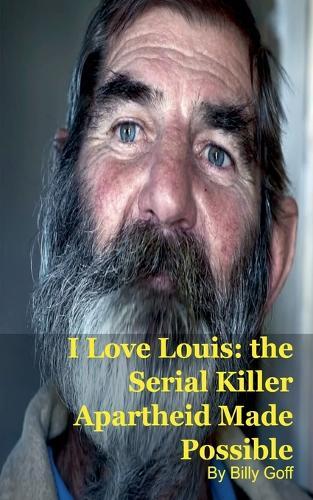
I Love Louis: the Serial Killer Apartheid Made Possible Between 1986 and 1989, a private security guard named Louis van Schoor shot more than one hundred people in the darkened shops of East London, South Africa. Every victim was Black or Coloured. Not one was armed. At least thirty-nine died. The police accepted his reports without investigation. A magistrate declared twenty-five of the killings justifiable in a single sitting. His white community put stickers on their cars that read: I Love Louis. This book is the full reckoning that the 1992 trial, which convicted Van Schoor of just seven murders, never delivered. Drawing on the landmark BBC investigation that finally identified buried victims and confronted Van Schoor in his final years, it reconstructs the killings in forensic and human detail, examines the legal framework that licensed the slaughter, and traces the institutional complicity of the police, the magistracy, and the business community that made the killing possible and the accountability impossible. It follows the thirty-five-year search of a family for a man buried in an unmarked grave, the intergenerational violence of Van Schoor's daughter Sabrina, and the thirty-two deaths still officially classified as justifiable homicide today. Van Schoor died in July 2024, unrepentant and unaccountable. The debt he left behind remains unpaid. This is the story of who he was, what produced him, and what justice still requires.
Full Product Details
Author: Billy Goff
Publisher: Silverback Books
Imprint: Silverback Books
Dimensions:
Width: 12.70cm
, Height: 1.30cm
, Length: 20.30cm
Weight: 0.236kg
ISBN: 9798235113077
Pages: 234
Publication Date: 29 April 2026
Audience:
General/trade
,
General
Format: Paperback
Publisher's Status: Active
Availability: Available To Order

We have confirmation that this item is in stock with the supplier. It will be ordered in for you and dispatched immediately.
Author Information
Billy Goff was born in County Clare and spent formative years between Ireland and the industrial cities of Eastern Europe, an experience that gave him a lasting preoccupation with the human cost of political transition and the social worlds that collapse produces. He has written extensively on Russian and post-Soviet history, with a particular focus on the intersection of institutional failure, criminal pathology, and the lives of communities under economic stress. His research into the Spesivtsev case drew on forensic literature, sociological accounts of the post-Soviet transition, and the documentary record of one of Russia's most devastating and underexamined criminal histories. The Siberian Ripper is one of several books he has written on violent crime in the former Soviet world.