Overview
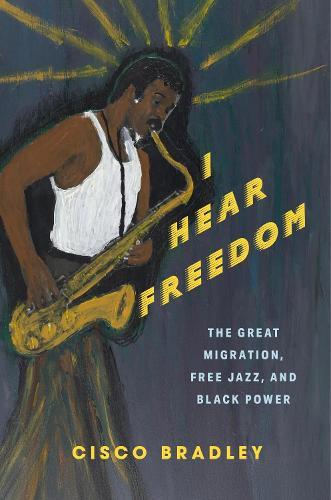
In the 1960s, a musical revolution took place in the industrial landscapes of Cleveland and Detroit. Disenchanted with the strictures of bebop, musicians forged a new style-free jazz-that took inspiration from a vast range of sources, including figures such as Ornette Coleman, Cecil Taylor, and John Coltrane; African and Middle Eastern music; avant-garde modernism; and the politics and aesthetics of Black Power. How did this radical movement come about, and what explains its creativity and vitality? Based on interviews with dozens of musicians, I Hear Freedom tells the story of free jazz and its connection to the broader Black experience. Cisco Bradley demonstrates that although this part of the free jazz movement arose in the Midwest, it is deeply rooted in the musical traditions and aesthetics that the Great Migration brought from the South. As postwar urban renewal projects fractured Black communities, musicians drew on this heritage to create new forms of expression. Figures such as Albert Ayler, Donald Ayler, Charles Tyler, Frank Wright, Bobby Few, Charles Moore, and Faruq Z. Bey developed distinct artistic visions, often influenced by their involvement in Black liberation movements. I Hear Freedom chronicles the Cleveland and Detroit free jazz scenes, and it follows musicians to New York, Los Angeles, Paris, and beyond. A revelatory oral history, this book shows that free jazz is a uniquely Black style shaped by mobility, community, and the struggle for freedom.
Full Product Details
Author: Cisco Bradley ,
Gabriel Vanlandingham-Dunn
Publisher: Columbia University Press
Imprint: Columbia University Press
ISBN: 9780231221573
ISBN 10: 0231221576
Pages: 496
Publication Date: 17 March 2026
Audience:
College/higher education
,
Postgraduate, Research & Scholarly
Format: Paperback
Publisher's Status: Forthcoming
Availability: Awaiting stock

Reviews
Through meticulous oral histories, archival research, and theoretical insight, Bradley expands the scope and tenor of jazz historiography by revealing how Black familial lineages carried musical values of mobility, collectivity, and experimentation into the heart of northern urban modernity and made jazz a blueprint for the Black radical tradition and its dreams of liberation. -- Benjamin Barson, author of <i>Brassroots Democracy: Maroon Ecologies and the Jazz Commons</i> In I Hear Freedom, Cisco Bradley guides readers through an alternative, ethnographic model of jazz—and thus American music—history. Other jazz scholars posit linear genealogies, with musicians/composers evolving out of past styles and artists; Bradley instead situates black improvising musicians/composers within their familial, community, and professional networks. With extensive and unprecedented archival research, Bradley reveals how migratory movement drove free jazz’s experimentalist praxis, and how encounters made along the journey culminated in art. -- Kwami Coleman, author of <i>Change: The New Thing and Modern Jazz</i>
Author Information
Cisco Bradley is professor of history at the Pratt Institute. His books include The Williamsburg Avant-Garde: Experimental Music and Sound on the Brooklyn Waterfront (2023) and Universal Tonality: The Life and Music of William Parker (2021). He is also the director of the documentary Take Me to Fendika (2024). Gabriel Jermaine Vanlandingham-Dunn is a music historian, writer, researcher, and DJ who heads cow: Music and is the creative consultant at Astral Spirits Records.