Overview
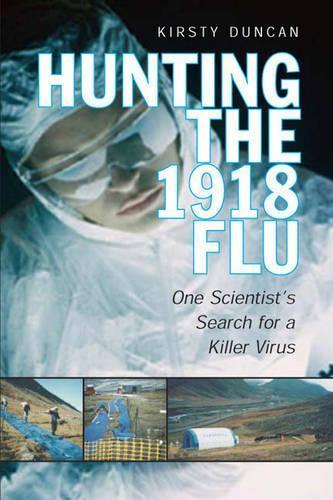
Seventy-five years after the initial outbreaks, the scientific world still has no specific answers to the questions of the identity of the causal agents of the Spanish flu and encephalitis lethargica. They had become two of the world's and history's greatest medical mysteries. In 1992, reading about the flu's gruesome effects and the experts' alarming predictions made the author want to investigate them. This is the story of her research. In 1918, medical science was at a loss to explain the Spanish flu epidemic which swept the world in three great waves and killed an estimated 20 to 40 million people in just one year, more than the number that died during the four years of World War 1. Today, while the Spanish flu has faded in the public's memory, most virologists are convinced that sooner or later a similarly deadly flu virus will return with a vengeance. Responding to this the author presents a detailed account of her experiences as she organized a multi-national, multi-discipline scientific expedition to exhume the bodies of a group of Norwegian miners, buried in Svalbard, all of whom died from the Spanish flu. Duncan first addresses the story of a large-scale medical project with the objective of uncovering genetic material from the Spanish flu and then proceeds to a first-hand account of the turbulent politics that emerged as the group moved towards a goal where the egos were as strong as the stakes were high. Readers witness how the research team engages in ""entropic'"" behaviour despite its presumed dedication to science and the search for the virus, as the story unfolds through the beginning progress and harrowing conclusion of her project (1992-2001). In her account of pursuing the deadly killer, Duncan raises questions not only regarding public health, epidemiology, ethics of science and the rights of subjects but also about age, gender and privilege in science. While her search for the virus has shown promising preliminary results, it has also shown the dangers of science itself being subsumed in the rush for personal acclaim.
Full Product Details
Author: Kirsty E. Duncan
Publisher: University of Toronto Press
Imprint: University of Toronto Press
Edition: 2nd Revised edition
Dimensions:
Width: 15.80cm
, Height: 3.10cm
, Length: 23.50cm
Weight: 0.626kg
ISBN: 9780802087485
ISBN 10: 0802087485
Pages: 304
Publication Date: 30 May 2003
Audience:
College/higher education
,
Professional and scholarly
,
General/trade
,
Undergraduate
,
Postgraduate, Research & Scholarly
Format: Hardback
Publisher's Status: No Longer Our Product
Availability: Awaiting stock

The supplier is currently out of stock of this item. It will be ordered for you and placed on backorder. Once it does come back in stock, we will ship it out for you.
Author Information
Kirsty E. Duncan is an adjunct professor at the University of Toronto where she teaches medical geography. Hunting the 1918 Flu is the product of ten years of intensive research and analysis, and extensive travel and collaboration.