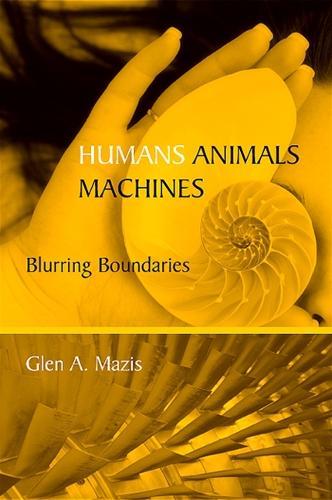
|
Overview
Full Product Details
Author: Glen A. Mazis
Publisher: State University of New York Press
Imprint: State University of New York Press
Dimensions:
Width: 15.20cm
, Height: 2.50cm
, Length: 22.90cm
Weight: 0.399kg
ISBN: 9780791475560
ISBN 10: 0791475565
Pages: 286
Publication Date: 04 September 2008
Audience:
College/higher education
,
Tertiary & Higher Education
Format: Paperback
Publisher's Status: Active
Availability: In Print 
This item will be ordered in for you from one of our suppliers. Upon receipt, we will promptly dispatch it out to you. For in store availability, please contact us.
Table of Contents
Acknowledgments 1. Approaching Humans, Animals, and Machines Blurred Boundaries Where Are the Machines? Are Humans Not Animals? Are We Not Confused about Definitions? Doing Away with Hierarchy Can Preserve Uniqueness Ambiguity, Openness to Experience, Phenomenology, and Nondualism Embodiment as Cooperation with the Surround Meaning-Bearing Matter 2. The Common Ground between Animals and Humans: Prolonged Bodies in Dwelling Places The Elusive Boundaries among Humans, Animals, and Machines Avoiding Reductive Senses of Overlaps of Humans, Animals, and Machines New Ways to See Overlaps and Differences: Living Space and ""Understanding"" One's Place Animal and Human Worlds and False Boundaries: Heideggerand von Uexkull The Lack of an Expanded Sense of Embodiment and Animality in Heidegger How Another Sense of Embodiment Opens These Dimensions Differing Spaces, Bodies, and Differing Worlds, but Open to Each Other 3. Machines Finding Their Place: Humans and Animals Already Live There If Bodies Are Relations to Surrounds, Are Artificially Intelligent Machines Gaining Bodies? Embodied Understanding, Movement, and Meaning: Robots and Embodied Artificial Intelligence Enmeshed Worlds: Cochlear Implants and Michael Chorost's Sense of Being a Cyborg Making a Cochlear Implant Work and Perceptual Faith, Attention Flow, and Emotional Connection Indeterminacy Is Openness to the Overlap Plain Machines and How We Are All in This World Together: Humans, Animals, and Machines Dangers of Imploded Boundaries and the Need for Ambiguity 4. Drawing the Boundary of Humans with Animals and Machines: Greater Area and Depth Can We Even Draw Boundary Lines? ""The Rational Animal"" Using Tools, Speaking, and Passing the Turing Test Thinking ""Substance"" and How It Feels to Meet a Thinker with a Face Human Thought Extended by Machines Humans Locate and Direct Themselves in Mood, Emotion, Feeling, and Thought ""We Feel"" and the Emotional Valence Neural and Material Plasticity and Open Systems Brains as Process, Emotions as Integrating, and Selves both Inside and Out 5. Drawing the Boundary of Humans with Animals and Machines: Reconsidering Knowing and Reality Juxtapositions, Brain Hemispheres, Brains as Observer/Observed, and the Logic of Yin/Yang Quantum Minds and Nondualistic Reality Nonlocal Quantum Reality, ""Phenomenality,"" and Magic in Emotion Imagination, Being Moved, and the Virtual Dimension of Human Life The Storytelling Communal Animal, Integrated Brains/Selves, and Human Excellence Ambiguity and Boundaries among Networks Inside and Outside Ourselves Simultaneously, Freedom, Interbeing Humans Witness the World's Depth in Multivalent Apprehension 6. Animals: Excellences and Boundary Markers The Problem of Understanding Animals' Perspectives from Within The Thickness of Animal Perception versus a Reductive Mechanical Model Animals and Prereflective, Perceptually Grounded Selves Animal Perceptual Sensitivity Meshes with Ecological Niches, Not Human Enclosures Instinct as the Life of the Dream The Expressive Spontaneity of Animals as Embodied Dialogue Animals in the Slower Time We Call Nature 7. Machines: Excellences and Boundary Markers Machines and Solid, Impervious Materiality Machines, Consistency, and the Time of the Earth Machines, Power, Precision, and Machine Beauty Machines, Speed, and the Lack of Place for Deeper Time Machines, the Arbitrary, and Dissonant, Arrhythmic Time Machines as Woven into the Fabric of the Surround Conclusion: Toward the Community of Humans, Animals, and Machines Is There Personhood for Animals and Machines? Obligations to Sacrificing Animals and Helping Machines, Good and Bad Persons, and Guardianship An Ecospirituality of Humans, Animals, and Machines Notes Index
Reviews
""...[Mazis] discusses and combines insights from a remarkably wide range of sources such as Buddhist philosophy, cognitive science, ethology, theoretical biology, and more recent AI research."" - Phenomenology and the Cognitive Sciences ""...what most sets Mazis' work apart from the majority of thought on the shared and distinct capacities of humans, non-human animals, and machines ... is his intense interest in the present and potential future of these capacities as opposed to their transhistorical or traditional forms."" - JAC ""This is a book of powerful ideas ... it does provoke. That, perhaps, is ultimately its strength."" - Metapsychology ""...this book manages to relate a wealth of initially disparate-seeming material in a thought-provoking way."" - CHOICE ""One of the great virtues of this book is its ability to draw upon different domains-philosophy, artificial intelligence, ethology, psychology, anthropology, and art-and to do so in a rigorous and creative manner."" - Edward S. Casey, author of The World at a Glance
"""...[Mazis] discusses and combines insights from a remarkably wide range of sources such as Buddhist philosophy, cognitive science, ethology, theoretical biology, and more recent AI research."" - Phenomenology and the Cognitive Sciences ""...what most sets Mazis' work apart from the majority of thought on the shared and distinct capacities of humans, non-human animals, and machines ... is his intense interest in the present and potential future of these capacities as opposed to their transhistorical or traditional forms."" - JAC ""This is a book of powerful ideas ... it does provoke. That, perhaps, is ultimately its strength."" - Metapsychology ""...this book manages to relate a wealth of initially disparate-seeming material in a thought-provoking way."" - CHOICE ""One of the great virtues of this book is its ability to draw upon different domains-philosophy, artificial intelligence, ethology, psychology, anthropology, and art-and to do so in a rigorous and creative manner."" - Edward S. Casey, author of The World at a Glance"
...[Mazis] discusses and combines insights from a remarkably wide range of sources such as Buddhist philosophy, cognitive science, ethology, theoretical biology, and more recent AI research. - Phenomenology and the Cognitive Sciences ...what most sets Mazis' work apart from the majority of thought on the shared and distinct capacities of humans, non-human animals, and machines ... is his intense interest in the present and potential future of these capacities as opposed to their transhistorical or traditional forms. - JAC This is a book of powerful ideas ... it does provoke. That, perhaps, is ultimately its strength. - Metapsychology ...this book manages to relate a wealth of initially disparate-seeming material in a thought-provoking way. - CHOICE One of the great virtues of this book is its ability to draw upon different domains-philosophy, artificial intelligence, ethology, psychology, anthropology, and art-and to do so in a rigorous and creative manner. - Edward S. Casey, author of The World at a Glance
Author Information
Glen A. Mazis is Professor of Philosophy and Humanities at Penn State at Harrisburg and the author of Earthbodies: Rediscovering Our Planetary Senses, also published by SUNY Press.
Tab Content 6
Author Website:
Countries Available
All regions
|