Overview
""Surekha Davies invites readers to imagine the lives of historical monsters and to empathize with their often-wretched treatment.""―Science magazine A history of how humans have created monsters out of one another—from our deepest fears—and what these monsters tell us about humanity's present and future. Monsters are central to how we think about the human condition. Join award-winning historian of science Dr. Surekha Davies as she reveals how people have defined the human in relation to everything from apes to zombies, and how they invented race, gender, and nations along the way. With rich, evocative storytelling that braids together ancient gods and generative AI, Frankenstein's monster and E.T., Humans: A Monstrous History shows how monster-making is about control: It defines who gets to count as normal. In an age when corporations increasingly see people as obstacles to profits, this book traces the long, volatile history of monster-making and charts a better path for the future. The result is a profound, effervescent, empowering retelling of the history of the world for anyone who wants to reverse rising inequality and polarization. This is not a history of monsters, but a history through monsters.
Full Product Details
Author: Surekha Davies
Publisher: University of California Press
Imprint: University of California Press
ISBN: 9780520430792
ISBN 10: 0520430794
Pages: 336
Publication Date: 17 March 2026
Audience:
Professional and scholarly
,
Professional & Vocational
Format: Paperback
Publisher's Status: Active
Availability: Out of stock

The supplier is temporarily out of stock of this item. It will be ordered for you on backorder and shipped when it becomes available.
Reviews
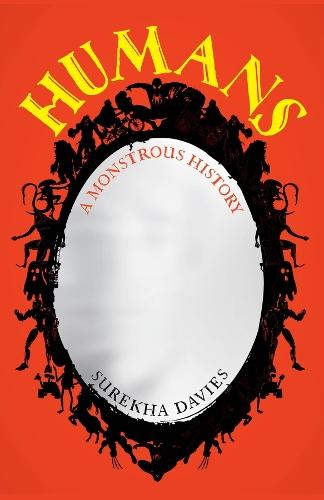
""Wide-ranging, weirdly fascinating."" * The Ink * ""Davies invites readers to imagine the lives of historical monsters and to empathize with their often-wretched treatment."" * Science Magazine * ""Davies’s book is a radical and timely plea to renew our focus on the humanities. At a time when biology and other sciences are making great strides in understanding how we are put together, chemically and physically, Humans makes clear how vital it is that we invest in understanding how we are put together culturally.” * The Chronicle of Higher Education * “Humans documents the curious ways we have thought about who counts as human throughout history, from Pliny’s belief that extreme environments created monstrous people to the 18th-century Swedish botanist Carl Linnaeus’s four subtypes of humans. Most significant for our time, however, are Davies’ thoughts on nation states – the way ideas about race and birthrights are used for dark political ends – and on how AI might end up monstering us.” * The New Statesman * “Engaging . . . As the historian of science, art and ideas concludes: ‘Monsters are portals. Monsters are us. Let’s get to work.’” * Nature * “Surekha Davies’ Humans traces the long, volatile history of monster-making to chart a better path for the future. Along the way, Davies reveals how people have defined the human in relation to everything from apes to zombies, and how they invented race, gender, and nations.” * Arab News * “The monsters at the heart of this stimulating new book do not hide under beds or coil around the edges of maps. They do not harass passers-by with riddles. As the mirror on the cover suggests, Surekha Davies’s monsters are us – in her view, perhaps the best of us.” * The TLS * “Embracing the label of monster can afford us all some respite from the pressures of fitting neatly into the categories that have been assigned to us. . . . embracing the monster can remind us that there is no one way to be human.” * The Oxonian Review * “Wide-ranging, eclectic and creative, it’s more about how we create monsters – and who we create them from – than it is about monsters themselves. Davies visits the freak show, but it’s the audience and the proprietors she’s interested in looking at.” * Fortean Times *
""Wide-ranging, weirdly fascinating."" * The Ink * ""Davies invites readers to imagine the lives of historical monsters and to empathize with their often-wretched treatment."" * Science Magazine * ""Davies’s book is a radical and timely plea to renew our focus on the humanities. At a time when biology and other sciences are making great strides in understanding how we are put together, chemically and physically, Humans makes clear how vital it is that we invest in understanding how we are put together culturally.” * The Chronicle of Higher Education * “Humans documents the curious ways we have thought about who counts as human throughout history, from Pliny’s belief that extreme environments created monstrous people to the 18th-century Swedish botanist Carl Linnaeus’s four subtypes of humans. Most significant for our time, however, are Davies’ thoughts on nation states – the way ideas about race and birthrights are used for dark political ends – and on how AI might end up monstering us.” * The New Statesman * “Engaging . . . As the historian of science, art and ideas concludes: ‘Monsters are portals. Monsters are us. Let’s get to work.’” * Nature * “Surekha Davies’ Humans traces the long, volatile history of monster-making to chart a better path for the future. Along the way, Davies reveals how people have defined the human in relation to everything from apes to zombies, and how they invented race, gender, and nations.” * Arab News * “The monsters at the heart of this stimulating new book do not hide under beds or coil around the edges of maps. They do not harass passers-by with riddles. As the mirror on the cover suggests, Surekha Davies’s monsters are us – in her view, perhaps the best of us.” * The TLS * “Embracing the label of monster can afford us all some respite from the pressures of fitting neatly into the categories that have been assigned to us. . . . embracing the monster can remind us that there is no one way to be human.” * The Oxonian Review * “Wide-ranging, eclectic and creative, it’s more about how we create monsters – and who we create them from – than it is about monsters themselves. Davies visits the freak show, but it’s the audience and the proprietors she’s interested in looking at.” * Fortean Times * “Creative and deeply serious, winding a path from primordial gods to zombies and large language models. Davies shows how the concept of monstrousness helped create the categories of who is human and who is not that undergird contemporary inequality. It is a history of why we make monsters – and what might happen if we cease to.” * History Today Books of the Year 2025 *
""Wide-ranging, weirdly fascinating."" * The Ink * ""Davies invites readers to imagine the lives of historical monsters and to empathize with their often-wretched treatment."" * Science Magazine * ""Davies’s book is a radical and timely plea to renew our focus on the humanities. At a time when biology and other sciences are making great strides in understanding how we are put together, chemically and physically, Humans makes clear how vital it is that we invest in understanding how we are put together culturally.” * The Chronicle of Higher Education * “Humans documents the curious ways we have thought about who counts as human throughout history, from Pliny’s belief that extreme environments created monstrous people to the 18th-century Swedish botanist Carl Linnaeus’s four subtypes of humans. Most significant for our time, however, are Davies’ thoughts on nation states – the way ideas about race and birthrights are used for dark political ends – and on how AI might end up monstering us.” * The New Statesman * “Engaging . . . As the historian of science, art and ideas concludes: ‘Monsters are portals. Monsters are us. Let’s get to work.’” * Nature * “Surekha Davies’ Humans traces the long, volatile history of monster-making to chart a better path for the future. Along the way, Davies reveals how people have defined the human in relation to everything from apes to zombies, and how they invented race, gender, and nations.” * Arab News * “The monsters at the heart of this stimulating new book do not hide under beds or coil around the edges of maps. They do not harass passers-by with riddles. As the mirror on the cover suggests, Surekha Davies’s monsters are us – in her view, perhaps the best of us.” * The TLS * “Embracing the label of monster can afford us all some respite from the pressures of fitting neatly into the categories that have been assigned to us. . . . embracing the monster can remind us that there is no one way to be human.” * The Oxonian Review * “Wide-ranging, eclectic and creative, it’s more about how we create monsters – and who we create them from – than it is about monsters themselves. Davies visits the freak show, but it’s the audience and the proprietors she’s interested in looking at.” * Fortean Times * “Creative and deeply serious, winding a path from primordial gods to zombies and large language models. Davies shows how the concept of monstrousness helped create the categories of who is human and who is not that undergird contemporary inequality. It is a history of why we make monsters – and what might happen if we cease to.” * History Today Books of the Year 2025 * “Davies provides concrete historical examples to help us understand our enduring fascination with monsters.” * Christian Century *
Author Information
Dr. Surekha Davies is a British author, speaker, and historian of science, art, and ideas. Her first book, Renaissance Ethnography and the Invention of the Human, won the Morris D. Forkosch Prize for the best first book in intellectual history from the Journal of the History of Ideas and the Roland H. Bainton Prize in History and Theology. She has written essays and reviews about the histories of biology, anthropology, and monsters in the Times Literary Supplement, Nature, Science, and Aeon.