Overview
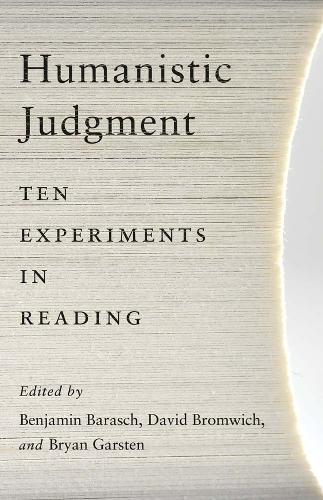
A defense of individual judgment as the core of humanistic study Why do some works of art and thought speak to us for generations while the vast majority are quickly forgotten? What insights do we gain from our experience of exceptional literature, philosophy, and art? How are we changed by our encounters with those works? Professional scholars in the humanities have lately grown uncomfortable, even embarrassed, about judging and asserting the human value of the works they love. In ten experimental and wide-ranging essays, this book seeks to restore value and taste as legitimate bases for judgment and illustrate how scholars can pursue wisdom by reflecting on works they judge worthy of serious attention and searching criticism.
Full Product Details
Author: Benjamin Barasch ,
David Bromwich ,
Bryan Garsten
Publisher: Yale University Press
Imprint: Yale University Press
ISBN: 9780300269970
ISBN 10: 0300269978
Pages: 248
Publication Date: 17 February 2026
Audience:
College/higher education
,
Postgraduate, Research & Scholarly
Format: Hardback
Publisher's Status: Forthcoming
Availability: Awaiting stock

Reviews
“This is a feast in the form of a book. Representing several generations of distinguished teacher-scholars, the authors vary in taste but share a common motive and spirit: restoring respect for the human complexity that is the source and subject of all enduring art and thought.”—Andrew Delbanco, Columbia University “These far-ranging essays resist the now decades-long trend by humanists to allegorize their objects of study. Refusing ready characterizations of ‘representativeness,’ the authors reveal how works of art, literature, and philosophy can leap from the acknowledged circumstances of their origins to become ever-transforming resources of inspiration, trouble, solace, and even happiness.”—Susan Stewart, author of The Ruins Lesson: Meaning and Material in Western Culture “Humanistic Judgment aims to re-center how the humanities are approached and taught. The collection models how professors can shape their discussions of specific works in ways that focus on the work at hand while touching on broader issues. The book will be of great interest to teachers and administrators looking to revitalize the humanities, a dynamic that’s necessary to the health of our education system and our country.”—Ernest Suarez, executive director, Association of Literary Scholars, Critics, and Writers
“This is a feast in the form of a book. Representing several generations of distinguished teacher-scholars, the authors vary in taste but share a common motive and spirit: restoring respect for the human complexity that is the source and subject of all enduring art and thought.”—Andrew Delbanco, Columbia University “These far-ranging essays resist the now decades-long trend by humanists to allegorize their objects of study. Refusing ready characterizations of ‘representativeness,’ the authors reveal how works of art, literature, and philosophy can leap from the acknowledged circumstances of their origins to become ever-transforming resources of inspiration, trouble, solace, and even happiness.”—Susan Stewart, author of The Ruins Lesson: Meaning and Material in Western Culture “Humanistic Judgment aims to re-center how the humanities are approached and taught. The collection models how professors can shape their discussions of specific works in ways that focus on the work at hand while touching on broader issues. The book will be of great interest to teachers and administrators looking to revitalize the humanities, a dynamic that’s necessary to the health of our education system and our country.”—Ernest Suarez, Executive Director, the Association of Literary Critics, Scholars, and Writers
“These far-ranging essays resist the now decades-long trend by humanists to allegorize their objects of study. Refusing ready characterizations of ‘representativeness,’ the authors reveal how works of art, literature, and philosophy can leap from the acknowledged circumstances of their origins to become ever-transforming resources of inspiration, trouble, solace, and even happiness.”—Susan Stewart, author of The Ruins Lesson: Meaning and Material in Western Culture
Author Information
Benjamin Barasch, a literary scholar and musician, has taught humanities at Yale University, Columbia University, and Deep Springs College. David Bromwich is Sterling Professor of English at Yale University. Bryan Garsten is Professor of Political Science and Humanities at Yale University.