Overview
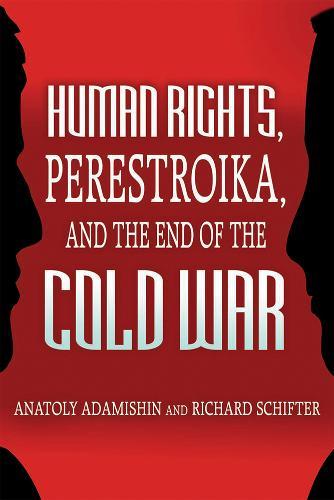
A diplomatic memoir unlike any other, this volume takes the reader behind the scenes on both sides of the Cold War as two men form an unlikely partnership to help transform Soviet-American relations. When U.S. assistant secretary of state Richard Schifter first met Soviet deputy foreign minister Anatoly Adamishin to discuss human rights, the Reagan administration was still skeptical of Gorbachev's reformist credentials. But skepticism soon gave way not just to belief but to active support. Like their immediate superiors George Shultz and Eduard Shevardnadze, Schifter and Adamishin became partners in the process of rapprochement. Together, they helped free political prisoners, spur Jewish emigration, support perestroika against its domestic enemies, and contribute to the mutual trust that allowed the Cold War to end swiftly and peacefully. Each chapter consists of two parts, one by each author, that offer complementary perspectives on the same events. The result is a volume that reveals much about the policymaking process during a historic era and exemplifies the power of diplomatic negotiation. It also argues provocatively that once the Cold War had ended, U.S. assistance to the Soviet Union could have helped prevent Gorbachev's fall from power, which ultimately damaged the democratic cause in Russia.
Full Product Details
Author: Anatoly Adamishin ,
Richard Schifter
Publisher: United States Institute of Peace Press
Imprint: United States Institute of Peace Press
Dimensions:
Width: 15.20cm
, Height: 2.00cm
, Length: 22.90cm
Weight: 0.522kg
ISBN: 9781601270405
ISBN 10: 1601270402
Pages: 356
Publication Date: 01 July 2009
Audience:
College/higher education
,
Postgraduate, Research & Scholarly
Format: Paperback
Publisher's Status: Out of Stock Indefinitely
Availability: Out of stock

Reviews
In recounting the experience of the senior negotiators on one of the key issues that arose during the Cold War, the authors provide valuable insight into negotiations that have received relatively little attention as compared to those on arms control and geopolitical issues. Their comments are also very useful in combating some widespread misconceptions about the nature and achievements of Gorbachev s perestroika.
In recounting the experience of the senior negotiators on one of the key issues that arose during the Cold War, the authors provide valuable insight into negotiations that have received relatively little attention as compared to those on arms control and geopolitical issues. Their comments are also very useful in combating some widespread misconceptions about the nature and achievements of Gorbachev s perestroika. -- Jack F. Matlock, Jr., U.S. Ambassador to the USSR, 1987-1991
This unique, joint memoir reveals a behind-the-scenes look at the U.S.-Soviet policymaking process at the end of the 20th Century. The authors provide a fascinating account of their roles in moving the issue of human rights up the foreign policy agenda. -- Robert Kagan, Carnegie Endowment for International Peace Of all the factors that led to the downfall of Soviet Communism and the end of the Cold War, the issue of human rights stands out. Human rights are the very antithesis of Communist ideology and practice, and sapped at their foundation. Adamishin and Shifter offer invaluable insights into how the softest of all elements of soft power triumphed over a regime built on force and fear. More than a study of recent history, this is a much-needed encouragement for all those who aspire to a world with a human face. -- Dmitri Trenin, Director of the Carnegie Moscow Center In recounting the experience of the senior negotiators on one of the key issues that arose during the Cold War, the authors provide valuable insight into negotiations that have received relatively little attention as compared to those on arms control and geopolitical issues. Their comments are also very useful in combating some widespread misconceptions about the nature and achievements of Gorbachev s perestroika. -- Jack F. Matlock, Jr., U.S. Ambassador to the USSR, 1987-1991
In recounting the experience of the senior negotiators on one of the key issues that arose during the Cold War, the authors provide valuable insight into negotiations that have received relatively little attention as compared to those on arms control and geopolitical issues. Their comments are also very useful in combating some widespread misconceptions about the nature and achievements of Gorbachev s perestroika. -- Jack F. Matlock, Jr., U.S. Ambassador to the USSR, 1987-1991 This unique, joint memoir reveals a behind-the-scenes look at the U.S.-Soviet policymaking process at the end of the 20th Century. The authors provide a fascinating account of their roles in moving the issue of human rights up the foreign policy agenda. -- Robert Kagan, Carnegie Endowment for International Peace Of all the factors that led to the downfall of Soviet Communism and the end of the Cold War, the issue of human rights stands out. Human rights are the very antithesis of Communist ideology and practice, and sapped at their foundation. Adamishin and Shifter offer invaluable insights into how the softest of all elements of soft power triumphed over a regime built on force and fear. More than a study of recent history, this is a much-needed encouragement for all those who aspire to a world with a human face. -- Dmitri Trenin, Director of the Carnegie Moscow Center
Author Information
Anatoly Adamishin has had a distinguished career in the foreign ministry of both the Soviet Union and the Russian Federation, serving as a deputy foreign minister and as ambassador to Italy and the United Kingdom. Richard Schifter was a lawyer turned diplomat who served in three presidential administrations, including as the State Department's point person on international human rights issues from 1985 to 1992. The fundamental right of human beings to live without facing discrimination had been a personal issue for Mr. Schifter, who lost his parents in the genocide of European Jews during World War II. Mr. Schifter spent more than three decades as a lawyer representing Native American tribes before he was selected by President Ronald Reagan in 1985 to serve as assistant secretary of state for human rights and humanitarian affairs. In that capacity, he headed the State Department's Bureau of Human Rights, now called the Bureau of Democracy, Human Rights and Labor.