Overview
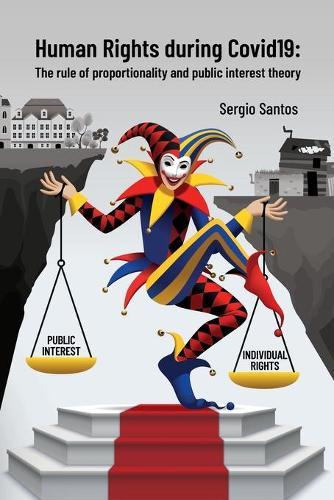
Other than discussing the covid19 policies within the context of human rights law, this text might be of help to people seeking either 1) a discussion on the rule of proportionality and public interest theory within constitutional and human rights law, or 2) an elaboration of the rule that brings to light the historical vulnerabilities to which it has been submitted. Unofficially, the rule has been selected because it provides a possibility to discuss conflict rather than focusing on rules alone and enables a discussion on discourse theory. This work asks what it is that constitutes a right during the covid19 pandemic within the context of human rights. The targets are 1) to illuminate possible legal arguments behind the restrictive measures that governments in Europe have enforced, 2) to submit these arguments to a critique and discuss possible alternatives, and 3) to consider the character of the law, i.e., nature, axiology, and open-endedness, that the acceptance of such arguments reveal. First, the concepts of right, human rights, and public interest are developed in the context of legal reasoning. A distinction is drawn between human rights, i.e., the normative character of the law, and human rights law, i.e., legislation and policy. The normative character of fundamental rights is considered both morally and through the concept of public interest. Second, the arguments and justifications behind legal policies, i.e., restrictions, are reconstructed by taking the European Convention on Human Rights (ECHR) as a model system for human rights adjudication. Proportionality and balancing are discussed within this framework to argue that governments and expert advisers have concluded that the extent of the spread of the SARS Cov2 virus can be employed to proportionally derogate fundamental rights with the aim to stop it, i.e., fundamental rights have been balanced against the spread of the virus. Such reasoning is submitted to a critique by considering a broad notion of health and other public interests and by asking the questions: what counts as health, right and public interest, what is the common metric and who is the balancer? Third, an alternative policy is discussed where rights are trumps. Other public interests are considered ideals to be optimized and realized to the highest degree that is actually and legally possible. Finally, a fourth point argues that none of the above alternatives are well founded because they lack a clear political objective to unify them, i.e., the law must clarify its priority before the problem of rights can be considered. Two extremes are considered. In one, the target is, amongst other, to optimize human activity by exploiting expert advice and mathematical optimization. An analogy can be drawn here to Leninism, an ideology that aims to realize a socio-economic transition by exploiting expert advice and scientific expertise. Here only the ideology changes. This approach is argued to lead to the creation of a utopic, or ideal society. Individuals give up their individual rights in order to prioritise the a greater good understood as prosperous collective advance. in this approach, expert advice aims to optimize public interests and give them higher priority to individual freedom. The other targets to create an ideal democracy. This leads to a society that never reaches the ideal because it allows individual human rights to tamper collective purposes. If an ideal democratic society is to be understood as a society that respects equality and freedom, such society cannot, and should not, be compared with a utopic society where all ideal public interests are met. The implication is that, in a democracy, some will go through inconveniences due to the liberty of others. On the other hand, nobody's fundamental rights will be used as a means to an end in the name of justified policies that support collective purposes.
Full Product Details
Author: Sergio Santos
Publisher: Independently Published
Imprint: Independently Published
Dimensions:
Width: 15.20cm
, Height: 0.70cm
, Length: 22.90cm
Weight: 0.181kg
ISBN: 9798752621239
Pages: 130
Publication Date: 23 October 2021
Audience:
General/trade
,
General
Format: Paperback
Publisher's Status: Active
Availability: Temporarily unavailable

The supplier advises that this item is temporarily unavailable. It will be ordered for you and placed on backorder. Once it does come back in stock, we will ship it out to you.