|
|
|||
|
||||
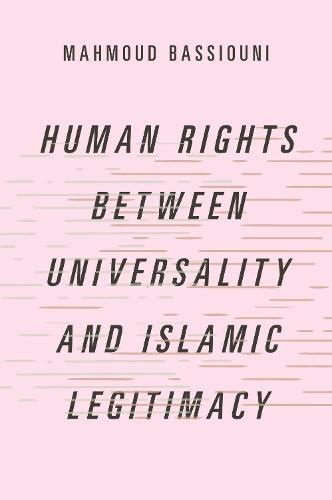
OverviewAre concepts of human rights universal? If so, how does one reconcile them with schools of thought that Western regimes often view as hostile to universal human rights, such as Islamic fundamentalism? This question often ends in the assumption that Sharia law cannot be reconciled with human rights or that there needs to be a one-way adaption of Sharia to human rights concepts. Others view the application of human rights ideas to Sharia as an imperial intrusion. In Human Rights Between Universality and Islamic Legitimacy, Mahmoud Bassiouni addresses the debate surrounding the compatibility of Islam and human rights. He argues that to understand their compatibility, we need to better understand the dynamic way in which Islamic tradition has evolved relative to international human rights. He asserts that existing Islamic human rights schemes have not been able to formulate an approach that adequately balances the double requirement of universality and Islamic legitimacy, and have done little to contribute to a more profound and methodologically coherent understanding of human rights. Including analyses of different Muslim positions, Bassiouni identifies their merits and shortcomings and asks how we can rethink and answer open questions in human rights philosophy by bringing the resources of the Islamic tradition to bear upon them. Overall, Human Rights Between Universality and Islamic Legitimacy engages current debates on human rights in the field of political theory and offers an Islamically informed perspective, which at times substantiates, at other times challenges, orthodox understandings of human rights. As a result, Bassiouni shows how an engagement with the Islamic legal tradition can contribute to the construction of a more sound and coherent theory of human rights. Full Product DetailsAuthor: Mahmoud Bassiouni (Assistant Professor in Political Science, Assistant Professor in Political Science, Goethe University Frankfurt)Publisher: Oxford University Press Inc Imprint: Oxford University Press Inc Dimensions: Width: 16.50cm , Height: 3.30cm , Length: 24.60cm Weight: 0.567kg ISBN: 9780197753897ISBN 10: 0197753892 Pages: 312 Publication Date: 20 December 2024 Audience: College/higher education , Postgraduate, Research & Scholarly Format: Hardback Publisher's Status: Active Availability: To order Stock availability from the supplier is unknown. We will order it for you and ship this item to you once it is received by us. Table of ContentsAcknowledgments I. Contexts of Muslim Human Rights Discourse 1. The Contemporary Context 2. Historical Context 3. Theological Context II. Reconstructing the Muslim Discourse on Human Rights 4. Rejection and Incompatibility 5. Appropriation 6. Assimilation 7. Summary and Outlook III. Islamic Foundations of a Universal Conception of Human Rights 8. The Purpose of Islamic Law (Maqasid Al-Sharia) 9. A Critical Review 10. New Conceptions of the Maqasid IV. Human Rights and Human Needs 11. Conceptions of Human Rights 12. Human Needs 13. Human Rights as Institutions for the Protection of Human Needs Conclusion References IndexReviewsAuthor InformationMahmoud Bassiouni is an Assistant Professor in Political Science at Goethe University Frankfurt. He teaches and writes on the philosophy of human rights, political secularism, and Islamic political and legal thought. Tab Content 6Author Website:Countries AvailableAll regions |
||||