Overview
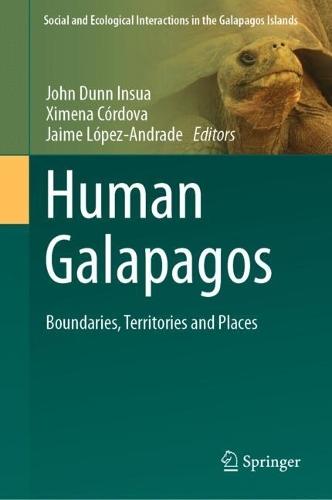
The book takes a multidisciplinary approach to the spatial configuration of the Galapagos Islands from the human dimension and the socio-ecological interactions of the borders, territories, and places that build up the archipelago, using San Cristóbal Island as a case study. It does not limit itself to the division of the colonized area versus the national park but examines the dynamics that exist among the numerous socio-ecological structures that compose the space. It studies the administration and formation of the physical infrastructure in both urban and rural contexts, as well as essential services such as water and energy. The book aims to demonstrate that the design of human components should be understood as an integral part of the conservation, planning, and management of the protected areas of the archipelago. It provides a first guide so that the future design of society is aware of the fragility of ecosystems, using the Galapagos Islands as a referential model.
Full Product Details
Author: John Dunn Insua ,
Ximena Córdova ,
Jaime López-Andrade
Publisher: Springer Nature Switzerland AG
Imprint: Springer Nature Switzerland AG
ISBN: 9783032087997
ISBN 10: 3032087996
Pages: 231
Publication Date: 11 January 2026
Audience:
College/higher education
,
Postgraduate, Research & Scholarly
Format: Hardback
Publisher's Status: Forthcoming
Availability: Not yet available

This item is yet to be released. You can pre-order this item and we will dispatch it to you upon its release.
Author Information
Dr. Ximena M. Córdova is a groundbreaking scholar in mathematics and industrial engineering. She made history as the first woman to graduate in Mathematics from the National Polytechnic School in Quito, Ecuador. Her academic journey includes Master’s degrees in Quality, Management, and Productivity, and Actuarial Science from The University of Iowa, and a Ph.D. in Industrial Engineering from Wichita State University. Dr. Córdova is currently the President of the Higher Education Quality Assurance Council (CACES) of Ecuador and a Full Professor at Universidad San Francisco de Quito, specializing in optimization, ergonomics, and project management. From 2015 to 2020, she served as the Vice Chancellor (Provost) of Universidad San Francisco de Quito, becoming the first woman in this role and driving significant improvements in teaching and administration. In 2015, she co-founded the ""Women in Science and Engineering"" (WISE) project to promote women in STEM fields. Her research focuses on Green Supply Chains and Ergonomics, employing modeling and optimization techniques. She is involved in developing new accreditation models for Ecuador’s Higher Education System and recently co-authored a spatially mapped emissions inventory for the Galapagos Islands, contributing to its long-term sustainability. Additionally, Dr. Córdova served as the editor of the Industrial and Systems Engineering Review (ISER) and participates in various boards, including Mujeres por Mujeres, the Transfer and Technology Center (CTT-USFQ), Tecniseguros, and the Ecuadorian Society of Actuaries. Professor John Dunn an became an architect from the Universidad San Francisco de Quito (USFQ), in 2001. In 2015 he graduated from Auburn University’s Community Planning Master’s Degree. His working now in this PhD research project in Universidad San Pablo CEU, which explores the impact of port infrastructure in the urban settlements located in the Galapagos Islands. John has been involved with the USFQ’s Galapagos International Architecture Studio, since its beginning, in 2013. He also in the Coordinator of the Architecture and Urban Form Research Institute (AFORU) at USFQ. Besides his professional practice as a urban consultant, John is and editorial columnist in local news media. Professor Jaime López, an architect from the Universidad San Francisco de Quito (USFQ), graduated in 2001. He earned an MSc in Architecture from TU Delft in 2009 and a Doctorate in Architectural Projects from the Polytechnic University of Catalunya (UPC) in 2022. His research focuses on the interaction between urban morphology and physical geography in natural protected spaces, with the Galápagos archipelago as his primary case study. Jaime founded an international architecture studio in the Galápagos Islands, pioneering research on Galapagos human settlements from a design perspective. He is currently the director of the Architecture and Urban Form Research Institute (AFORU) at USFQ and serves as the community outreach coordinator for the School of Architecture. Additionally, he is a private consultant in urban and regional planning for various public and private institutions.