Overview
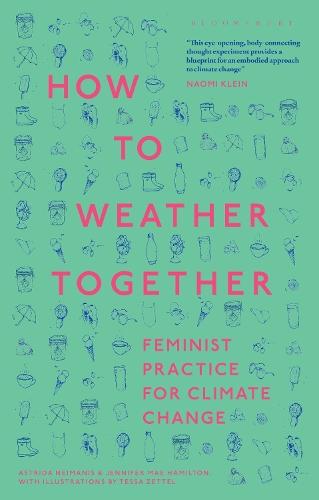
In How to Weather Together, Astrida Neimanis and Jennifer Mae Hamilton develop an innovative model for climate change mitigation and adaptation that brings together climate justice and community engagement. Translating feminist theory into practice, they demonstrate how we can gradually change the world as the world changes us. Drawing on a rich and varied history of feminist, queer and anticolonial scholarship, Neimanis and Hamilton propose 'weathering' as both a theoretical framework and a set of practical tools for responding to environmental catastrophe. They ask how we can reckon with existential crisis through playful, low-tech practice by connecting the planetary to the personal. With photographs and a series of illustrated weathering activities throughout, the book turns academic concepts into practical, hands-on guidance for community groups, artists, students, researchers, and others. It shows how climate adaptation requires building better social infrastructures for our shared but different worlds.
Full Product Details
Author: Dr Astrida Neimanis (University of Sydney, Australia) ,
Dr Jennifer Mae Hamilton (New York University, Sydney, Australia) ,
Jennifer Mae Hamilton (New York University Sydney Australia) ,
Greg Garrard (University of British Columbia Canada)
Publisher: Bloomsbury Publishing PLC
Imprint: Bloomsbury Academic
Dimensions:
Width: 14.00cm
, Height: 2.00cm
, Length: 21.40cm
Weight: 0.480kg
ISBN: 9781350467507
ISBN 10: 1350467502
Pages: 304
Publication Date: 05 February 2026
Audience:
College/higher education
,
Professional and scholarly
,
Tertiary & Higher Education
,
Professional & Vocational
Format: Hardback
Publisher's Status: Forthcoming
Availability: To order

Reviews
This eye-opening, body-connecting thought experiment provides a blueprint for an embodied approach to climate change. Neimanis and Hamilton span continents and communities with stories of building community infrastructures for dealing with the changing weather. * Naomi Klein * Framed in feminist, queer and anticolonial theories and ethics, Astrida Neimanis and Jennifer Hamilton’s How to Weather Together: Feminist Practice for Changing Climates is a brilliant book on weathering, a new concept so well discussed in theory and practice that it will change the way we understand and respond to climate change and weather, as well as to social-political weathers. * Serpil Oppermann, Professor of Environmental Humanities, and Director of Environmental Humanities Center, Cappadocia University, Turkey. *
This eye-opening, body-connecting thought experiment provides a blueprint for an embodied approach to climate change. Neimanis and Hamilton span continents and communities with stories of building community infrastructures for dealing with the changing weather. * Naomi Klein * Framed in feminist, queer and anticolonial theories and ethics, Astrida Neimanis and Jennifer Hamilton’s How to Weather Together: Feminist Practice for Climate Change is a brilliant book on weathering, a new concept so well discussed in theory and practice that it will change the way we understand and respond to climate change and weather, as well as to social-political weathers. * Serpil Oppermann, Professor of Environmental Humanities, and Director of Environmental Humanities Center, Cappadocia University, Turkey. *
Author Information
Astrida Neimanis is Canada Research Chair in Feminist Environmental Humanities at the University of British Columbia, Canada on unceded syilx territory. Jennifer Mae Hamilton lives and works on unceded Anaiwan Country as Senior Lecturer in Literary Studies at the University of New England, Australia.