Overview
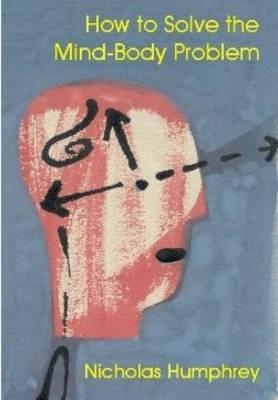
"The mind is the brain. Each mental state - each hope, fear, thought - can be identified with a particular physical state of the brain, without remainder. So argues Nicholas Humphrey in this highly readable yet scholarly essay. He offers strong support for his 'identity theory' from evolution. His controversial claim is discussed and challenged in commentaries by authors such as Andy Clark (""Being There"", 1997), Daniel Dennett (""Consciousness Explained"", 1991; ""Darwin's Dangerous Idea"", 1995) and Ralph Ellis (""Questioning Consciousness"", 1995). Humphrey rounds off the book with a response to his critics. This title offers an excellent short introduction to the mind-body problem and the study of consciousness. Nicholas Humphrey is author of the widely-read ""A History of the Mind"" (1992) and other books including ""Consciousness Regained"" and ""Soul-Searching"". He is senior research fellow in evolutionary psychology at the London School of Economics."
Full Product Details
Author: Nicholas Humphrey
Publisher: Imprint Academic
Imprint: Imprint Academic
Dimensions:
Width: 17.80cm
, Height: 0.80cm
, Length: 25.60cm
Weight: 0.400kg
ISBN: 9780907845089
ISBN 10: 0907845088
Pages: 112
Publication Date: 01 May 2000
Audience:
College/higher education
,
General/trade
,
Undergraduate
,
General
Format: Paperback
Publisher's Status: Active
Availability: In Print

This item will be ordered in for you from one of our suppliers. Upon receipt, we will promptly dispatch it out to you. For in store availability, please contact us.
Reviews
'... Humphry's efferent-activity-that-I-am-aware-of' theory of consciousness and his resulting solution to the mind-body problem presents readers with a myriad of important issues in consciousness ...' Trends in Cognitive Sciences 'Humphrey presents his theory here in a coherent, easy to follow, self-contained way ... sets out some interesting new avenues of investigation' Metapsychology This totally engaging book not so much challenges current views on this most ancient of problem than cogently argues for its definition. Human Nature Review Coherent, readable and self-contained. Philosophical Writings
... Humphrey's 'efferent-activity-that-I-am-aware-of' theory of consciousness and his resulting solution to the mind-body problem presents readers with a myriad of important issues in consciousness... Trends in Cognitive Sciences 'Humphrey presents his theory here in a coherent, easy to follow, self-contained way... [S]ets out some interesting new avenues of investigation. Metapsychology This totally engaging book not so much challenges current views on this most ancient of problem than cogently argues for its definition. Human Nature Review Coherent, readable and self-contained. Philosophical Writings
Andy Clark A refreshingly progressive recipe for laying wide the doors of sensation Daniel Dennett Humphrey's account leaves open the prospect of a conscious robot Valerie Gray Hardcastle Humphrey has the insight that the ways we describe both our mental states and our brain states are probably wrong Carol Rovane Humphrey's account of the position of qualia in mental life is the most promising and fertile I have seen. I am especially impressed by his pivotal idea that sensation is itself a species of affect-laden intentional activity. This is a genuinely new idea with enormous appeal and explanatory potential, the full measure of which I suspect not even he has taken. Robert van Gilick Humphrey's essay is full of intriguing and original suggestions, pointing out new directions for investigation and probing deep beneath the surface.
Author Information
Nicholas Humphrey is author of the widely-read A History of the Mind (1992) and other books including Consciousness Regained and Soul-Searching. He is senior research fellow in evolutionary psychology at the London School of Economics.