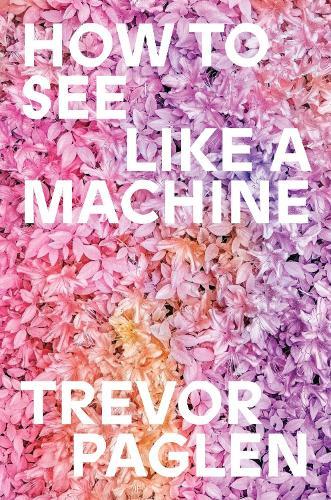
Overview
We once looked at pictures. Then, with the advent of computer vision and machine learning, pictures started looking back at us. Now, something even stranger is happening. Generative AI, adtech, recommendation algorithms, engagement economies, personalized search, and machine learning are inaugurating a new relationship between humans and media. Pictures are now looking at us looking at them, eliciting feedback and evolving. We’ve entered a protean, targeted visual culture that shows us what it believes we want to see, measures our reactions, then morphs itself to optimize for the reactions and actions it wants. New forms of media prod and persuade, modulate and manipulate, shaping worldviews and actions to induce us into believing what they want us to believe, and to extract value and exert influence. How did we get here?
Full Product Details
Author: Trevor Paglen
Publisher: Verso Books
Imprint: Verso Books
Dimensions:
Width: 14.00cm
, Height: 1.60cm
, Length: 21.00cm
Weight: 0.284kg
ISBN: 9781836742166
ISBN 10: 1836742169
Pages: 192
Publication Date: 19 May 2026
Audience:
General/trade
,
General
Replaced By: 9781836742173
Format: Hardback
Publisher's Status: Forthcoming
Availability: Not yet available

This item is yet to be released. You can pre-order this item and we will dispatch it to you upon its release.
Reviews
To be literate today means to come to terms with how the twin technical transformations of our time, computer vision and generative AI, work, and how they work on us: how they have reformatted our perception and cognition, our labor and leisure, our representations and realities, and will continue to do so with ever greater intensity. There is no better guide than Trevor Paglen, our most exploratory of artists, who, for two decades, has cracked open each new version of this black box, exposing proprietary abuses, inventing critical terms, devising counter uses, and imagining alternative futures. How to See Like a Machine is the toolkit we need. -- Hal Foster, author of <i>What Comes After Farce? Art and Criticism at a Time of Debacle<i> In this indispensable compilation, Trevor Paglen traces the fate of photographic images in the age of cognitive warfare, AI slop and pictorial conditioning. Decades of propaganda, psyops and photoshop have successively rid images of reality. Generative AI automates this process to create statistical renderings in a state of superposition; neither true nor false, but optimized to mess with human minds. When seeing becomes acting, thinking and theory need to involve actual visual practice, too. Paglens invaluable hands-on method of inquiry documents a shift in focus from images of reality to the reality of images. Required reading. -- Hito Steyerl, author of <i>Medium Hot<i>
To be literate today means to come to terms with how the twin technical transformations of our time, computer vision and generative AI, work, and how they work on us: how they have reformatted our perception and cognition, our labor and leisure, our representations and realities, and will continue to do so with ever greater intensity. There is no better guide than Trevor Paglen, our most exploratory of artists, who, for two decades, has cracked open each new version of this black box, exposing proprietary abuses, inventing critical terms, devising counter uses, and imagining alternative futures. How to See Like a Machine is the toolkit we need. -- Hal Foster, author of <i>What Comes After Farce? Art and Criticism at a Time of Debacle<i> In this indispensable compilation, Trevor Paglen traces the fate of photographic images in the age of cognitive warfare, AI slop and pictorial conditioning. Decades of propaganda, psyops and photoshop have successively rid images of reality. Generative AI automates this process to create statistical renderings in a state of superposition; neither true nor false, but optimized to mess with human minds. When seeing becomes acting, thinking and theory need to involve actual visual practice, too. Paglens invaluable hands-on method of inquiry documents a shift in focus from images of reality to the reality of images. Required reading. -- Hito Steyerl, author of <i>Medium Hot<i> Paglen is an extraordinary artist and thinker. In these succinct, entertaining essays he broadens our understanding of vision, and shows how image-making is leaving the human eye behind -- Hari Kunzru, author of <i>Blue Ruin</i> How will people choose to interact with art in a world where AI can spit out any image desired? When digital platforms value hyperpersonalization over discovery and learn through user surveillance? AI is altering visual culture more insidiously than it even seems, far beyond slop and plagiarism, and we need to understand it. * Lit Hub, Most Anticipated Books of 2026 *
Author Information
Trevor Paglen is an artist whose work spans image-making, sculpture, investigative journalism, writing, engineering, and numerous other disciplines. Paglen’s work has had one-person exhibitions at the Smithsonian Museum of American Art, Washington D.C.; Carnegie Museum of Art, Pittsburgh; Fondazione Prada, Milan; the Barbican Centre, London; Vienna Secession, Vienna; and Protocinema Istanbul, and participated in group exhibitions the Metropolitan Museum of Art, the San Francisco Museum of Modern Art, the Tate Modern, and numerous other venues. His work has been profiled in the New York Times, the New Yorker, the Wall Street Journal, Wired, the Financial Times, Art Forum, and Aperture. In 2014, he received the Electronic Frontier Foundation’s Pioneer Award and in 2016, he won the Deutsche Börse Photography Prize. Paglen was named a MacArthur Fellow in 2017. Paglen holds a B.A. from U.C. Berkeley, an MFA from the Art Institute of Chicago, and a Ph.D. in Geography from U.C. Berkeley.