Overview
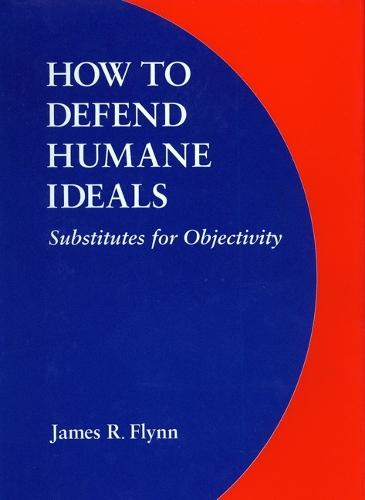
One of the principal moral and psychological problems of our time is whether humane ideals can be defended. Loss of faith in the objectivity of ethics has encouraged a sense of hopelessness. The notion that no ideal is better than any other, that a humane commitment has no rational advantage over Nietzsche's contempt for ordinary people, has been accused of leaving our civilization without self-confidence or a purpose. James R. Flynn rejects attempts to salvage ethical objectivity as futile and counterproductive. Instead, he uses philosophical analysis to demonstrate the relevance of logic and evidence to moral debate. He then uses modern social science to refute racists, Social Darwinists, Nietzsche, and the meritocracy thesis of The Bell Curve. Flynn concludes that the great post-Enlightenment project--justice for all races and classes, the reduction of inequality, and the abolition of privilege--retains its moral dignity and relevance.
Full Product Details
Author: James R. Flynn
Publisher: University of Nebraska Press
Imprint: University of Nebraska Press
Dimensions:
Width: 15.20cm
, Height: 1.30cm
, Length: 22.90cm
Weight: 0.352kg
ISBN: 9780803217959
ISBN 10: 0803217951
Pages: 224
Publication Date: 01 May 2008
Audience:
Professional and scholarly
,
Professional & Vocational
Format: Paperback
Publisher's Status: Active
Availability: To order

Stock availability from the supplier is unknown. We will order it for you and ship this item to you once it is received by us.
Reviews
Flynn presents a challenging, thought-provoking and thouroughly distinctive approach to ethical theory. -Brian Trainor, Australian Journal of Political Science -- Brian Trainor Australian Journal of Political Science A very good read... A refreshing approach to the problem of how to defend humane ideals when you have given up the objective truth of moral statements. -M.J. Cresswell, New Zealand Journal -- M.J. Cresswell New Zealand Journal Flynn shows that a humane and progressive liberalism can produce powerful arguments in the social and political realm, while abandoning what he regards as discredited and unhelpful notions of ethical proof and objectivity. There is nothing quite like this in literature-nothing that matches the power of Flynn's meta-ethical discussion and sustained first-level arguments. The chapters on the dilemmas and difficulties in modern social policy on race and class are magnificent. -Jeremy Waldron, author of Social Justice -- Jeremy Waldron Time and again, Flynn has spurred debate and opened up entirely new fields of scholarship. This book is an ambitious attempt to integrate philosophy, psychology, and sociology to provide an evidential case for humane ideals. -Stephen J. Ceci, editor of The Nature Nurture Debate: The Essential Readings -- J. Ceci
Flynn presents a challenging, thought-provoking and thouroughly distinctive approach to ethical theory. -Brian Trainor, Australian Journal of Political Science -- Brian Trainor Australian Journal of Political Science A very good read... A refreshing approach to the problem of how to defend humane ideals when you have given up the objective truth of moral statements. -M.J. Cresswell, New Zealand Journal -- M.J. Cresswell New Zealand Journal Time and again, Flynn has spurred debate and opened up entirely new fields of scholarship. This book is an ambitious attempt to integrate philosophy, psychology, and sociology to provide an evidential case for humane ideals. -Stephen J. Ceci, editor of The Nature Nurture Debate: The Essential Readings -- J. Ceci Flynn shows that a humane and progressive liberalism can produce powerful arguments in the social and political realm, while abandoning what he regards as discredited and unhelpful notions of ethical proof and objectivity. There is nothing quite like this in literature-nothing that matches the power of Flynn's meta-ethical discussion and sustained first-level arguments. The chapters on the dilemmas and difficulties in modern social policy on race and class are magnificent. -Jeremy Waldron, author of Social Justice -- Jeremy Waldron
Flynn presents a challenging, thought-provoking and thouroughly distinctive approach to ethical theory. Brian Trainor Australian Journal of Political Science A very good read... A refreshing approach to the problem of how to defend humane ideals when you have given up the objective truth of moral statements. M.J. Cresswell New Zealand Journal Time and again, Flynn has spurred debate and opened up entirely new fields of scholarship. This book is an ambitious attempt to integrate philosophy, psychology, and sociology to provide an evidential case for humane ideals. Stephen J. Ceci, editor of The Nature Nurture Debate: The Essential Readings Flynn shows that a humane and progressive liberalism can produce powerful arguments in the social and political realm, while abandoning what he regards as discredited and unhelpful notions of ethical proof and objectivity. There is nothing quite like this in literature--nothing that matches the power of Flynn's meta-ethical discussion and sustained first-level arguments. The chapters on the dilemmas and difficulties in modern social policy on race and class are magnificent. Jeremy Waldron, author of Social Justice
Author Information
A professor emeritus at the University of Otago, New Zealand, James R. Flynn is the author of Asian Americans: Achievement beyond IQ and Race, IQ, and Jensen. He has been profiled in Scientific American, and his research has been reviewed in Nature and Newsweek.