Overview
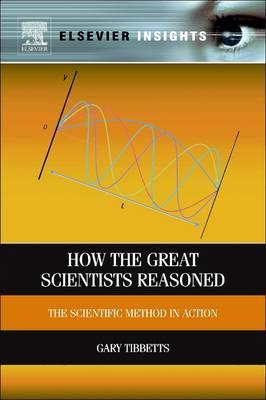
The scientific method is one of the most basic and essential concepts across the sciences, ensuring that investigations are carried out with precision and thoroughness. The scientific method is typically taught as a step-by-step approach, but real examples from history are not always given. This book teaches the basic modes of scientific thought, not by philosophical generalizations, but by illustrating in detail how great scientists from across the sciences solved problems using scientific reason. Examples include Christopher Columbus, Joseph Priestly, Antoine Lavoisier, Michael Faraday, Wilhelm Röntgen, Max Planck, Albert Einstein, and Niels Bohr. Written by a successful research physicist who has engaged in many studies and years of research, all in the attempt to extract the secrets of nature, this book captures the excitement and joy of research. The process of scientific discovery is as delightfully absorbing, as complex, and as profoundly human as falling in love. It can be a roller coaster ride of despairing valleys and exhilarating highs. This book sketches the powerful reasoning that led to many different discoveries, but also celebrates the ""ah-ha moments"" experienced by each scientist, letting readers share the thrilling instant when each scientist reached the critical revelation in his research.
Full Product Details
Author: Gary G. Tibbetts (Physics Department, General Motors Research Laboratories (Retired), Warren, Michigan, USA)
Publisher: Elsevier - Health Sciences Division
Imprint: Elsevier - Health Sciences Division
Dimensions:
Width: 15.20cm
, Height: 0.90cm
, Length: 22.90cm
Weight: 0.450kg
ISBN: 9780323282673
ISBN 10: 0323282679
Pages: 160
Publication Date: 01 October 2012
Audience:
Professional and scholarly
,
Professional & Vocational
Format: Paperback
Publisher's Status: Active
Availability: Manufactured on demand

We will order this item for you from a manufactured on demand supplier.
Reviews
.physicist Tibbetts (General Motors) humanizes the methods of several scientists, using an easy-to-read style that includes enough detail to satisfy the casual and the professional reader alike.Even readers who are familiar with many of these stories will gain new insights into the thought processes of some of the great scientists. --Choice, July 2013
...physicist Tibbetts (General Motors) humanizes the methods of several scientists, using an easy-to-read style that includes enough detail to satisfy the casual and the professional reader alike...Even readers who are familiar with many of these stories will gain new insights into the thought processes of some of the great scientists. --Choice, July 2013
...physicist Tibbetts (General Motors) humanizes the methods of several scientists, using an easy-to-read style that includes enough detail to satisfy the casual and the professional reader alike...Even readers who are familiar with many of these stories will gain new insights into the thought processes of some of the great scientists. --Choice, July 2013