Overview
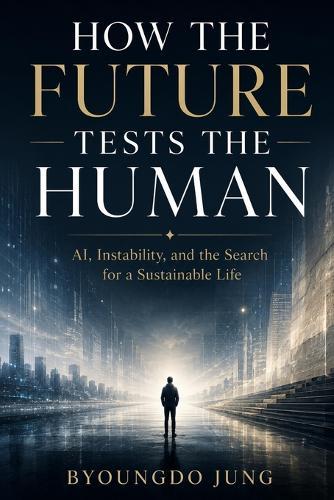
What if the defining challenge of the future is not technology itself, but whether human beings can remain fully human under its pressure? We are entering a world that is more connected, more accelerated, more unstable, and more deeply shaped by artificial intelligence than ever before. Much has been written about what AI can do, how industries will change, and which skills may matter next. Far less has been written about what these changes are doing to the structure of human life itself. How the Future Tests the Human is a serious, human-centered exploration of that deeper question. This book argues that the future is not only testing innovation, productivity, and institutional adaptability. It is testing the human being directly. It is testing whether people can remain reflective, relational, dignified, and recoverable under conditions of instability, information saturation, constant evaluation, and machine-mediated acceleration. Rather than treating AI as a narrow technical tool, this book examines it as part of a much larger transformation in the conditions of life. Work is becoming more fluid and less predictable. Attention is becoming more fragmented. Recognition is becoming more conditional. Relationships are becoming broader but thinner. The self is increasingly asked to adapt, manage, optimize, and remain visible in a world that offers fewer durable forms of continuity. At the center of the book is a simple but urgent claim: a life can remain functional while becoming less livable. A person may continue to work, produce, respond, and succeed while losing depth, trust, reflective space, and the sense that life is still meaningfully their own. A society may become more advanced while making human beings more fragile. A civilization may grow more powerful in systems while becoming less wise about the people who must live inside those systems. The book explores how instability changes the experience of time, why hyper-connection does not necessarily cure loneliness, how AI can widen both opportunity and inequality, and why modern life increasingly places pressure not only on work and attention, but on personhood itself. From there, it turns to one of the most important questions of the coming age: resilience. But resilience here is not treated as a shallow slogan or the demand to remain productive under worsening conditions. It is redefined as something deeper: the capacity to absorb disruption, preserve dignity, and return to life without surrendering the conditions that make life humanly livable. Blending future studies, social philosophy, psychology, and cultural analysis, How the Future Tests the Human offers a framework for understanding the age of AI without reducing human life to a technical problem. It is not a book of hype, and it is not a book of panic. It is a book about personhood, dignity, selfhood, and what must still be protected if life is to remain livable in the age of acceleration. For readers of serious nonfiction on AI, society, psychology, philosophy, and the future of work, this book offers a clear and original perspective: the most important question of the coming age is not only what technology will build, but what sort of human being it will leave behind. If the future is already testing us, then the task is no longer simply to adapt. The task is to decide what must still be protected.
Full Product Details
Author: Byoungdo Jung
Publisher: Independently Published
Imprint: Independently Published
Dimensions:
Width: 15.20cm
, Height: 1.40cm
, Length: 22.90cm
Weight: 0.367kg
ISBN: 9798197045782
Pages: 272
Publication Date: 15 May 2026
Audience:
General/trade
,
General
Format: Paperback
Publisher's Status: Active
Availability: Available To Order

We have confirmation that this item is in stock with the supplier. It will be ordered in for you and dispatched immediately.