Overview
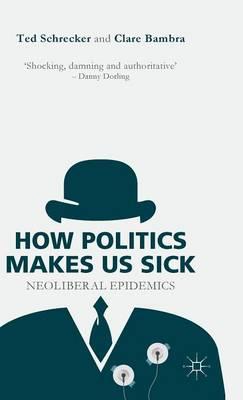
Ted Schrecker and Clare Bambra argue that the obesity, insecurity, austerity and inequality that result from neoliberal (or 'market fundamentalist') policies are hazardous to our health, asserting that these neoliberal epidemics require a political cure.
Full Product Details
Author: T. Schrecker ,
C. Bambra
Publisher: Palgrave Macmillan
Imprint: Palgrave Macmillan
Dimensions:
Width: 14.00cm
, Height: 1.10cm
, Length: 21.60cm
Weight: 3.305kg
ISBN: 9781137463067
ISBN 10: 1137463066
Pages: 167
Publication Date: 29 May 2015
Audience:
Professional and scholarly
,
Professional & Vocational
Replaced By: 9781349961269
Format: Hardback
Publisher's Status: Active
Availability: In Print

This item will be ordered in for you from one of our suppliers. Upon receipt, we will promptly dispatch it out to you. For in store availability, please contact us.
Reviews
The political tradition of recent years has been to blame the victims for their ailments. Today you so often hear that people should 'take responsibility for themselves' as if each of us could individually transform the obesogenic environments created in the search for ever greater profits, as if we could individually alter our parental history, and our childhood circumstances, the pollution in the air we breathe and the thoughts fed through the media of the nation-state we live in, and as if we were each an island and there were such thing as society. How Politics Makes Us Sick debunks these myths and replaces them with explanations based on evidence. - Danny Dorling, Halford Mackinder Professor of Geography, University of Oxford, UK This important expose charts how neoliberal ideology has undermined the lives of ordinary people, not least by damaging public health. The authors offer compelling evidence that privatisation, deregulation and austerity are bad for us, leading to worse health outcomes and growing health inequalities. The section on how growing insecurity at work is sending stress levels soaring will be of particular interest to trade unionists. Clearly structured and convincingly argued, this book is a worthy addition to the growing body of literature highlighting the pernicious effects of unfettered markets. It shows that the need for an antidote to neo-liberalism is greater than ever - and that a cure is possible.' - Frances O'Grady, General Secretary, Trades Union Congress, UK
The political tradition of recent years has been to blame the victims for their ailments. Today you so often hear that people should 'take responsibility for themselves' as if each of us could individually transform the obesogenic environments created in the search for ever greater profits, as if we could individually alter our parental history, and our childhood circumstances, the pollution in the air we breath and the thoughts fed through the media of the nation-state we live in, and as if we were each an island and there were such thing as society. How Politics Makes Us Sick debunks these myths and replaces them with explanations based on evidence. - Danny Dorling, Halford Mackinder Professor of Geography, University of Oxford, UK
It's official: austerity and neoliberalism is bad for your health. This impeccably researched book illustrates how the reigning dogma of our time is bad for people - and spurs us on to find an alternative. - Owen Jones, Author and Columnist for The Guardian The political tradition of recent years has been to blame the victims for their ailments. Today you so often hear that people should 'take responsibility for themselves' as if each of us could individually transform the obesogenic environments created in the search for ever greater profits, as if we could individually alter our parental history, and our childhood circumstances, the pollution in the air we breathe and the thoughts fed through the media of the nation-state we live in, and as if we were each an island and there were no such thing as society. How Politics Makes Us Sick debunks these myths and replaces them with explanations based on evidence. - Danny Dorling, Halford Mackinder Professor of Geography, University of Oxford, UK This important expose charts how neoliberal ideology has undermined the lives of ordinary people, not least by damaging public health. The authors offer compelling evidence that privatisation, deregulation and austerity are bad for us, leading to worse health outcomes and growing health inequalities. The section on how growing insecurity at work is sending stress levels soaring will be of particular interest to trade unionists. Clearly structured and convincingly argued, this book is a worthy addition to the growing body of literature highlighting the pernicious effects of unfettered markets. It shows that the need for an antidote to neo-liberalism is greater than ever - and that a cure is possible. - Frances O'Grady, General Secretary, Trades Union Congress Over the last few years we have heard much about the corrosive effects of inequality in our societies - and how it is hurting us socially, economically and politically. Schrecker and Bambra provide a compelling argument that inequality's most malignant effect is in undermining our health and welfare systems. They have shown that it is very much a man-made crisis, and importantly not only do they chart why ideological decisions have undermined public health and increased inequality, but they point towards the brave political decisions needed to halt the corrosion. Their searing critique of neoliberal policies and the way in which they hurt the most vulnerable in society should be compulsory reading for anyone planning to stand for elected office. - Jude Kirton-Darling, Labour MEP for North East England and member of the European Parliament Committee on International Trade A compelling narrative of the ill-health effects of neoliberalism and its by-products of social inequality and market and social insecurity. Rich in up-to-date empirical data, it introduces the general reader to a political economy approach to understanding health and its unequal distribution. Demonstrating the political and thus non-inevitable character of many worrying trends such as rising obesity and stress rates, it points to real alternatives to policies that are typically justified by claiming 'there is no alternative'. - Elke Heins, Times Higher Education website
Author Information
Ted Schrecker is Professor of Global Health Policy at Durham University, UK. He previously taught environmental studies, political science and population health, and worked as a legislative researcher and consultant for many years. Clare Bambra is Professor of Public Health Geography and Director of the Centre for Health and Inequalities Research, Durham University, UK. Her research focuses on the effects of labour markets, health and welfare systems on health inequalities.