Overview
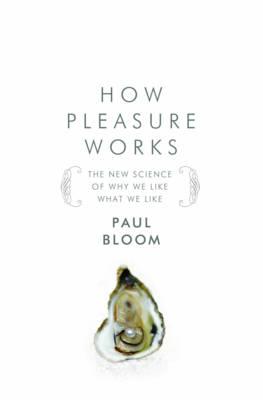
The thought of sex with a virgin is intensely arousing for many men. The average American spends more than four hours a day watching television. Abstract art can sell for millions of dollars. People slow their cars to look at gory accidents, and go to movies that make them cry. Pleasure is anything but straightforward. Our desires, attractions, and tastes take us beyond the symmetry of a beautiful face, the sugar and fat in food, or the prettiness of a painting. In How Pleasure Works, Yale University psychologist Paul Bloom draws on groundbreaking research to unveil the deeper workings of why we desire what we desire. Refuting the longstanding explanation of pleasure as a simple sensory response, Bloom shows us that pleasure is grounded in our beliefs about the deeper nature or essence of a given thing. This is why we want the real Rolex and not the knockoff, the real Picasso and not the fake, the twin we have fallen in love with and not her identical sister. In this fascinating and witty account, Bloom draws on child development, philosophy, neuroscience, and behavioral economics in order to address pleasures noble and seamy, highbrow and lowbrow. Along the way, he gives us unprecedented insights into a realm of human psychology that until now has only been partially understood.
Full Product Details
Author: Paul Bloom (Yale University)
Publisher: WW Norton & Co
Imprint: WW Norton & Co
Dimensions:
Width: 16.50cm
, Height: 2.50cm
, Length: 24.40cm
Weight: 0.582kg
ISBN: 9780393066326
ISBN 10: 0393066320
Pages: 304
Publication Date: 14 June 2010
Audience:
General/trade
,
General
Replaced By: 9780393340006
Format: Hardback
Publisher's Status: Active
Availability: In Print

This item will be ordered in for you from one of our suppliers. Upon receipt, we will promptly dispatch it out to you. For in store availability, please contact us.
Reviews
This book is a pearl, a work of great beauty and value, built up around a simple truth: that we are essentialists, tuned in to unseen order.--Jonathan Haidt, author of The Happiness Hypothesis: Finding Modern Truth in Ancient Wisdom
How Pleasure Works has one of the best discussions I've read of why art is pleasurable, why it matters to us, and why it moves us so.--Daniel Levitin, author of This Is Your Brain on Music: The Science of a Human Obsession
In this eloquent and provocative book, Paul Bloom takes us inside the paradoxes of pleasure, exploring everything from cannibalism to Picasso to IKEA furniture. The quirks of delight, it turns out, are a delightful way to learn about the human mind. --Jonah Lehrer, author of How We Decide
This book is a pearl, a work of great beauty and value, built up around a simple truth: that we are essentialists, tuned in to unseen order. -- Jonathan Haidt, author of The Happiness Hypothesis: Finding Modern Truth in Ancient Wisdom This book is a pearl, a work of great beauty and value, built up around a simple truth: that we are essentialists, tuned in to unseen order. -- Jonathan Haidt, author of The Happiness Hypothesis: Finding Modern Truth in Ancient Wisdom How Pleasure Works has one of the best discussions I've read of why art is pleasurable, why it matters to us, and why it moves us so. -- Daniel Levitin, author of This Is Your Brain on Music: The Science of a Human Obsession This book is not just a pleasure, but a revelation, by one of psychology's deepest thinkers and best writers. Lucid and fascinating, you'll want to read it slowly and savor the experience. -- Daniel Gilbert, author of Stumbling on Happiness In this eloquent and provocative book, Paul Bloom takes us inside the paradoxes of pleasure, exploring everything from cannibalism to Picasso to IKEA furniture. The quirks of delight, it turns out, are a delightful way to learn about the human mind. -- Jonah Lehrer, author of How We Decide Drawing on his own research as well as studies in neuroscience, behavioral economics, and philosophy, [Bloom] makes a powerful argument for essentialism at the crux of human pleasure. -- Maywa Montenegro - Seed Magazine A gracefully written book and a lot of fun. -- Peter D. Kramer - Slate Scholarly yet spy.... Bloom salts the book with all manner of pungent, apposite points.... A heartening, well-developed argument. -- Kirkus Reviews Bloom covers food, sex and art at length and touches on much more in this accessible compendium of experiments, quotes, philosophical nuggets and anecdotes. Sigmund Freud, Mr. Pleasure Principle himself, would have approved. -- Katy Steinmetz - Time Is there anyone who could resist a book about sex, food, art, and fun? Didn't think so. This book is about all those things, but what turns it from a guilty pleasure into a guiltless one is its deep understanding of philosophy, developmental psychology, and evolutionary theory... How Pleasure Works should stoke your neurons into a frenzy and leave you wanting more. -- Mary Carmichael - Newsweek.com Engaging, evocative... Bloom, a professor of psychology at Yale, is a supple, clear writer, and his parade of counter-intuitive claims about pleasure is beguiling. -- Michael Washburn - NPR [A] book that is different from the slew already out there on the general subject of happiness. No advice here about how to become happier by organizing your closest; Bloom is after something deeper than the mere stuff of feeling good. -- The New York Times Book Review
Author Information
Paul Bloom is a professor of psychology at Yale University. He is the author of Descartes’ Baby and How Pleasure Works. He has contributed to The Atlantic, the New York Times, Science, and Nature. He lives in New Haven, Connecticut.