Overview
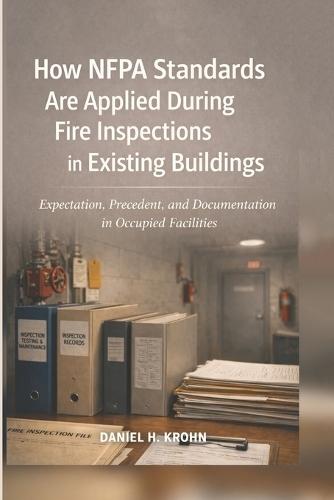
How NFPA Standards Are Applied During Fire Inspections in Existing Buildings examines how NFPA standards actually function inside real fire inspection environments. In occupied, existing buildings, standards are rarely applied by reading text line by line. Instead, they are enforced through inspection memory, precedent, documentation, visibility, and accumulated expectations shaped by prior inspections and building history. This book focuses on how NFPA standards are applied in practice during fire inspections, not on what the standards say or how they are written. It explains why enforcement often feels inconsistent from one inspection to the next, why the same issues continue to reappear even after corrective work, and why inspection outcomes nevertheless become predictable over time. The discussion is grounded in real inspection conditions, legacy systems, and the operational realities faced by building owners, facility managers, and fire protection professionals. Written from an inspection-aware, field-oriented perspective, this book does not provide code commentary, clause-by-clause explanations, or compliance checklists. It avoids legal interpretation and jurisdiction-specific guidance. Instead, it examines inspection behavior and decision logic to help professionals understand how NFPA standards are commonly applied and enforced in existing buildings. This volume is part of the Inspection Realities in Existing Buildings series, which explores how fire protection and life safety requirements are evaluated, enforced, and experienced in real, occupied facilities rather than idealized design conditions. This book addresses: How NFPA standards are applied during fire inspections even when the standard itself is never consulted Why prior inspection history shapes current NFPA enforcement expectations How inspection reports, ITM records, and documentation function as informal standard references Why legacy systems are often evaluated against modern expectations without clear upgrade triggers How visibility, access, labeling, and physical condition influence NFPA-based inspection findings How multiple NFPA standards blend together during inspections rather than being enforced in isolation Why enforcement can feel inconsistent while still following recognizable and repeatable patterns This book is intended for facility managers, building owners, property managers, fire protection professionals, and engineers responsible for inspection outcomes in existing buildings. It is not a code handbook, not a substitute for NFPA publications, and not a compliance checklist. Its purpose is to help readers anticipate inspection behavior, reduce repeat deficiencies, and manage fire protection compliance more effectively by understanding how NFPA standards are actually applied during inspections.
Full Product Details
Author: Daniel H Krohn
Publisher: Independently Published
Imprint: Independently Published
Volume: 3
Dimensions:
Width: 15.20cm
, Height: 1.20cm
, Length: 22.90cm
Weight: 0.304kg
ISBN: 9798244605662
Pages: 224
Publication Date: 19 January 2026
Audience:
General/trade
,
General
Format: Paperback
Publisher's Status: Active
Availability: Available To Order

We have confirmation that this item is in stock with the supplier. It will be ordered in for you and dispatched immediately.