|
|
|||
|
||||
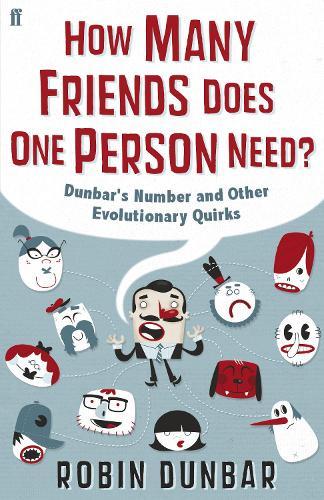
OverviewWhy do men talk, women gossip, and which is better for you? When is it good to be tall and why is monogamy a drain on the brain? And why should you suspect someone who has more than 150 friends on Facebook? We are the product of our evolutionary history and this history colours our everyday lives - from why we kiss to how religious we are. In How Many Friends Does One Person Need? Robin Dunbar explains how the distant past underpins our current behaviour, through the groundbreaking experiments that have changed the thinking of evolutionary biologists forever. He explains phenomena such as why 'Dunbar's Number' (150) is the maximum number of acquaintances you can have, why all babies are born premature and the science behind lonely hearts columns. Stimulating, provocative and highly enjoyable, this fascinating book is essential for understanding why humans behave as they do - what it is to be human. Full Product DetailsAuthor: Professor Robin DunbarPublisher: Faber & Faber Imprint: Faber & Faber Edition: Main Dimensions: Width: 13.40cm , Height: 2.80cm , Length: 20.50cm Weight: 0.384kg ISBN: 9780571253425ISBN 10: 0571253423 Pages: 320 Publication Date: 04 February 2010 Audience: General/trade , General Format: Hardback Publisher's Status: Active Availability: To order Stock availability from the supplier is unknown. We will order it for you and ship this item to you once it is received by us. Table of ContentsReviewsAuthor InformationRobin Dunbar is currently Professor of Evolutionary Anthropology at Oxford and a Fellow of Magdalen College. His principal research interest is the evolution of sociality. He was elected a Fellow of the British Academy in 1998. His books include The Trouble with Science (1995), 'an eloquent riposte to the anti-science lobby' (Sunday Times), and Grooming, Gossip and the Evolution of Language, praised as 'brilliantly original' and 'a delight to read' (Focus). His most recent book, The Human Story, (2004), was described as 'fizzing with recent research and new theories' in the Sunday Times and 'punchy and provocative' by the New Scientist. Tab Content 6Author Website:Countries AvailableAll regions |
||||