Overview
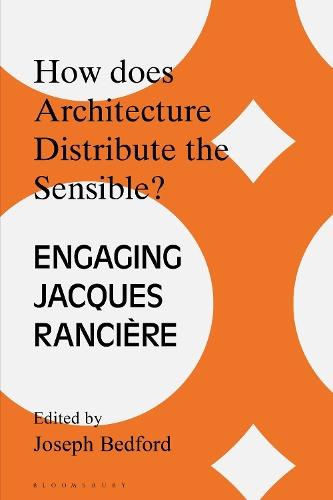
Jacques Rancière is one of the leading thinkers not only of contemporary aesthetic theory but contemporary philosophy in general. After his break from Althusser, Rancière developed the radical and axiomatic principal of the absolute equality of intelligences and capacities that defined his entire body of work, from his critique of philosophy, to his historical studies of emancipated modes of labor and education, to the articulation of dissensus from the order of the police. Rancière’s trajectory as a philosopher led him towards aesthetics where offered a radical reinterpretation of the political meaning of aesthetics and with it, of modernism and postmodernism that, having shaken the world of art, is now shaking the world of architecture. This book brings Jacques Rancière’s demand for equality and his reformulation of aesthetics into direct dialogue with architecture. In doing so, it inquires into the role that architecture plays in distributing the sensible, in creating aesthetic experiences, in creating order or dissensus, in serving as a mode of critique, and in emancipating or stultifying its users and subjects. Through this detailed exchange between Rancière and four of the world’s leading architectural thinkers; Anthony Vidler, Joan Ockman, Peggy Deamer and Michael Young, a debate unfolds within the book that tests the implications of Rancière’s aesthetic philosophy for architectural practice today; questioning the way we write architectural history, how architects draw, what the labor of the architect is, and that questions key architectural ideas such as the distribution, function, use, ornament, discipline and design.
Full Product Details
Author: Joseph Bedford (Virginia Tech University, USA)
Publisher: Bloomsbury Publishing PLC
Imprint: Bloomsbury Academic
Dimensions:
Width: 16.00cm
, Height: 1.80cm
, Length: 23.60cm
Weight: 0.460kg
ISBN: 9781350342804
ISBN 10: 1350342807
Pages: 208
Publication Date: 11 December 2025
Audience:
Professional and scholarly
,
Professional & Vocational
Format: Hardback
Publisher's Status: Active
Availability: Manufactured on demand

We will order this item for you from a manufactured on demand supplier.
Reviews
The Architecture Exchange has found a unique means to expand and advance architectural thinking and plumb the possibilities that lie between theory and architecture. Rather than simply transcribing conference presentations, How Does Architecture Distribute the Sensible? models real exchange (fittingly enough) among the collection’s participants. Each entry has been workshopped, in person and by email, by the group, giving a depth to the texts that transforms this from a book to a robust seminar on Rancière’s relevance to architecture. * Sarah Whiting, Dean of the Harvard Graduate School of Design, and Josep Lluís Sert Professor of Architecture *
Author Information
Joseph Bedford is Assistant Professor of History and Theory at Virginia Tech. He holds a PhD from Princeton University, degrees from Cambridge University and the Cooper Union, and is the founding editor of Attention: The Audio Journal for Architecture and the Architecture Exchange, a platform for theoretical exchange in architecture. Jacques Rancière is a professor of philosophy at The European Graduate School, professor emeritus at the Université de Paris, VIII, and one of the more significant and influential philosophers of our time. He is the author of: The Ignorant Schoolmaster: Five Lessons in Intellectual Emancipation (1987) The Nights of Labor: The Workers’ Dream in Nineteenth-Century France (1989); Disagreement: Politics and Philosophy (1998); The Politics of Aesthetics (2004); The Future of the Image (2007); The Emancipated Spectator (2010); Dissensus: On Politics and Aesthetics (2010); Aisthesis: Scenes from the Aesthetic Regime of Art (2013).