Overview
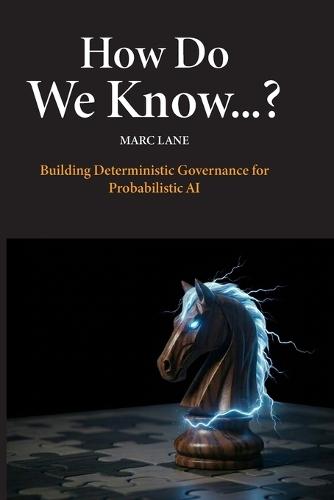
AI is already making decisions inside modern organizations. The real question is: can those decisions be trusted and proven? Across industries, companies are deploying enterprise AI systems, autonomous agents, and large language models to accelerate work, analyze data, and automate complex decisions. But as AI adoption grows, a critical problem is becoming impossible to ignore: governance. Most organizations rely on guardrails, monitoring tools, and output filters to manage AI risk. These tools help reduce harmful outputs, but they do not solve the deeper problem of AI governance. They evaluate results after the fact. They do not govern the reasoning process that produced them. In regulated industries such as finance, healthcare, pharmaceuticals, insurance, and defense, this creates a dangerous gap between AI capability and AI compliance. When regulators, auditors, or internal risk teams ask how an AI system reached a decision, most organizations cannot answer. They have outputs. They have logs. But they do not have a defensible decision record. This book examines the growing governance gap in modern AI systems and introduces a new architectural approach for responsible AI and regulated AI deployment. Inside, you'll learn: - Why traditional AI guardrails and safety layers fail in regulated environments - The hidden AI compliance tax organizations pay when systems cannot document their reasoning - Why major AI platforms cannot fully solve enterprise governance from outside the model - How enterprise AI governance architectures must operate inside the reasoning process itself - The design of a governed execution kernel, a runtime architecture that generates a complete decision trail for every AI determination Instead of reviewing AI outputs after they are produced, governed systems embed AI governance, AI risk management, and AI compliance controls directly into the reasoning pathway. Every decision is evaluated against active constraints, human oversight thresholds, and policy frameworks as it occurs. The result is enterprise AI that can operate safely in regulated environments while producing the audit trails regulators and compliance teams require. For leaders working in AI governance, responsible AI, enterprise AI architecture, AI compliance, and AI risk management, this book offers a practical framework for building AI systems that organizations can actually trust. The future of enterprise AI will not be defined only by model capability. It will be defined by whether those systems can prove how their decisions were made.
Full Product Details
Author: Marc Lane
Publisher: Independently Published
Imprint: Independently Published
Dimensions:
Width: 15.20cm
, Height: 0.80cm
, Length: 22.90cm
Weight: 0.213kg
ISBN: 9798252022734
Pages: 154
Publication Date: 14 March 2026
Audience:
General/trade
,
General
Format: Paperback
Publisher's Status: Active
Availability: Available To Order

We have confirmation that this item is in stock with the supplier. It will be ordered in for you and dispatched immediately.