Overview
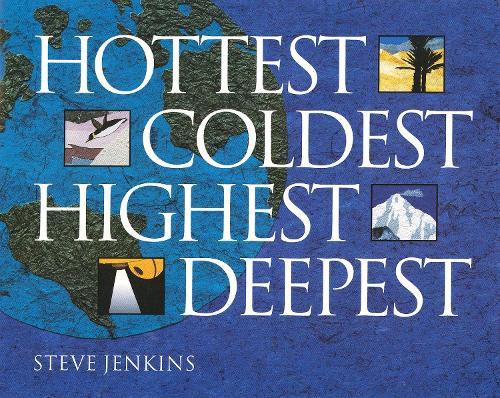
Climb the tallest mountain, dive into the deepest lake, and navigate the longest river in Steve Jenkins' stunning new book that explores the wonders of the natural world.With his striking cut paper collages, Jenkins majestically captures the grand sense of scale, perspective and awe that only mother earth can inspire.
Full Product Details
Author: Steve Jenkins
Publisher: Cengage Learning, Inc
Imprint: Houghton Mifflin
Dimensions:
Width: 25.40cm
, Height: 0.30cm
, Length: 20.30cm
Weight: 0.122kg
ISBN: 9780618494880
ISBN 10: 061849488
Pages: 32
Publication Date: 01 November 2004
Recommended Age: From 4 to 7 years
Audience:
Children/juvenile
,
Children / Juvenile
Format: Paperback
Publisher's Status: Active
Availability: In Print

This item will be ordered in for you from one of our suppliers. Upon receipt, we will promptly dispatch it out to you. For in store availability, please contact us.
Reviews
In this world record book of natural history, Jenkins identifies and describes places such as the planet's deepest lake, highest mountain, most active volcano, the most extreme tides, and the places designated the hottest, the coldest, the wettest, the driest, and the windiest on Earth. Each spread features a distinctive collage of cut-and-torn papers, which vary in texture and hue. Silhouetted forms provide dramatic focal points in the compositions. Each spread includes a couple of lines of text, supplemented with more information in smaller type and inset maps and diagrams that help the reader visualize just how high, deep, or wet the subject is in comparison with others of its kind. Highly effective visual education for the classroom of for young browsers intrigued by superlatives. Booklist, ALA Once again, Jenkins provides jaw-dropping facts and extremely elegant paper collages to illustrate the amazing natural world. Readers are introduced to the deepest ocean trench, the highest mountain (in terms of elevation) and the tallest (from foot to summit), the longest river, the hottest patch, the coldest, the most active volcanoes, the most extreme tides. The lyric beauty and sense Jenkins brings to his collages manifest a sense of place. Inset maps - global and regional - and measurement charts (often using humans and the Empire State Building for scale) allow these extremes to make geographical and quantitative sense. Kirkus Reviews As in Biggest, Strongest, Fastest, Jenkins once again uses striking colorful paper collage illustrations to explore a topic. Here, he delves into the greatly varied marvels of the world. . . . Interesting charts help put sizes into perspective. . . . These visuals give young readers a full understanding of how amazing these natural wonders are. Each spread includes a map that shows where these places are located. Browsers will pick up this delightful picture book and read it through completely. This eye-catching introduction to geography will find a lot of use in libraries and classrooms. School Library Journal
In this world record book of natural history, Jenkins identifies and describes places such as the planet's deepest lake, highest mountain, most active volcano, the most extreme tides, and the places designated the hottest, the coldest, the wettest, the driest, and the windiest on Earth. Each spread features a distinctive collage of cut-and-torn papers, which vary in texture and hue. Silhouetted forms provide dramatic focal points in the compositions. Each spread includes a couple of lines of text, supplemented with more information in smaller type and inset maps and diagrams that help the reader visualize just how high, deep, or wet the subject is in comparison with others of its kind. Highly effective visual education for the classroom of for young browsers intrigued by superlatives. Booklist, ALA Once again, Jenkins provides jaw-dropping facts and extremely elegant paper collages to illustrate the amazing natural world. Readers are introduced to the deepest ocean trench, the highest mountain (in terms of elevation) and the tallest (from foot to summit), the longest river, the hottest patch, the coldest, the most active volcanoes, the most extreme tides. The lyric beauty and sense Jenkins brings to his collages manifest a sense of place. Inset maps - global and regional - and measurement charts (often using humans and the Empire State Building for scale) allow these extremes to make geographical and quantitative sense. Kirkus Reviews As in Biggest, Strongest, Fastest, Jenkins once again uses striking colorful paper collage illustrations to explore a topic. Here, he delves into the greatly varied marvels of the world. . . . Interesting charts help put sizes into perspective. . . . These visuals give young readers a full understanding of how amazing these natural wonders are. Each spread includes a map that shows where these places are located. Browsers will pick up this delightful picture book and read it through completely. This eye-catching introduction to geography will find a lot of use in libraries and classrooms. School Library Journal --
In this world record book of natural history, Jenkins identifies and describes places such as the planet's deepest lake, highest mountain, most active volcano, the most extreme tides, and the places designated the hottest, the coldest, the wettest, the driest, and the windiest on Earth. Each spread features a distinctive collage of cut-and-torn papers, which vary in texture and hue. Silhouetted forms provide dramatic focal points in the compositions. Each spread includes a couple of lines of text, supplemented with more information in smaller type and inset maps and diagrams that help the reader visualize just how high, deep, or wet the subject is in comparison with others of its kind. Highly effective visual education for the classroom of for young browsers intrigued by superlatives. Booklist, ALA Once again, Jenkins provides jaw-dropping facts and extremely elegant paper collages to illustrate the amazing natural world. Readers are introduced to the deepest ocean trench, the highest mountain (in terms of elevation) and the tallest (from foot to summit), the longest river, the hottest patch, the coldest, the most active volcanoes, the most extreme tides. The lyric beauty and sense Jenkins brings to his collages manifest a sense of place. Inset maps - global and regional - and measurement charts (often using humans and the Empire State Building for scale) allow these extremes to make geographical and quantitative sense. Kirkus Reviews As in Biggest, Strongest, Fastest, Jenkins once again uses striking colorful paper collage illustrations to explore a topic. Here, he delves into the greatly varied marvels of the world. . . . Interesting charts help put sizes into perspective. . . . These visuals give young readers a full understanding of how amazing these natural wonders are. Each spread includes a map that shows where these places are located. Browsers will pick up this delightful picture book and read it through completely. This eye-catching introduction to geography will find a lot of use in libraries and classrooms. School Library Journal--No Source
In this world record book of natural history, Jenkins identifies and describes places such as the planet's deepest lake, highest mountain, most active volcano, the most extreme tides, and the places designated the hottest, the coldest, the wettest, the driest, and the windiest on Earth. Each spread features a distinctive collage of cut-and-torn papers, which vary in texture and hue. Silhouetted forms provide dramatic focal points in the compositions. Each spread includes a couple of lines of text, supplemented with more information in smaller type and inset maps and diagrams that help the reader visualize just how high, deep, or wet the subject is in comparison with others of its kind. Highly effective visual education for the classroom of for young browsers intrigued by superlatives. Booklist, ALA Once again, Jenkins provides jaw-dropping facts and extremely elegant paper collages to illustrate the amazing natural world. Readers are introduced to the deepest ocean trench, the highest mountain (in terms of elevation) and the tallest (from foot to summit), the longest river, the hottest patch, the coldest, the most active volcanoes, the most extreme tides. The lyric beauty and sense Jenkins brings to his collages manifest a sense of place. Inset maps - global and regional - and measurement charts (often using humans and the Empire State Building for scale) allow these extremes to make geographical and quantitative sense. Kirkus Reviews As in Biggest, Strongest, Fastest, Jenkins once again uses striking colorful paper collage illustrations to explore a topic. Here, he delves into the greatly varied marvels of the world. . . . Interesting charts help put sizes into perspective. . . . These visuals give young readers a full understanding of how amazing these natural wonders are. Each spread includes a map that shows where these places are located. Browsers will pick up this delightful picture book and read it through completely. This eye-catching introduction to geography will find a lot of use in libraries and classrooms. School Library Journal
Author Information
Steve Jenkins wrote and illustrated many nonfiction picture books for young readers, including the Caldecott Honor Book What Do You Do with a Tail Like This? His books have been called stunning, eye-popping, inventive, gorgeous, masterful, extraordinary, playful, irresistible, compelling, engaging, accessible, glorious, and informative. Steve Jenkins wrote and illustrated many nonfiction picture books for young readers, including the Caldecott Honor Book What Do You Do with a Tail Like This? His books have been called stunning, eye-popping, inventive, gorgeous, masterful, extraordinary, playful, irresistible, compelling, engaging, accessible, glorious, and informative.