Overview
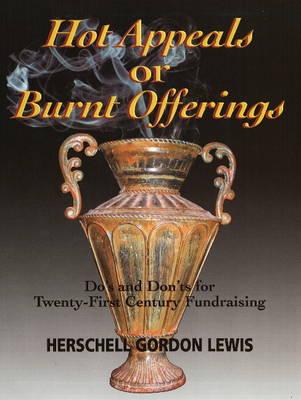
This is a deep-into-twenty-first century book, giving guidance to weathering the deep-into-twenty-first century not-for-profit climate. So yours is a 501(c)(3) and theirs isn't? Do your best donors and potential donors regard that facet as attention-getting and relevant? Probably not. Technical details don't provide much persuasive power in this new world. For those many newcomers to our ranks who believe the medium (especially email) is the message, this book could be their salvation their map out of the factoid wilderness. For the rest of us, this book will remind us not only to recognise that we're competing (for many, an unwelcome intrusion), but also to see the many options available to us, some classic and some new, and give guidance to successfully using all of them. It's a new world and with it a radically difference fundraising ambience from that of the kinder, gentler 1980s and 1990s. That world was certainly competitive; but the competition didn't include the World Wide Web and a welter of other forces some positive, others sinister competing for and weighing down on your loyal patrons. In this world of instant world-wide communication, the local library competes with the local symphony orchestra ...which competes with the local hospital, which competes with national hospitals ...which in turn compete with...There also is the greater ability to target actual donors and potential donors. Add to this is another reality that hasn't changed: Donors have a finite amount of money -- approximately the same amount as in the pre-Internet, pre-World Wide Web days -- to contribute to all causes. Two words are operative here. First is Attention, because our best potential donors are the ones whose attention is most in play. They're the ones whose e-mail boxes are the most crowded. They're the ones most likely to be jaded by constant We need help messages from every competitor, whether library, orchestra, college, hospital, or major cause. And theirs is the attention most likely to be fragmented. The second operative word is Relevance. Those others out there, they aren't as relevant as we are. They don't offer as much personal recognition, which in turn means they don't offer as much personal satisfaction. So we go for emotional relevance.
Full Product Details
Author: Herschell Gordon Lewis
Publisher: Racom Communications
Imprint: Racom Communications
Dimensions:
Width: 28.00cm
, Height: 1.00cm
, Length: 21.50cm
Weight: 0.414kg
ISBN: 9781933199078
ISBN 10: 1933199075
Pages: 152
Publication Date: 01 October 2008
Audience:
Professional and scholarly
,
Professional & Vocational
Format: Paperback
Publisher's Status: Active
Availability: Out of stock

The supplier is temporarily out of stock of this item. It will be ordered for you on backorder and shipped when it becomes available.
Author Information
Herschell Gordon Lewis is one of the leading copywriters of the past half-century and perhaps the best-known direct response copywriter and consultant in the U.S. Lewis also writes for many trade publications, including Direct, Selling, 1 to 1, Direct Marketing News, and is the copy columnist for Multichannnel Merchant. For 200 consecutive issues he wrote the monthly feature Creative Strategies for Direct Marketing Magazine. He also writes Copy Class for the UK publication Direct Marketing International, and catalog critiques for the UK publication Catalogue & eBusiness. Lewis is a much-sought-after speaker and has addressed advertising and marketing audiences around the world. For years Mr. Lewis conducted the copy workshop at the International Direct Marketing Symposium, Montreux, Switzerland and has been a featured speaker for more thant 20 years at the Direct Markeitng association. In 2003 he was inducted into the Direct Marketing Hall of Fame.