Overview
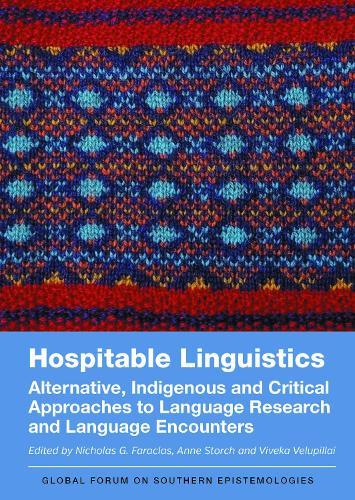
Challenging the boundaries of linguistics as a field, and transgressing the limitations of genre in writing about language, this book explores the possibilities of what the authors call a ‘hospitable linguistics’. It offers a critical discussion of how linguistics endeavors to domesticate, subdue and integrate both people and languages into existing academic structures and theories, and how as a discipline academic linguistics has barely begun to move beyond its colonial, patriarchal and conservative foundations. In this book, leading figures in their fields reflect on their own and others’ practices and experiences in three key areas: the agency and power of refugees and migrants; Indigenous people’s (in)hospitable responses to strangers; and hospitable language as expressed through art, music and artefacts. As a whole, the book represents a crucial intervention in attempts to fashion a new, more integrative, responsible and respectful linguistics that makes way for the ideas of people who are often the object of study.
Full Product Details
Author: Nicholas G. Faraclas ,
Anne Storch ,
Viveka Velupillai
Publisher: Multilingual Matters
Imprint: Multilingual Matters
Dimensions:
Width: 17.40cm
, Height: 2.10cm
, Length: 24.50cm
Weight: 0.810kg
ISBN: 9781788929875
ISBN 10: 178892987
Pages: 344
Publication Date: 19 March 2025
Audience:
College/higher education
,
Postgraduate, Research & Scholarly
Format: Hardback
Publisher's Status: Active
Availability: In Print

This item will be ordered in for you from one of our suppliers. Upon receipt, we will promptly dispatch it out to you. For in store availability, please contact us.
Reviews
This is a wonderful volume that examines how mother tongues can articulate resistance to colonial sovereignty. This book contributes significantly to research around indigenous languages – keeping stories alive, telling the untold tales and highlighting the wrongs of colonialism. * Helen J. Balfour, Murdoch University, Australia * This volume is an urgent must-read for social-justice activists with interest in language and linguistics. Its multilingual approach to topics well beyond the conventional confines of linguistics contributes to the multidisciplinary foundation that's needed for truly inclusive research where Indigenous and marginalised voices have a say in discourses of decolonisation. * Michel DeGraff, Massachusetts Institute of Technology, USA * This rigorous publication invites the reader to consider that the boundaries created between disciplines and languages by the colonial order are artificial. The inclusive methodologies in each chapter and the transformative approach of the book in its entirety challenge us to reflect on new ways of understanding the study of language. * Juan Carlos Suárez Villegas, University of Seville, Spain *
Author Information
Nicholas G. Faraclas is Full Professor in Linguistics at the University of Puerto Rico. His research focuses on language and power, language and the colonial construction of race, gender and class, linguistic contact and hybridity, indigeneity and linguistic sovereignty, critical literacy and popular education, and the linguistic and cultural repertoires of the Afro-Atlantic and Melanesia. Anne Storch is Full Professor in Afrikanistik / African Linguistics at the University of Cologne, Germany. Her research focuses on linguistic manipulation and marginalized languages, linguistic typology, colonial linguistics and anthropological linguistics. Viveka Velupillai is an Honorary Professor in the Department of English at the University of Giessen, Germany and Visiting Professor at the Language Sciences Institute, University of the Highlands and Islands, Scotland. Her research focuses on linguistic typology, language contact and historical linguistics, Creoles and marginalized languages.