|
|
|||
|
||||
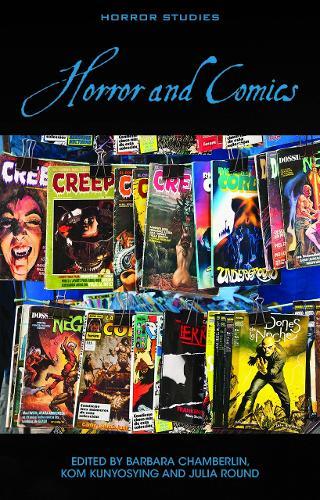
OverviewThis collection investigates the evolution of comics and horror by analysing a range of approaches and traditions. International contributors explore how multiple aspects of comics (forms, cultures, histories) have contributed to the depiction and development of horror across many subgenres (folk horror, ecohorror, gothic romance and more); their chapters also show how horror has informed the development of comics across multiple periods, places and genres, from seventeenth-century broadsheets to newspaper strips, weeklies and contemporary graphic novels, spanning Brazil, Germany, Italy, Japan, UK and USA. By considering well-known horror comics alongside understudied ones, this book re-examines and re-energises established concepts, such as the abject, the Other and closure, applying them to diverse texts, contexts, authors and audiences, and demonstrating the potential of comics and horror to encourage innovations of form and content in each other. Full Product DetailsAuthor: Barbara Chamberlin , Kom Kunyosying , Julia RoundPublisher: University of Wales Press Imprint: University of Wales Press Weight: 0.454kg ISBN: 9781837722556ISBN 10: 1837722552 Pages: 296 Publication Date: 15 April 2025 Audience: College/higher education , Postgraduate, Research & Scholarly Format: Hardback Publisher's Status: Active Availability: Temporarily unavailable The supplier advises that this item is temporarily unavailable. It will be ordered for you and placed on backorder. Once it does come back in stock, we will ship it out to you. Table of ContentsList of Illustrations and Captions Notes on Contributors Introduction – Barbara Chamberlin, Kom Kunyosying, and Julia Round PART ONE: Crossing Genres, Blurring Boundaries Multimodal Mirroring in ‘The Black Cat’ – Elizabeth Allyn Woock Satanic Feminism and Decadent Aesthetics in Guido Crepax’s ‘Valentina’ Comics – Miranda Corcoran The Living, the Dead and the Living Dead: Brazilian Horror Imagery and Genre Hybridisation in Shiko‘s Três Buracos – Tiago José Lemos I Monteiro and Heitor Da Luz Silva Befriending the Past: The Genre-Bending Vanessa Comics Series (1982–1990) and its Historical Context – Barbara M. Eggert PART TWO: Identity, Agency, Humanity ‘I’m not who he thinks I am’: Identity and Victimhood in Country Horror Comics – Matthew Costello ‘What’s one more monster?’: Articulations of Latinx Monstrosity and Whiteness in Border Town – Anna Marta Marini ‘Still pretty, ain’t she?’: The Female Gaze and the Queer Monstrous Feminine in Itō Junji’s Tomie – Keiko Miyajima Sinister Houses and Forbidden Loves: Queer Identity in DC’s Gothic Romances – Lillian Hochwender PART THREE: Society, Anxiety, Politics Abjection, Ambivalence and the Abyss in EC’s New Trend Line – Alex Link The Power of a Demon and the Heart of a Human: The Darkness of Humanity in Devilman – Meriel Dhanowa Where the Wild Things Really Are: Comics and the Horrors of Reality – Dirk Vanderbeke and Doreen Triebel ‘REALITY scarier than any boogeyman’: Shock, Exploitation, and Environmentalism in Slow Death Funnies – Christy Tidwell Afterwords – Barbara Chamberlin, Kom Kunyosying, and Julia RoundReviewsAuthor InformationBarbara Chamberlin is Senior Lecturer at the University of Brighton. She has published on comics and horror, folklore, and walking as creative practice. Kom Kunyosying is an independent scholar who studies visual and iconic representations of ethnicity. He has published on horror, ecology, geek culture, and the hillbilly in comics and other media. Julia Round is an Associate Professor at Bournemouth University. She has published over fifty academic works on horror, comics and children's literature, including the award-winning monograph Gothic for Girls (2019). Tab Content 6Author Website:Countries AvailableAll regions |
||||