Full Product Details
Author: Scott MacMillan
Publisher: Bloomsbury Publishing Plc
Imprint: Rowman & Littlefield
Dimensions:
Width: 15.80cm
, Height: 3.40cm
, Length: 23.20cm
Weight: 0.540kg
ISBN: 9781538164921
ISBN 10: 1538164922
Pages: 328
Publication Date: 01 August 2022
Audience:
General/trade
,
General
Format: Hardback
Publisher's Status: Active
Availability: To order

Stock availability from the supplier is unknown. We will order it for you and ship this item to you once it is received by us.
Reviews
Abed was an extraordinary man who built one of the largest and most effective anti-poverty organisations in the world. He did this with humility, attention to rigour and evidence, and a relentless pursuit of the innovation and scale needed to be truly transformative. This book tells his remarkable story and provides important lessons to all those who care about development.--Minouche Shafik, director of London School of Economics and author of What We Owe Each Other: A New Social Contract Abed was one of the foremost leaders of thought as well as action of our time. Not only did he transform Bangladesh, and indeed a lot of the world, by his radical initiatives, he proceeded to his actions through identifying what our deprived world needed, using remarkably penetrating analysis and social scrutiny. An astonishing combination of clear-headed thinking and sure-footed execution made Abed the great leader that he was. We have had very few like him in the history of the world.--Amartya Sen, Nobel Prize Laureate in Economics Are you a wonk, keen to know how the worldrsquo;s largest nonprofit came to be (while maintaining a fairly low profile) and how they use evidence and business savvy to deliver effective, scaled programs around the world? Or are you keen to understand the human stories behind the scenes of one of the best but untold stories of fighting poverty one household at a time? Either way, this book will grab you, as it follows the story of the unsung hero Fazle Hasan Abed and the path to scale for fighting poverty.--Dean Karlan, professor of economics and finance at Northwestern University and founder of Innovations for Poverty Action BRAC tackles the causes of poverty, hunger and hopelessness at the root and plants trees of hope.--Wangari Maathai, Nobel Peace Prize winner Hope Over Fate is the inspiring story of a brilliant, self-effacing man, the incredible organization he created, and the largest, most successful poverty eradication effort in history. Scott MacMillan unpacks the building blocks in the life and work of Fazle Hasan Abed, a remarkable man whose name and incredible achievements are worthy not just of the honours he received, but of careful study by anyone involved in the work of ending poverty.--Ian Smillie, author of Freedom from Want How often do we see people like Sir Fazle Hasan Abed? His absence has left a great sense of loss in all of us--Abhijit Banerjee and Esther Duflo Yunus, Nobel Prize Laureates in Economics and authors of Poor Economics I can think of few people who have done so much for humanity as Abed. He was a friend and someone I deeply admired and learned from: While US aid efforts in Afghanistan often flopped, his succeeded.--Nicholas Kristof, New York Times If you aspire to be a great changemaker or even social entrepreneur, this book is for you. Scott MacMillan brings us a living Fazle Abed, one of the first and absolutely most creative, pattern-changing entrepreneurs for the good of the last hundred years.--Bill Drayton, founder and CEO, Ashoka In 1972, after Bangladeshrsquo;s war of liberation had left many homeless, Fazle Abed left his job as a London oil executive and returned to his home country with pound;16,000 in his pocket mdash; and the ambitious goal of building 10,400 houses. He ended up raising enough money to build 16,000 houses for some of the poorest people in Bangladesh and still had enough left over to start his next project. Thatrsquo;s who Sir Fazle was as a humanitarian, and thatrsquo;s what he helped us learn about development work: How to build a big, efficient organization, while never forgetting who you were doing it for.--Bill and Melinda French Gates It is certainly not an exaggeration to say that there is hardly anyone among the 170 million people of Bangladesh who do not benefit in some way from Abedrsquo;s programs or enjoy products and services provided by his organizations. hellip; Abed has changed the concept of NGOs all over the world. The idea that an NGO could come forward to provide a comprehensive solution to almost all the problems in a country was absolutely unthinkable.--Muhammad Yunus, Nobel Peace Prize winner It is impossible to overstate the contributions of Sir Fazle to the work of poverty alleviation and development both in his native Bangladesh and around the world.--Stavros N. Yiannouka, CEO of the World Innovation Summit for Education MacMillan will move readers with this biography of Fazle Hassan Abed and BRAC, the charitable action organization originally known as the Bangladesh Rehabilitation Assistance Committee, which Abed founded. As an accountant with a love of language and the arts, Abed became a revolutionary philanthropist after seeing the devastation in the newly formed Bangladesh. Abed, who died in 2019, assisted hundreds of thousands of people through BRAC, eventually expanding the charity to provide aid to a dozen countries in Africa and Asia. MacMillan, an executive with BRAC USA and former speechwriter for Abed, elegantly weaves the inspiring story of BRAC with the tragedy of Abedrsquo;s personal struggles, creating a compelling picture of a complicated man. Abedrsquo;s story is undoubtedly an uplifting one, and the author clearly idolizes his subject, which, combined with his talented writing, offers much hope to be found here.-- ""Booklist"" Over the course of three decades, under Sir Fazlersquo;s inspiring leadership, the humanitarian organization he founded, BRAC, has become one of the worldrsquo;s leading development organizations. From its humble beginnings in Bangladesh ndash; the country he loved so well ndash; to its expansion to 10 countries across Asia and Africa, BRAC has stood as an inspiring example of how we can gather people together in common cause to improve the lives of the most vulnerable.--Henrietta Fore, executive director, UNICEF Sir Fazle made an essential contribution to the single greatest period of poverty reduction in human history. He was an inspiration to so many, especially the millions of women and girls who have been empowered through BRAC.--Ambassador Kenneth M. Quinn, former president of the World Food Prize Foundation Sir Fazle was an extraordinary person and he created an institution which mirrors his vision, commitment, and values.--Kevin Watkins, former chief executive of Save the Children UK Sir Fazle Abed was a true hero of modern humanity. He proved that even the most complicated and complex of environments can be systemically changed through effective leadership, innovation, perseverance, and courage. He showed the power of belief in children to change their life trajectory when given the right education, tools, and support. Through this book we can hope that many others will be inspired to walk in his footsteps of a lifelong commitment to helping others reach their full potential.--John Goodwin, former CEO, Lego Foundation Sir Fazle Abedrsquo;s life was a great gift to humanity. His nearly 50 years of visionary leadership at BRAC transformed millions of lives in Bangladesh and beyond, and changed the way the world thinks about development. Driven by an unwavering belief in the inherent dignity of all people, he empowered those in extreme poverty to build better futures for themselves and their families.--President Bill Clinton Sir Fazlersquo;s contributions to poverty alleviation and sustainable development in Bangladesh and around the world are sources of great inspiration for the United Nations. Sir Fazlersquo;s vision became BRACrsquo;s vision: A world free from all forms of exploitation and discrimination. He was a strong advocate for women, and through BRAC, he designed development models that placed women at the centre. Sir Fazle also understood that opportunity starts through education, and developed an education model that has been replicated around the globe.--António Guterres, Secretary-General of the United Nations The scale and impact of what [Abed] has done, and yet the utter humility with which he has done everything, is a lesson for every single one of us.--Jim Yong Kim, former World Bank president This inspirational account credits Fazle Hasan Abed (1936ndash;2019) and his Bangladesh Rehabilitation Assistance Committee, now called BRAC, with helping to ldquo;upend the traditions of misery and poverty in Bangladesh.rdquo; MacMillan, a director at BRAC USA, traces the organizationrsquo;s roots to 1970, when Abed, then working as the finance executive at Shell Pakistan, witnessed the devastation a cyclone brought to his native Bangladesh (then known as East Pakistan). At the time of its independence in 1971, Bangladesh was the second poorest nation in the world. ldquo;One in four children died before their fifth birthday, rdquo; MacMillan notes, but by 2013, the under-five mortality had fallen to 4%. The turnaround came in large part thanks to BRACrsquo;s incentive-based training program, which taught mothers how to mix a home remedy of water, sugar, and salt to treat life-threatening diarrhea. Other BRAC initiatives, based on Abedrsquo;s business background and conviction that people need to feel ldquo;a sense of self-worth, rdquo; included microloans and the creation of small schools where children and adults were taught by someone from their own village.... This is a detailed study of how change happens.-- ""Publishers Weekly"" Through a lifetime of quiet persistence, Sir Fazle has changed the way the world thinks about poverty and development. The foundations of lasting peace include education, health, prosperity and justice; without these, the prospects for peace in this world remain distant. Sir Fazle has shown us a way forward. With anti-poverty innovations operated on a massive scale, BRAC has made immeasurable contributions to the on-going effort to eradicate extreme poverty from the face of the earth, while inspiring others to make a similar impact. Today, thanks in large part to Sir Fazle#39;s work in his native Bangladesh and elsewhere, the poor are no longer seen as passive victims of a poverty that is enduring and unchanging. Instead, they have become agents of change in their own lives, empowered to seize control of their destinies using an array of innovative tools.--Ellen Johnson Sirleaf, former president of Liberia and winner of the Nobel Peace Prize
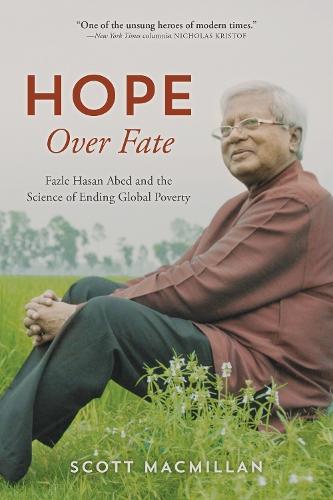
MacMillan will move readers with this biography of Fazle Hassan Abed and BRAC, the charitable action organization originally known as the Bangladesh Rehabilitation Assistance Committee, which Abed founded. As an accountant with a love of language and the arts, Abed became a revolutionary philanthropist after seeing the devastation in the newly formed Bangladesh. Abed, who died in 2019, assisted hundreds of thousands of people through BRAC, eventually expanding the charity to provide aid to a dozen countries in Africa and Asia. MacMillan, an executive with BRAC USA and former speechwriter for Abed, elegantly weaves the inspiring story of BRAC with the tragedy of Abed's personal struggles, creating a compelling picture of a complicated man. Abed's story is undoubtedly an uplifting one, and the author clearly idolizes his subject, which, combined with his talented writing, offers much hope to be found here.-- Booklist
Author Information
Scott MacMillan is the director of learning and innovation at BRAC USA, an affiliate organization of BRAC, where he has worked since 2011. A former journalist, he served as the speechwriter of Sir Fazle Hasan Abed, the founder of BRAC, prior to Abed’s death in 2019. He lives in Connecticut with his wife and daughter, along with a cat, dog, and four horses.