Overview
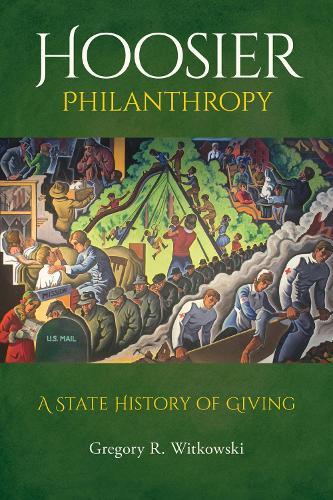
The first in-depth history of philanthropy in Indiana. Philanthropy has been central to the development of public life in Indiana over the past two centuries. Hoosier Philanthropy explores the role of philanthropy in the Hoosier state, showing how voluntary action within Indiana has created and supported multiple visions of societal good. Featuring 15 articles, Hoosier Philanthropy charts the influence of different types of nonprofit Hoosier organizations and people, including foundations, service providers, volunteers, and individual donors.
Full Product Details
Author: Gregory R. Witkowski ,
Clay Robbins ,
James H. Madison ,
David P. King
Publisher: Indiana University Press
Imprint: Indiana University Press
Weight: 0.680kg
ISBN: 9780253064141
ISBN 10: 0253064147
Pages: 500
Publication Date: 01 November 2022
Audience:
Professional and scholarly
,
Professional & Vocational
Format: Paperback
Publisher's Status: Active
Availability: To order

Stock availability from the supplier is unknown. We will order it for you and ship this item to you once it is received by us.
Reviews
""A book that examines the history of philanthropy in a single state is rare, but is a welcome addition to our field. This book has tremendously wide appeal to anyone interested in the history and practice of philanthropy, and its distinctive role in American society. The book also takes a notably expansive view of philanthropy, which further enlarges its usefulness for scholars and practitioners. Philanthropy here is more than just big donors and elite organizations. It is more than just the white-male-dominated, Main Street-booster crusades that we associate with traditional Midwestern charity stereotypes. Hoosier philanthropy, it turns out, is so much more than just that – as is philanthropy itself.""—Michael Moody, Frey Foundation Chair for Family Philanthropy, Dorothy A. Johnson Center for Philanthropy, Grand Valley State University ""Hoosier Philanthropy brings together an impressive group of scholars to examine an often-missing perspective in the literature by considering philanthropic giving in one U.S. state over a lengthy span of time, focusing on a range of philanthropic actors and sub-sectors. By analyzing two hundred years of giving in Indiana, it delivers a critical assessment of the historical, political, and social aspects of a phenomenon important to many regions of the U.S. and world, making it a valuable read for anyone interested in philanthropy and its influence on our lives and society.""—Angela M. Eikenberry, D. B. and Paula Varner Professor, University of Nebraska at Omaha ""Hoosier Philanthropy, a superb collection of in-depth case studies of the past 200 years of philanthropy in Indiana, fills a glaring gap in understanding how state-based philanthropy and civil society have evolved in the U.S. The studies illuminate the philanthropic accomplishments of families such as the Lilly family and individuals such as Madame C. J. Walker in fields as diverse as higher education, health care, religion, social services, civil rights, and community associations. The authors profile how, over time, philanthropists in Indiana built sustainable networks connecting public and private actors and institutions across the state, between Indiana and other states, as well as with the federal government and beyond to other countries. Hoosier Philanthropy is a must-read for scholars concerned with the distinctive history and practice of philanthropy at the state level and keen to undertake such histories in other states, for practitioners and policymakers eager to learn how to make a difference in civic life through public-private partnerships, and for non-specialists seeking to understand how individuals have worked together, today and in the past, to build vibrant communities and improve social and economic conditions.""—Patricia L. Rosenfield, author, A World of Giving: Carnegie Corporation of New York - A Century of International Philanthropy, member, Board of Directors Harry Frank Guggenheim Foundation ""Regional and community contexts help us see the pluralism of American philanthropy. Hoosier Philanthropy enriches and expands this perspective. The authors illuminate one state's diverse philanthropists, the networks and institutions they formed, the methods for government and private action they prescribed. Readers will welcome new insights about the focus, beneficiaries, and civic culture underpinning Indiana's unique philanthropic practice and history. The book's lessons reach beyond one state's borders, with stories that illustrate common threads and the enduring issues that still challenge philanthropists in every region today.""—Kathleen W. Buechel, Executive Director Benter Foundation and editor of A Gift of Belief, Philanthropy in the Forging of Pittsburgh
"""A book that examines the history of philanthropy in a single state is rare, but is a welcome addition to our field. This book has tremendously wide appeal to anyone interested in the history and practice of philanthropy, and its distinctive role in American society. The book also takes a notably expansive view of philanthropy, which further enlarges its usefulness for scholars and practitioners. Philanthropy here is more than just big donors and elite organizations. It is more than just the white-male-dominated, Main Street-booster crusades that we associate with traditional Midwestern charity stereotypes. Hoosier philanthropy, it turns out, is so much more than just that – as is philanthropy itself.""—Michael Moody, Frey Foundation Chair for Family Philanthropy, Dorothy A. Johnson Center for Philanthropy, Grand Valley State University ""Hoosier Philanthropy brings together an impressive group of scholars to examine an often-missing perspective in the literature by considering philanthropic giving in one U.S. state over a lengthy span of time, focusing on a range of philanthropic actors and sub-sectors. By analyzing two hundred years of giving in Indiana, it delivers a critical assessment of the historical, political, and social aspects of a phenomenon important to many regions of the U.S. and world, making it a valuable read for anyone interested in philanthropy and its influence on our lives and society.""—Angela M. Eikenberry, D. B. and Paula Varner Professor, University of Nebraska at Omaha ""Hoosier Philanthropy, a superb collection of in-depth case studies of the past 200 years of philanthropy in Indiana, fills a glaring gap in understanding how state-based philanthropy and civil society have evolved in the U.S. The studies illuminate the philanthropic accomplishments of families such as the Lilly family and individuals such as Madame C. J. Walker in fields as diverse as higher education, health care, religion, social services, civil rights, and community associations. The authors profile how, over time, philanthropists in Indiana built sustainable networks connecting public and private actors and institutions across the state, between Indiana and other states, as well as with the federal government and beyond to other countries. Hoosier Philanthropy is a must-read for scholars concerned with the distinctive history and practice of philanthropy at the state level and keen to undertake such histories in other states, for practitioners and policymakers eager to learn how to make a difference in civic life through public-private partnerships, and for non-specialists seeking to understand how individuals have worked together, today and in the past, to build vibrant communities and improve social and economic conditions.""—Patricia L. Rosenfield, author, A World of Giving: Carnegie Corporation of New York - A Century of International Philanthropy, member, Board of Directors Harry Frank Guggenheim Foundation ""Regional and community contexts help us see the pluralism of American philanthropy. Hoosier Philanthropy enriches and expands this perspective. The authors illuminate one state's diverse philanthropists, the networks and institutions they formed, the methods for government and private action they prescribed. Readers will welcome new insights about the focus, beneficiaries, and civic culture underpinning Indiana's unique philanthropic practice and history. The book's lessons reach beyond one state's borders, with stories that illustrate common threads and the enduring issues that still challenge philanthropists in every region today.""—Kathleen W. Buechel, Executive Director Benter Foundation and editor of A Gift of Belief, Philanthropy in the Forging of Pittsburgh"
A book that examines the history of philanthropy in a single state is rare, but is a welcome addition to our field. This book has tremendously wide appeal to anyone interested in the history and practice of philanthropy, and its distinctive role in American society. The book also takes a notably expansive view of philanthropy, which further enlarges its usefulness for scholars and practitioners. Philanthropy here is more than just big donors and elite organizations. It is more than just the white-male-dominated, Main Street-booster crusades that we associate with traditional Midwestern charity stereotypes. Hoosier philanthropy, it turns out, is so much more than just that - as is philanthropy itself. -Michael Moody, Frey Foundation Chair for Family Philanthropy, Dorothy A. Johnson Center for Philanthropy, Grand Valley State University Hoosier Philanthropy brings together an impressive group of scholars to examine an often-missing perspective in the literature by considering philanthropic giving in one U.S. state over a lengthy span of time, focusing on a range of philanthropic actors and sub-sectors. By analyzing two hundred years of giving in Indiana, it delivers a critical assessment of the historical, political, and social aspects of a phenomenon important to many regions of the U.S. and world, making it a valuable read for anyone interested in philanthropy and its influence on our lives and society. -Angela M. Eikenberry, D. B. and Paula Varner Professor, University of Nebraska at Omaha Hoosier Philanthropy, a superb collection of in-depth case studies of the past 200 years of philanthropy in Indiana, fills a glaring gap in understanding how state-based philanthropy and civil society have evolved in the U.S. The studies illuminate the philanthropic accomplishments of families such as the Lilly family and individuals such as Madame C. J. Walker in fields as diverse as higher education, health care, religion, social services, civil rights, and community associations. The authors profile how, over time, philanthropists in Indiana built sustainable networks connecting public and private actors and institutions across the state, between Indiana and other states, as well as with the federal government and beyond to other countries. Hoosier Philanthropy is a must-read for scholars concerned with the distinctive history and practice of philanthropy at the state level and keen to undertake such histories in other states, for practitioners and policymakers eager to learn how to make a difference in civic life through public-private partnerships, and for non-specialists seeking to understand how individuals have worked together, today and in the past, to build vibrant communities and improve social and economic conditions. -Patricia L. Rosenfield, author, A World of Giving: Carnegie Corporation of New York - A Century of International Philanthropy, member, Board of Directors Harry Frank Guggenheim Foundation Regional and community contexts help us see the pluralism of American philanthropy. Hoosier Philanthropy enriches and expands this perspective. The authors illuminate one state's diverse philanthropists, the networks and institutions they formed, the methods for government and private action they prescribed. Readers will welcome new insights about the focus, beneficiaries, and civic culture underpinning Indiana's unique philanthropic practice and history. The book's lessons reach beyond one state's borders, with stories that illustrate common threads and the enduring issues that still challenge philanthropists in every region today. -Kathleen W. Buechel, Executive Director Benter Foundation and editor of A Gift of Belief, Philanthropy in the Forging of Pittsburgh
A book that examines the history of philanthropy in a single state is rare, but is a welcome addition to our field. This book has tremendously wide appeal to anyone interested in the history and practice of philanthropy, and its distinctive role in American society. The book also takes a notably expansive view of philanthropy, which further enlarges its usefulness for scholars and practitioners. Philanthropy here is more than just big donors and elite organizations. It is more than just the white-male-dominated, Main Street-booster crusades that we associate with traditional Midwestern charity stereotypes. Hoosier philanthropy, it turns out, is so much more than just that - as is philanthropy itself.--Michael Moody, Frey Foundation Chair for Family Philanthropy, Dorothy A. Johnson Center for Philanthropy, Grand Valley State University Hoosier Philanthropy brings together an impressive group of scholars to examine an often-missing perspective in the literature by considering philanthropic giving in one U.S. state over a lengthy span of time, focusing on a range of philanthropic actors and sub-sectors. By analyzing two hundred years of giving in Indiana, it delivers a critical assessment of the historical, political, and social aspects of a phenomenon important to many regions of the U.S. and world, making it a valuable read for anyone interested in philanthropy and its influence on our lives and society.--Angela M. Eikenberry, D. B. and Paula Varner Professor, University of Nebraska at Omaha Hoosier Philanthropy, a superb collection of in-depth case studies of the past 200 years of philanthropy in Indiana, fills a glaring gap in understanding how state-based philanthropy and civil society have evolved in the U.S. The studies illuminate the philanthropic accomplishments of families such as the Lilly family and individuals such as Madame C. J. Walker in fields as diverse as higher education, health care, religion, social services, civil rights, and community associations. The authors profile how, over time, philanthropists in Indiana built sustainable networks connecting public and private actors and institutions across the state, between Indiana and other states, as well as with the federal government and beyond to other countries. Hoosier Philanthropy is a must-read for scholars concerned with the distinctive history and practice of philanthropy at the state level and keen to undertake such histories in other states, for practitioners and policymakers eager to learn how to make a difference in civic life through public-private partnerships, and for non-specialists seeking to understand how individuals have worked together, today and in the past, to build vibrant communities and improve social and economic conditions.--Patricia L. Rosenfield, author, A World of Giving: Carnegie Corporation of New York - A Century of International Philanthropy, member, Board of Directors Harry Frank Guggenheim Foundation Regional and community contexts help us see the pluralism of American philanthropy. Hoosier Philanthropy enriches and expands this perspective. The authors illuminate one state's diverse philanthropists, the networks and institutions they formed, the methods for government and private action they prescribed. Readers will welcome new insights about the focus, beneficiaries, and civic culture underpinning Indiana's unique philanthropic practice and history. The book's lessons reach beyond one state's borders, with stories that illustrate common threads and the enduring issues that still challenge philanthropists in every region today.--Kathleen W. Buechel, Executive Director Benter Foundation and editor of A Gift of Belief, Philanthropy in the Forging of Pittsburgh
Author Information
Gregory R. Witkowski is a Senior Lecturer of nonprofit management and affiliate faculty at the National Center for Disaster Preparedness at Columbia University. He is the author of The Campaign State: Mobilizing the Masses in East Germany, 1945–89, and editor (with Arnd Bauerkaemper) of Germany Philanthropy in Transatlantic Perspective: Perceptions, Exchanges, Transfers.