Overview
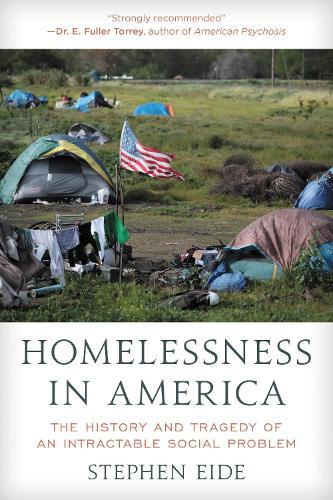
The last thirty years have witnessed an urban renaissance in America. Major cities have managed to drive down the murder rate, improve the schools, restore the built environment, and revitalize their economies. Middle class families are putting down roots in neighborhoods once given up for dead. But solutions to homelessness have eluded even the most successful cities. While the South Bronx was once synonymous across the globe for “slum,” now, San Francisco and Los Angeles are just as internationally notorious for their homelessness crises. Indeed, the same cities with the worst homelessness crises rank among America’s most successful. One of the crisis’ more perplexing features is how cities that have met with so much success with respect to economic development, crime and public education have failed to even ease their homelessness crisis, much less end it. In Homelessness in America, Stephen Eide examines the history, governmental and private responses, and future prospects of this intractable challenge. The “chronic” nature of the challenge should be understood, he argues, by reference to American history and American ideals. The history of homelessness is bound up with industrialization and urbanization, the closing of the West, the Great Depression, and the post WWII decline and subsequent revival of great American cities. Though we’ve used different terms (“tramp” “hobo” “bum”) at other times, something like homelessness has always been with us and the debate over causes and solutions has always involved conflicts over fundamental values. After explaining why homelessness persists in America and correcting popular misconceptions about the issue, Eide offers concrete recommendations for how we can do better for the homeless population. Homelessness in America engages readers by answering the most common questions their audience brings to the topic and exploring other questions that are no less important for being not as commonly asked. Homelessness intersects with multiple other policy areas: education, urban development, criminal justice reform, mental health. By exploring the intersection of homelessness with so many other policy areas, this book aspires to provide a comprehensive account of the challenge.
Full Product Details
Author: Stephen Eide
Publisher: Bloomsbury Publishing Plc
Imprint: Rowman & Littlefield
Dimensions:
Width: 15.90cm
, Height: 2.60cm
, Length: 23.80cm
Weight: 0.558kg
ISBN: 9781538159576
ISBN 10: 1538159570
Pages: 258
Publication Date: 02 June 2022
Audience:
General/trade
,
General
Format: Hardback
Publisher's Status: Active
Availability: Manufactured on demand

We will order this item for you from a manufactured on demand supplier.
Reviews
""Stephen Eide's sweeping, comprehensive analysis explains why ""homelessness"" encompasses not a single problem calling for a single solution, but a diverse array of paradoxes and pathologies that can be handled better but not solved. His illuminating history of homelessness shows that good intentions are at times in tension with good policy."" --R Shep Melnick, Thomas P. O'Neil, Jr. professor of American Politics, Boston College ""Stephen Eide has brought a fresh approach to a stale and seemingly endless problem. Homelessness, he emphasizes, is neither new nor unitary. Rather it is a common outcome of multiple problems - housing, substance abuse, mental illness, poverty, unemployment, domestic violence, single-parent households, street crime, public disorder and more. Proposing a single solution for homelessness is fatuous as the author illustrates by thoughtful proposed solutions to the various pieces of the puzzle. Strongly recommended, especially for those who think there is a single solution to these problems."" --E. Fuller Torrey, MD, author of American Psychosis: How the Federal Government Destroyed the Mental Illness Treatment System ""Stephen Eide's brilliant research within this book shines the spotlight of truth on one of America's most challenging public policy issues of our time."" --Robert G. Marbut Jr., formerly America's Federal Homelessness ""Czar"" ""From the first page, where Eide challenges the term ""homelessness"", this book takes a close look at sources of the problem that are rarely discussed in public, like the disappearance of SROs and mental hospitals, the lapsed use and misuse of vagrancy laws, the failure of ""outreach"" and ""Housing First"" programs, homeless-on-homeless violence, and the very useful role that police officers can and should play. He also looks skeptically at whether ""advocacy"" groups are really helping people who live on the streets."" --Dan Biederman, Place-making and Redevelopment executive ""This is the best primer on homelessness to date. His startling and counter intuitive recommendations for addressing the problem include disbanding homeless service systems and focusing less on housing but more on employment and mental health. These and others are buttressed by his careful analysis of its history and attempts at ending homelessness. For anyone who has stumbled upon a homeless person and wondered what could be done, this book has some profound answers."" --Peter Cove, author of Poor No More: Rethinking Dependency and the War on Poverty. From the first page, where Eide challenges the term ""homelessness"", this book takes a close look at sources of the problem that are rarely discussed in public, like the disappearance of SROs and mental hospitals, the lapsed use and misuse of vagrancy laws, the failure of ""outreach"" and ""Housing First"" programs, homeless-on-homeless violence, and the very useful role that police officers can and should play. He also looks skeptically at whether ""advocacy"" groups are really helping people who live on the streets. Stephen Eide has brought a fresh approach to a stale and seemingly endless problem. Homelessness, he emphasizes, is neither new nor unitary. Rather it is a common outcome of multiple problems - housing, substance abuse, mental illness, poverty, unemployment, domestic violence, single-parent households, street crime, public disorder and more. Proposing a single solution for homelessness is fatuous as the author illustrates by thoughtful proposed solutions to the various pieces of the puzzle. Strongly recommended, especially for those who think there is a single solution to these problems. Stephen Eide's brilliant research within this book shines the spotlight of truth on one of America's most challenging public policy issues of our time. Stephen Eide's sweeping, comprehensive analysis explains why ""homelessness"" encompasses not a single problem calling for a single solution, but a diverse array of paradoxes and pathologies that can be handled better but not solved. His illuminating history of homelessness shows that good intentions are at times in tension with good policy. This is the best primer on homelessness to date. His startling and counter intuitive recommendations for addressing the problem include disbanding homeless service systems and focusing less on housing but more on employment and mental health. These and others are buttressed by his careful analysis of its history and attempts at ending homelessness. For anyone who has stumbled upon a homeless person and wondered what could be done, this book has some profound answers.
"From the first page, where Eide challenges the term ""homelessness"", this book takes a close look at sources of the problem that are rarely discussed in public, like the disappearance of SROs and mental hospitals, the lapsed use and misuse of vagrancy laws, the failure of ""outreach"" and ""Housing First"" programs, homeless-on-homeless violence, and the very useful role that police officers can and should play. He also looks skeptically at whether ""advocacy"" groups are really helping people who live on the streets. --Dan Biederman, Place-making and Redevelopment executive Stephen Eide has brought a fresh approach to a stale and seemingly endless problem. Homelessness, he emphasizes, is neither new nor unitary. Rather it is a common outcome of multiple problems - housing, substance abuse, mental illness, poverty, unemployment, domestic violence, single-parent households, street crime, public disorder and more. Proposing a single solution for homelessness is fatuous as the author illustrates by thoughtful proposed solutions to the various pieces of the puzzle. Strongly recommended, especially for those who think there is a single solution to these problems. --E. Fuller Torrey, MD, author of American Psychosis: How the Federal Government Destroyed the Mental Illness Treatment System Stephen Eide's brilliant research within this book shines the spotlight of truth on one of America's most challenging public policy issues of our time. --Robert G. Marbut Jr., formerly America's Federal Homelessness ""Czar"" Stephen Eide's sweeping, comprehensive analysis explains why ""homelessness"" encompasses not a single problem calling for a single solution, but a diverse array of paradoxes and pathologies that can be handled better but not solved. His illuminating history of homelessness shows that good intentions are at times in tension with good policy. --R Shep Melnick, Thomas P. O'Neil, Jr. professor of American Politics, Boston College This is the best primer on homelessness to date. His startling and counter intuitive recommendations for addressing the problem include disbanding homeless service systems and focusing less on housing but more on employment and mental health. These and others are buttressed by his careful analysis of its history and attempts at ending homelessness. For anyone who has stumbled upon a homeless person and wondered what could be done, this book has some profound answers. --Peter Cove, author of Poor No More: Rethinking Dependency and the War on Poverty. From the first page, where Eide challenges the term ""homelessness"", this book takes a close look at sources of the problem that are rarely discussed in public, like the disappearance of SROs and mental hospitals, the lapsed use and misuse of vagrancy laws, the failure of ""outreach"" and ""Housing First"" programs, homeless-on-homeless violence, and the very useful role that police officers can and should play. He also looks skeptically at whether ""advocacy"" groups are really helping people who live on the streets. Stephen Eide has brought a fresh approach to a stale and seemingly endless problem. Homelessness, he emphasizes, is neither new nor unitary. Rather it is a common outcome of multiple problems - housing, substance abuse, mental illness, poverty, unemployment, domestic violence, single-parent households, street crime, public disorder and more. Proposing a single solution for homelessness is fatuous as the author illustrates by thoughtful proposed solutions to the various pieces of the puzzle. Strongly recommended, especially for those who think there is a single solution to these problems. Stephen Eide's brilliant research within this book shines the spotlight of truth on one of America's most challenging public policy issues of our time. Stephen Eide's sweeping, comprehensive analysis explains why ""homelessness"" encompasses not a single problem calling for a single solution, but a diverse array of paradoxes and pathologies that can be handled better but not solved. His illuminating history of homelessness shows that good intentions are at times in tension with good policy. This is the best primer on homelessness to date. His startling and counter intuitive recommendations for addressing the problem include disbanding homeless service systems and focusing less on housing but more on employment and mental health. These and others are buttressed by his careful analysis of its history and attempts at ending homelessness. For anyone who has stumbled upon a homeless person and wondered what could be done, this book has some profound answers."
"From the first page, where Eide challenges the term ""homelessness"", this book takes a close look at sources of the problem that are rarely discussed in public, like the disappearance of SROs and mental hospitals, the lapsed use and misuse of vagrancy laws, the failure of ""outreach"" and ""Housing First"" programs, homeless-on-homeless violence, and the very useful role that police officers can and should play. He also looks skeptically at whether ""advocacy"" groups are really helping people who live on the streets. --Dan Biederman, Place-making and Redevelopment executive Stephen Eide has brought a fresh approach to a stale and seemingly endless problem. Homelessness, he emphasizes, is neither new nor unitary. Rather it is a common outcome of multiple problems - housing, substance abuse, mental illness, poverty, unemployment, domestic violence, single-parent households, street crime, public disorder and more. Proposing a single solution for homelessness is fatuous as the author illustrates by thoughtful proposed solutions to the various pieces of the puzzle. Strongly recommended, especially for those who think there is a single solution to these problems. --E. Fuller Torrey, MD, author of American Psychosis: How the Federal Government Destroyed the Mental Illness Treatment System Stephen Eide's brilliant research within this book shines the spotlight of truth on one of America's most challenging public policy issues of our time. --Robert G. Marbut Jr., formerly America's Federal Homelessness ""Czar"" Stephen Eide's sweeping, comprehensive analysis explains why ""homelessness"" encompasses not a single problem calling for a single solution, but a diverse array of paradoxes and pathologies that can be handled better but not solved. His illuminating history of homelessness shows that good intentions are at times in tension with good policy. --R Shep Melnick, Thomas P. O'Neil, Jr. professor of American Politics, Boston College This is the best primer on homelessness to date. His startling and counter intuitive recommendations for addressing the problem include disbanding homeless service systems and focusing less on housing but more on employment and mental health. These and others are buttressed by his careful analysis of its history and attempts at ending homelessness. For anyone who has stumbled upon a homeless person and wondered what could be done, this book has some profound answers. --Peter Cove, author of Poor No More: Rethinking Dependency and the War on Poverty."
Author Information
Stephen Eide is a senior fellow at the Manhattan Institute. He has written widely on homelessness and related issues such as mental illness, including articles in National Affairs, the New York Daily News, The Hill, and the Los Angeles Times.