Overview
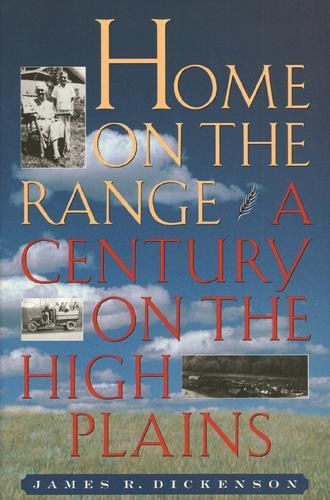
Home on the Range chronicles the epic drama of the settling and development of the High Plains, as viewed through the saga of journalist James Dickenson's family and the wheat-farming community of McDonald, Kansas. With a reporter's sharp eye for detail and human drama, as well as a lucid understanding of the grand sweep of history, Dickenson paints a highly personal portrait of American rural life and its tenacious struggle to survive. By turns lyrical, nostalgic, and unflinchingly realistic, Dickenson weaves a fascinating narrative in which shootouts, lynchings, human chicanery, and nature's treachery test the community's unswerving faith in hard work, tradition, and themselves.
Full Product Details
Author: James R. Dickenson
Publisher: University Press of Kansas
Imprint: University Press of Kansas
Edition: illustrated Edition
Dimensions:
Width: 15.50cm
, Height: 1.70cm
, Length: 23.40cm
Weight: 0.333kg
ISBN: 9780700607587
ISBN 10: 0700607587
Pages: 304
Publication Date: 22 April 1996
Audience:
General/trade
,
General
Format: Paperback
Publisher's Status: Active
Availability: In Print

This item will be ordered in for you from one of our suppliers. Upon receipt, we will promptly dispatch it out to you. For in store availability, please contact us.
Reviews
Every once in a while an authentic jewel of a book comes along that makes me want to shout to the world: Read this! You'll love it! I hereby so shout that about Home on the Range. It is a beautifully written story of a people and a place that is really about us all. It is a jewel that should be treasured and shared. --<b>Jim Lehrer</b>, The MacNeil/Lehrer Newshour This is not history from the bottom up, but from the inside out--life on the High Plains experienced viscerally, then reflected on shrewdly; a rare combination of emotion and analysis. He gives us a whole way of life simultaneously being lived and being lost. --<b>Garry Wills</b>, author of <i>Lincoln at Gettysburg</i>
-Every once in a while an authentic jewel of a book comes along that makes me want to shout to the world: Read this! You'll love it! I hereby so shout that about Home on the Range. It is a beautifully written story of a people and a place that is really about us all. It is a jewel that should be treasured and shared.---Jim Lehrer, The MacNeil/Lehrer Newshour -This is not history from the bottom up, but from the inside out--life on the High Plains experienced viscerally, then reflected on shrewdly; a rare combination of emotion and analysis. He gives us a whole way of life simultaneously being lived and being lost.---Garry Wills, author of Lincoln at Gettysburg
""A thoroughly readable story of the Dickenson family and the part of the country from which they come, a land of dust storms, ghost towns, and good country people. I was surprised at book's end by the degree to which I had been touched by the tale of how McDonald continues to hold out against the elements and the odds. Anyone who has spent time in a small town will warm to this book. Anyone in the business of passing laws that affect the daily life of small towns ought to read it with special care.""--Washington Post Book World ""Dickenson's story is something of a rural everyman's tale. . . . It records the passage of the nation from agrarian innocence to international player and shows how these changes affected the once small but prosperous farming community. His warm, full prose is as engaging and inviting as the people about whom he writes and clearly cherishes.""--Library Journal ""Dickenson interviewed individuals from all walks of life--farmers, ranchers, laborers, merchants, high school athletes, bankers, lawyers, soldiers, politicians, homemakers, newspaper publishers, preachers, teachers, and writers--to illustrate the larger historical landscapes he paints. Readers will be inspired by the affection he holds for the land and people of the plains, and they will appreciate the problems of surviving there.""--Wichita Eagle ""Dickenson's book is a mixture of fond memories and factual nuggets that prove Kansas is an appealing, rather remarkable place by any standard. It is of course a microcosm of America, the bittersweet story of a journey to the stars and its many detours and visits to the ditch.""--Kansas City Star ""Every once in a while an authentic jewel of a book comes along that makes me want to shout to the world: Read this! You'll love it! I hereby so shout that about Home on the Range. It is a beautifully written story of a people and a place that is really about us all. It is a jewel that should be treasured and shared.""--Jim Lehrer, The MacNeil/Lehrer Newshour ""This is not history from the bottom up, but from the inside out--life on the High Plains experienced viscerally, then reflected on shrewdly; a rare combination of emotion and analysis. He gives us a whole way of life simultaneously being lived and being lost.""--Garry Wills, author of Lincoln at Gettysburg
The High Plains town of McDonald, Kans., population 200 and dropping, is the focus of this affectionate family history, which probes a larger problem: the faltering of America's small rural communities and their close-knit societies. Dickenson, a Washington, D.C., journalist, left McDonald for greener pastures 30 years ago. Returning for his hometown's centennial in 1988, he notes declining population, disappearing businesses, and few economic alternatives. To put this decline in perspective, Dickenson examines the boom-and-bust cycle of farming, from his family's start as Kansas sodbusters in the 1870s through the farm crisis of the 1980s. Technology is the central source of rural decline: Farmers became so efficient in their quest for higher productivity that the technology that made this progress possible...wreaked a drastic change in the support community and social fabric of the area. Mechanization and reliance on chemicals and hybrids reduced the manpower required, transforming the base of agriculture from small subsistence farms to large, capital-hungry enterprises. Small rural towns, the traditional support network for surrounding farms, have suffered even as farming thrives, albeit in radically transformed fashion. Dickenson's analyses of small-town culture are marred by tentative bromides ( Religious beliefs fill a profound need in people everywhere and at all times ). He is on firmer ground describing the daily trials and triumphs of farming (especially in relating the primal tension of the wheat harvest), a vocation for which he harbors great respect. Also problematic is the fractured narrative, which suffers from both redundancy and gaps: He introduces Uncle Wayne, editor of the local newspaper, on a half-dozen occasions but doesn't define the High Plains (which compares to Appalachia in terms of isolation and dependence on a single extractive industry) until page 245. An understandably dour but ultimately affirming tribute to the strong will of High Plains people and the economic and cultural importance of American farming. (Kirkus Reviews)