Overview
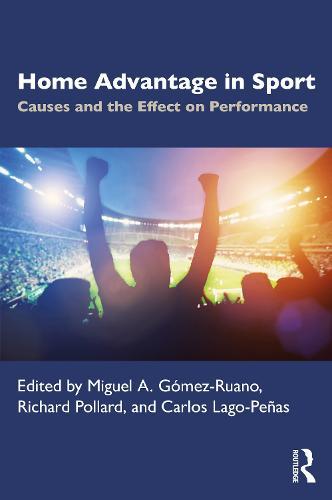
This is the first book exploring the concept of home advantage (HA), the well-known beneficial effect that players and teams derive from performing at home in all sports throughout the world. Despite the fact that the existence of HA dates back to the origins of organized sport in the late 19th century, its root causes and how they operate and interact with each other are still unclear and remain the topic of intense research involving many disciplines, all with the potential objective of improving team and individual performance. This book covers a broad review of HA divided into three different sections: (i) Section 1 focuses on the theory of HA in sport (the concept of this phenomenon, its quantification, and factors supposedly associated with the HA are explored; (ii) Section 2 analyses the effects of HA in sports related to both male and female athletes, in relation to tactics and strategies, fans, referees, travel, situational variables and the home disadvantage; and (iii) Section 3 studies the HA as it applies to specific sports worldwide such as outdoor sports (football, rugby, cricket, and Australian Football), indoor sports (basketball, futsal, handball, water polo and volleyball), US professional sports, individual sports, racket sports, combat sports, minor sports, disabled sports and the Olympic Games. This book has been written in cooperation with top leading experts in this field worldwide. The book offers a better understanding of the HA effect for MSc and PhD students, athletes, coaches, performance analysts, sport psychologists, sociologists, sport scientists and sport journalists.
Full Product Details
Author: Miguel Gómez-Ruano ,
Richard Pollard ,
Carlos Lago-Peñas
Publisher: Taylor & Francis Ltd
Imprint: Routledge
Weight: 0.453kg
ISBN: 9780367533267
ISBN 10: 036753326
Pages: 336
Publication Date: 28 October 2021
Audience:
General/trade
,
College/higher education
,
Professional and scholarly
,
General
,
Tertiary & Higher Education
Format: Paperback
Publisher's Status: Active
Availability: In Print

This item will be ordered in for you from one of our suppliers. Upon receipt, we will promptly dispatch it out to you. For in store availability, please contact us.
Author Information
Miguel A. Gómez-Ruano is associate professor at the Universidad Politécnica de Madrid, Faculty of Physical Activity and Sport Sciences, Madrid, Spain and adjunct professor at the James Cook University, Sport and Exercise Science, Townsville, Australia. Richard Pollard is a retired sports scientist, currently affiliated with the Statistics Department at California Polytechnic State University in San Luis Obispo, U.S.A. Carlos Lago-Peñas is full professor at the University of Vigo, Faculty of Education and Sport Sciences, Vigo, Spain.