Overview
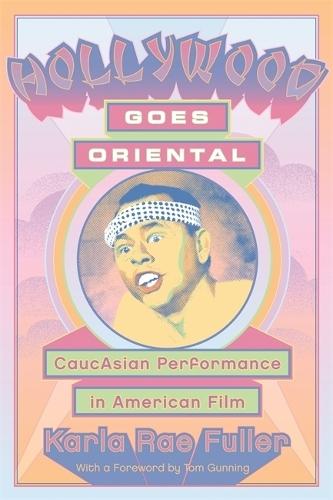
In the “classical” Hollywood studio era of the 1930s to the 1960s, many iconic Asian roles were filled by non-Asian actors and some—like Fu Manchu or Charlie Chan—are still familiar today. In Hollywood Goes Oriental: CaucAsian Performance in American Film, Karla Rae Fuller tracks specific cosmetic devices, physical gestures, dramatic cues, and narrative conventions to argue that representations of Oriental identity by Caucasian actors in the studio era offer an archetypal standard. Through this standard, Fuller shed light on the artificial foundations of Hollywood’s depictions of race and larger issues of ethnicity and performance. Fuller begins by investigating a range of Hollywood productions, including animated images, B films, and blockbusters, to identify the elaborate make-up practices and distinct performance styles that characterize Hollywood’s Oriental. In chapter 2, Fuller focuses on the most well known Oriental archetype, the detective, who incorporates both heroic qualities and darker elements into a complex persona. Moving into the World War II era, Fuller examines the Oriental character as political enemy and cultural outsider in chapter 3, drawing a distinction between the “good” Chinese and the “sinister” Japanese character. In chapter 4, she traces a shift back to a seemingly more benign, erotic, and often comedic depiction of Oriental characters after the war. While Hollywood Goes Oriental primarily focuses on representations of Oriental characters by Caucasian actors, Fuller includes examples of performances by non-Caucasian actors as well. She also delves into the origination, connotations, and repercussions of the loaded term “yellowface,” which has been appropriated for many causes. Students, scholars of film, and anyone interested in Asian and cultural studies will appreciate this insightful study.
Full Product Details
Author: Karla Rae Fuller ,
Tom Gunning
Publisher: Wayne State University Press
Imprint: Wayne State University Press
Volume: 26
Dimensions:
Width: 15.20cm
, Height: 2.00cm
, Length: 22.60cm
Weight: 0.500kg
ISBN: 9780814334676
ISBN 10: 0814334679
Pages: 312
Publication Date: 16 August 2010
Audience:
Professional and scholarly
,
Professional & Vocational
Format: Paperback
Publisher's Status: Active
Availability: Manufactured on demand

We will order this item for you from a manufactured on demand supplier.
Reviews
Fuller provides an astonishing litany of the A-list Hollywood names who've donned yellowface- in addition to Hepburn, Brando, Karloff and Rooney, there's also Shirley MacLaine, Laurence Harvey, Ricardo Montalban, Peter Ustinov, Peter Sellers and many, many more. . . This is a thorough, well-argued and well-researched book... --Clare Moody ""Filmwerk"" Fuller's study of images of Asian Americans in film takes an insightful approach by examining the practice of performances in 'yellowface': white (or in rare cases, black) actors portraying Asian characters. Hollywood Goes Oriental makes a substantial contribution to the literature in Asian American studies."" --Frank H. Wu ""chancellor and dean at the University of California Hastings College of the Law""
Fuller's discussion of cross-ethnic performance in Hollywood films is long overdue. She adds valuable insights to film studies, ethnic studies, and gender studies, while her use of performance theory in the analysis-in which ethnicity is viewed as a social construct that is expressed through the body-points to the possibility of new perspectives. --Jenny Lau professor of cinema at San Francisco State University Too often Hollywood cinema is reduced to a homogenized product. Fuller, while primarily tracing consistencies within the Hollywood product, also traces the heterogeneous nature of Hollywood's output. Thus, she not only chooses films in which Oriental characters are played by non-Orientals but has discovered films in which the issues of disguise, masquerade, and even stereotyping are central. --Tom Gunning professor of cinema and media studies at the University of Chicago Fuller's study of images of Asian Americans in film takes an insightful approach by examining the practice of performances in 'yellowface': white (or in rare cases, black) actors portraying Asian characters. Hollywood Goes Oriental makes a substantial contribution to the literature in Asian American studies. --Frank H. Wu chancellor and dean at the University of California Hastings College of the Law
"Fuller provides an astonishing litany of the A-list Hollywood names who've donned yellowface- in addition to Hepburn, Brando, Karloff and Rooney, there's also Shirley MacLaine, Laurence Harvey, Ricardo Montalban, Peter Ustinov, Peter Sellers and many, many more. . . This is a thorough, well-argued and well-researched book... --Clare Moody ""Filmwerk"" Fuller's study of images of Asian Americans in film takes an insightful approach by examining the practice of performances in 'yellowface': white (or in rare cases, black) actors portraying Asian characters. Hollywood Goes Oriental makes a substantial contribution to the literature in Asian American studies."" --Frank H. Wu ""chancellor and dean at the University of California Hastings College of the Law"""
Fuller's discussion of cross-ethnic performance in Hollywood films is long overdue. She adds valuable insights to film studies, ethnic studies, and gender studies, while her use of performance theory in the analysis-in which ethnicity is viewed as a social construct that is expressed through the body-points to the possibility of new perspectives. --Jenny Lau professor of cinema at San Francisco State University Fuller's study of images of Asian Americans in film takes an insightful approach by examining the practice of performances in 'yellowface': white (or in rare cases, black) actors portraying Asian characters. Hollywood Goes Oriental makes a substantial contribution to the literature in Asian American studies. --Frank H. Wu chancellor and dean at the University of California Hastings College of the Law Too often Hollywood cinema is reduced to a homogenized product. Fuller, while primarily tracing consistencies within the Hollywood product, also traces the heterogeneous nature of Hollywood's output. Thus, she not only chooses films in which Oriental characters are played by non-Orientals but has discovered films in which the issues of disguise, masquerade, and even stereotyping are central. --Tom Gunning professor of cinema and media studies at the University of Chicago
Author Information
Karla Rae Fuller is associate professor in the film and video department at Columbia College, Chicago, and the editor of the forthcoming Interviews with Ang Lee.