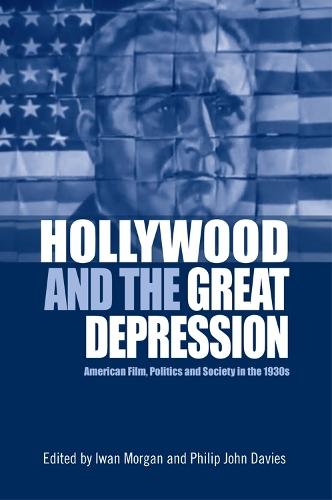
Full Product Details
Author: Iwan Morgan (University College London) ,
Philip John Davies (Professor of American Studies, De Montfort University)
Publisher: Edinburgh University Press
Imprint: Edinburgh University Press
Weight: 0.595kg
ISBN: 9780748699926
ISBN 10: 0748699929
Pages: 296
Publication Date: 18 October 2016
Audience:
General/trade
,
General
Format: Hardback
Publisher's Status: Active
Availability: Manufactured on demand

We will order this item for you from a manufactured on demand supplier.
Reviews
"""This stimulating collection energetically revisits and frequently revises the history of Hollywood's political engagements during the height of its cultural influence in the 1930s, offering new insights into the responses of writers, stars, moguls and distributors to the Depression and New Deal, and their expression in some of the decade's most memorable movies."" -- Professor Richard Maltby, Flinders University"
This stimulating collection energetically revisits and frequently revises the history of Hollywood's political engagements during the height of its cultural influence in the 1930s, offering new insights into the responses of writers, stars, moguls and distributors to the Depression and New Deal, and their expression in some of the decade's most memorable movies. -- Professor Richard Maltby, Flinders University
'The articles in this collection serve to bring new information to light, challenge some ideas about Depression-era film and deepen readers' understanding of other aspects of the film industry in the 1930s.' --Richard Bodek, College of Charleston Historical Journal of Film, Radio and Television
"The articles in this collection serve to bring new information to light, challenge some ideas about Depression-era film and deepen readers' understanding of other aspects of the film industry in the 1930s.--Richard Bodek, College of Charleston ""Historical Journal of Film, Radio and Television"" This stimulating collection energetically revisits and frequently revises the history of Hollywood's political engagements during the height of its cultural influence in the 1930s, offering new insights into the responses of writers, stars, moguls and distributors to the Depression and New Deal, and their expression in some of the decade's most memorable movies.'--Professor Richard Maltby, Flinders University"
The articles in this collection serve to bring new information to light, challenge some ideas about Depression-era film and deepen readers' understanding of other aspects of the film industry in the 1930s.--Richard Bodek, College of Charleston ""Historical Journal of Film, Radio and Television"" This stimulating collection energetically revisits and frequently revises the history of Hollywood's political engagements during the height of its cultural influence in the 1930s, offering new insights into the responses of writers, stars, moguls and distributors to the Depression and New Deal, and their expression in some of the decade's most memorable movies.'--Professor Richard Maltby, Flinders University
Author Information
Professor Iwan Morgan is Professor of US Studies and Commonwealth Fund Professor of American History, University College London. Philip John Davies is Professor in American Studies at De Montfort University.