Overview
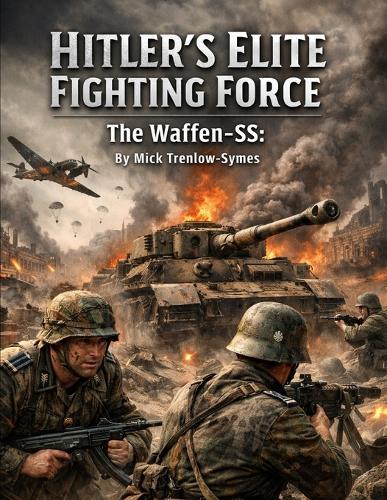
In the vast and unforgiving landscapes of the Second World War, few military formations have attracted as much attention, debate, and controversy as the Waffen-SS. Often described as an elite fighting force, it was at once a product of ideology, a tool of the Nazi regime, and a significant component of Germany's war effort. Yet behind the reputation lies a far more complex and challenging story. This book presents a clear, balanced, and deeply engaging account of the Waffen-SS from its origins to its ultimate collapse. Beginning in the political turmoil of post-First World War Germany, it traces how a small, tightly controlled organisation evolved into a large and diverse military force. It explores the role of ideology in shaping recruitment, training, and identity, while also examining the practical realities that influenced its development on the battlefield. As the narrative unfolds, the reader is taken through the early campaigns that defined the Waffen-SS, its rapid expansion, and its increasing involvement in some of the most intense theatres of the war. Particular attention is given to the Eastern Front, where the scale, brutality, and demands of the conflict tested the organisation to its limits. Here, endurance, adaptation, and leadership became critical factors in determining both survival and effectiveness. The book also examines the structure and leadership of the Waffen-SS, offering insight into the individuals who shaped its direction and the systems that governed its operations. It considers how tactics, equipment, and combat style evolved over time, reflecting both ambition and necessity in a rapidly changing war. However, this is not simply a study of military performance. The darker aspects of the Waffen-SS are addressed directly and with care. The organisation's connection to the wider policies of the Nazi regime, including its involvement in actions that extended beyond conventional warfare, forms an essential part of the narrative. These elements are examined within their historical context, providing a fuller understanding of the organisation and its place within the broader events of the period. As the war turns against Germany, the book follows the Waffen-SS through its final years of retreat, exhaustion, and eventual collapse. The realities of defeat, the breakdown of structure, and the pressures of a disintegrating system reveal the limits of the organisation and the consequences of the path it had followed. The concluding sections explore the legacy of the Waffen-SS, examining how it has been remembered, interpreted, and debated in the decades since the war. Myths, narratives, and historical research are considered together, offering a thoughtful and measured perspective on a subject that continues to provoke discussion. Written in a clear and accessible style, this book avoids sensationalism while remaining engaging and informative throughout. It is designed for readers who want more than a surface-level account, offering depth without unnecessary complexity. Whether you are new to the subject or seeking a more structured understanding, this is a compelling and balanced exploration of one of the most controversial military organisations of the twentieth century.
Full Product Details
Author: Mick Trenlow-Symes
Publisher: Independently Published
Imprint: Independently Published
Dimensions:
Width: 21.60cm
, Height: 0.50cm
, Length: 27.90cm
Weight: 0.249kg
ISBN: 9798254278337
Pages: 98
Publication Date: 30 March 2026
Audience:
General/trade
,
General
Format: Paperback
Publisher's Status: Active
Availability: Available To Order

We have confirmation that this item is in stock with the supplier. It will be ordered in for you and dispatched immediately.