Overview
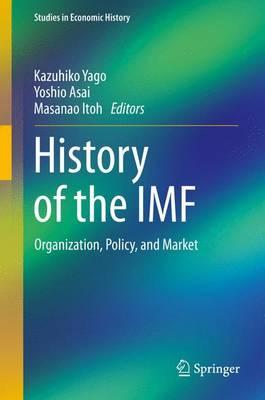
This book describes the history of the IMF from its birth, through the Bretton Woods era, and in the aftermath. Special attention is paid to integrating IMF history with the macro-economic policies of member countries and of other international institutions as well. This collection of work presents a clear understanding, inter alia, of the influence of the United States over IMF policy via the National Advisory Committee; the dealings of the IMF with the UK on pound sterling policy; the institutional change of the IMF brought about by Per Jacobsson, the third managing director; and France, Italy, Germany, Canada, and Japan vis-à-vis IMF consultations. It also provides the reader with topics concerning the bankers’ acceptance market function and international liquidity issues in relation to IMF policy; the final chapter sheds light on the long-standing relations between the IMF and China, from the Bretton Woods Agreement to the contemporary period. All the chapters are archive-based academic studies providing deep insights with historical background, which makes this book the first thoroughly independent achievement in the field of IMF history. This book is highly recommended to readers interested in contemporary monetary and financial history and those who seek to obtain a coherent image of postwar international institutions and markets.
Full Product Details
Author: Kazuhiko Yago ,
Yoshio Asai ,
Masanao Itoh
Publisher: Springer Verlag, Japan
Imprint: Springer Verlag, Japan
Edition: 2015 ed.
Dimensions:
Width: 15.50cm
, Height: 2.10cm
, Length: 23.50cm
Weight: 6.387kg
ISBN: 9784431553502
ISBN 10: 4431553509
Pages: 324
Publication Date: 29 June 2015
Audience:
Professional and scholarly
,
Professional & Vocational
Format: Hardback
Publisher's Status: Active
Availability: Manufactured on demand

We will order this item for you from a manufactured on demand supplier.
Author Information
Editors Yoshio Asai is a professor of economic history at Seijo University. He is the author of Sengo Kaikaku to Minshushugi (Post-war Economic Reforms and Democracy) (2001); and a co-author of Showa Zaiseishi, 1952-73 (History of Fiscal and Monetary Policies in Japan, 1952-73), Vol.11 (1999),Vol.12 (1992); and Kinyu Kiki to Kakushin (Financial Crises and Innovations)(2000). Masanao Itoh is professor at Otsuma Women's University and professor emeritus at the University of Tokyo. His main writings are Japanese Overseas Finance and Financial Policy 1914-1936 ( Nagoya University Press, 1989, in Japanese), which was awarded the 31st Japan Economist Prize in 1990; History of Fiscal and Monetary Policies in Japan 1974-1989, Vol. 7, 11: International Finance and External Economic Affairs (Ministry of Finance, Toyo Keizai Inc., editor, 2003, 2004, in Japanese); Japanese Overseas Finance and Financial Policy 1945-1974 and The Formation and the End of the 360 Yen-Dollar Rate (Nagoya University Press, 2009, in Japanese); and Why Have the Financial Crises Been Repeated?(Junpo-sha, 2010, in Japanese). Kazuhiko Yago, born in 1962, professor at Waseda University, Faculty of Commerce, defended his doctoral dissertation ""L'epargne populaire comme fonds de placement public: Caisse des Depots et Consignations"" at Universite Paris X in 1996. Publications include: Asian Imperial Banking History (with Hubert Bonin and Nuno Valerio), (Pickering and Chatto, 2014); The Financial History of the Bank for International Settlements (Routledge, 2012); ""La Banque du Japon dans le systeme monetaire international,1945-1985"", in Olivier Feiertag et Michel Margairaz, dirs., Les banques centrales a l'echelle du monde (Presses de la Fondation nationale des sciences politiques, 2012).