Overview
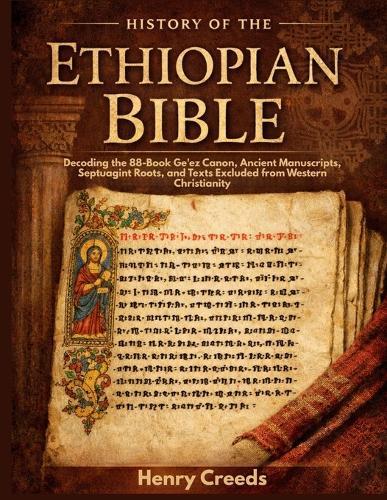
Your Bible has sixty-six books. The Ethiopian monk reading Scripture this morning just finished his eighty-eighth. For sixteen centuries, while Europe was losing texts to fire and theological controversy, Ethiopian monasteries were preserving the oldest, most complete biblical collection in continuous Christian use. They kept the Book of Enoch-quoted in your New Testament but missing from your canon. They maintained Jubilees, showing Abraham observing Sabbath before Sinai. They guarded books that early church fathers beloved but later Christianity forgot. This is not about exotic religious curiosities. This is about what happened when different ancient churches-all orthodox, all apostolic, all faithful-made different decisions about Scripture's boundaries. The Ethiopian Orthodox Tewahedo Church did not expand the canon. It simply never narrowed it. When Protestant reformers were removing books, Ethiopian scribes were copying them. When Catholic councils were debating boundaries, Ethiopian monks were chanting texts that predated the debates. The question is not why Ethiopia's Bible is so large, but why ours became so small. Inside these pages, you'll stand in the treasury of Abba Garima monastery, where radiocarbon dating proved manuscripts were as ancient as tradition claimed. You'll discover how the Septuagint's generous collection became Ethiopia's inheritance while the West abandoned it. You'll encounter Enoch's apocalyptic visions that shaped early Christian imagination and the mysterious Meqabyan books that exist nowhere else. You'll trace Christianity's arrival in fourth-century Aksum through royal conversion and monastic foundation. You'll watch as the Nine Saints established scriptoria that would preserve texts for millennia. You'll see how geography-mountain fortresses accessible only by rope-protected manuscripts through Islamic expansion, medieval wars, and colonial pressures. This is biblical history for people who want to understand, not just collect facts. Theological scholars will find rigorous engagement with canonical formation, Septuagint transmission, and ancient textual criticism. General readers will discover narrative as gripping as any thriller-monks risking lives to save manuscripts, texts surviving against impossible odds, and the revelation of what Africa preserved while the world forgot. What Ethiopia guarded changes how we read our own Bibles. Even if you never add books to your canon, knowing millions of Christians read eighty-eight books as Scripture-and have done so since before your tradition existed-transforms how you understand biblical authority, canonical boundaries, and the beautiful diversity of how God's people hear God's Word. The Ethiopian Bible is not an aberration requiring correction. It is a legitimate ancient witness that challenges our assumptions, enriches our imagination, and expands our understanding of what Christian Scripture can be. The monk in the highlands is still reading. The ancient manuscripts still rest in their treasuries. The books you've never encountered still wait. Order your copy today and discover what sixteen centuries of Ethiopian Christianity has preserved for the world. Learn to read Scripture with new eyes-with Abyssinian eyes. The books are open. What will you discover?
Full Product Details
Author: Henry Creeds
Publisher: Independently Published
Imprint: Independently Published
Dimensions:
Width: 21.60cm
, Height: 0.60cm
, Length: 27.90cm
Weight: 0.281kg
ISBN: 9798245995441
Pages: 114
Publication Date: 28 January 2026
Audience:
General/trade
,
General
Format: Paperback
Publisher's Status: Active
Availability: Available To Order

We have confirmation that this item is in stock with the supplier. It will be ordered in for you and dispatched immediately.