|
|
|||
|
||||
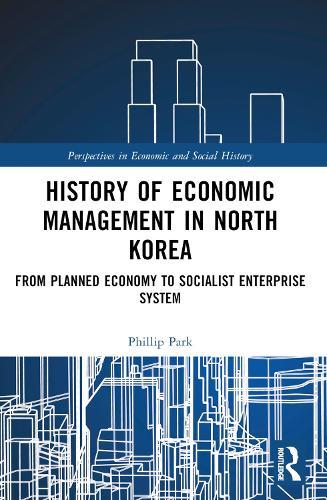
OverviewFull Product DetailsAuthor: Phillip H. Park (Kyungnam University, South Korea)Publisher: Taylor & Francis Ltd Imprint: Routledge ISBN: 9781032771939ISBN 10: 1032771933 Pages: 224 Publication Date: 21 May 2026 Audience: College/higher education , Tertiary & Higher Education Format: Paperback Publisher's Status: Forthcoming Availability: Not yet available This item is yet to be released. You can pre-order this item and we will dispatch it to you upon its release. Table of ContentsPrologue 1 Ch’ŏllima Movement, Taean Systems, and Centralized Planning 1.1 The Strategy of Prioritizing Heavy Industry and the Pyŏngjin (Parallel) Route 1.2 Taean System and Unified and Detailed Planning System 1.3 Efforts to Correct the Imbalance between ‘Accumulation and Consumption’ 1.3.1 Fostering Light Industry 1.3.2 Local Budget System and Local Industrial Factories 1.4 Return to the Policy of Prioritizing Heavy Industry: The Ten Grand Goals of Socialist Economic Construction 1.5 Rationalization of Planning: The Independent Accounting System and the United Enterprise System 2 Military-First Politics, CNC, and the Pursuit of Maximum Practical Benefits While Adhering to Socialist Principles Route 2.1 The Arduous March and Military-First Politics 2.2 Revolutionary Soldier Spirit and Kanggye Spirit 2.3 Kim Jong Il’s Strategy of Focus on Science and Technology Appendix to Chapter 2: Meaning and Implication of the “10·3 Discourse” 3 Socialist Enterprise Responsibility Management System and CNC-Based Reconstruction 3.1 Normalization of Production and the Socialist Enterprise Responsibility Management System 3.2 Key Features of the Socialist Enterprise Responsibility Management System 3.3 Commercial Banking and Socialist Enterprise Responsibility Management System 3.4 Evolution of Market in the DPRK and the Socialist Enterprise Responsibility Management System Appendix to Chapter 3: The Nature of Inflation in the DPRK and Estimation of Gross Domestic Growth of the DPRK after the Normalization of Production 4 General Summary and Evaluation of the DPRK’s Socialist Economic Construction and Economic Management System 4.1 The Kim Il Sung Era (1949-1994): Building Socialist Economic Construction and Management Based on Taean System 4.2 The Kim Jong Il Era (1995-2011): Two Means of Overcoming Arduous March: Military-First Politics and Advancement in Science and Technology 4.3 Kim Jong-Un Era (2012- ): The Era of the Socialist Enterprise Responsibility Management System, the Embodiment of DPRK’s Unique Economic Management System Based on the Legacies of Kim Il Sung and Kim Jong Il Epilogue Postscript IndexReviewsAuthor InformationPhillip H. Park is a professor of Political Science and Diplomacy at Kyungnam University in the Republic of Korea. He is the author of four books written in Korean and four in English. Seven of his works delve into the intricacies of the DPRK, while one offers a profound analysis of the history of neutral states and its relevance to the Republic of Korea. Phillip has also written numerous articles on Northeast Asia and the DPRK, in both Korean and English. Tab Content 6Author Website:Countries AvailableAll regions |
||||