Overview
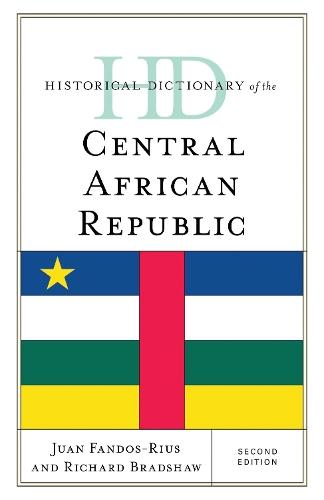
The Central African Republic (CAR) joined the international community when it attained autonomy within the Communauté (French Community) on 1 December 1958. Under this arrangement, France retained control over defense, foreign affairs, currency, and home security. Through history, Central Africans, comprising a quite large number of different ethnic groups and subgroups, engaged in internal and external conflicts, leading to significant migrations that showcased the nation’s current cultural diversity. In the twilight of the 19 century, Western influence arrived on the heels of French colonists, marking the end of slave trade from neighboring states to Central Africans but introducing new forms of servitude such as concessionary companies, portage, taxes, and compulsory labor. Central Africans saw their cultural systems and languages gradually erode, replaced by European educational models and Christianization. In less than 70 years, Central Africans experienced profound changes without a cohesive plan. As an independent nation, the CAR found itself grappling with Western nations contesting its natural resources, yielding little profit, and trapped in neocolonialism. The nation’s limited income weakened its authority, leading to its disappearance in rural areas. Tensions over land resources escalated into a civil war, disguised and polarized under the guise of interreligious conflict. Today, Central Africans stand at a pivotal moment, seeking change for peace and recovery. Historical Dictionary of the Central African Republic, Second Edition contains a chronology, an introduction, and an extensive bibliography. The dictionary section has more than 1,200 cross-referenced entries on important personalities as well as aspects of the country’s politics, economy, foreign relations, religion, and culture. This book is an excellent resource for students, researchers, and anyone wanting to know more about the Central African Republic (CAR).
Full Product Details
Author: Juan Fandos-Rius ,
Richard Bradshaw
Publisher: Bloomsbury Publishing Plc
Imprint: Rowman & Littlefield
Edition: 2nd edition
ISBN: 9781538185766
ISBN 10: 1538185768
Pages: 840
Publication Date: 24 February 2025
Audience:
General/trade
,
General
Format: Hardback
Publisher's Status: Active
Availability: Manufactured on demand

We will order this item for you from a manufactured on demand supplier.
Author Information
JUAN FANDOS-RIUS is an independent scholar, researcher, and encyclopedist who has extensively written about the Central African Republic. He studied in Ohio before earning a law degree from the University Jaume I in Castellon, Spain. Having traveled to the CAR, he has authored articles on various topics, including the history of the CAR flag, notable figures, ethnic groups, children’s and women’s issues, and political parties. RICHARD BRADSHAW (1950–2014) was a professor of world history at Centre College in Danville, Kentucky. A former Peace Corps member in the Central African Republic from 1977 to 1984, his publications and areas of expertise covered CAR history, culture, ethnobotany, and Suma language.