Overview
Japan has emerged as a major world player following its defeat in World War II. After recovering from the war, lifting itself onto the stage of the late 20th century world, and jettisoning its cheap, bizarre goods, Japan began to extend its influence into the wider world. The impact was first felt in the economic arena. Japan's production and marketing of high quality products allowed it to gain an important foothold in the world's economy. Japanese products became increasingly recognized for their high quality and reliability, and Japan became dominant in several major technological fields. Japan is a mix of the old and the modern. This book will attempt to introduce the successes and failures of postwar Japan to its readers. Historical Dictionary of Postwar Japan covers the most important aspects of Japan from 1945 through the present. While it emphasizes Japan's politics and its economy, it also has many entries on foreign relations, social issues, and the arts. This is done through a chronology, an introductory essay, an extensive bibliography, and over 500 cross-referenced dictionary entries on important people, organizations, activities, and events. This book is an excellent access point for students, researchers, and anyone wanting to know more about postwar Japan.
Full Product Details
Author: William D. Hoover
Publisher: Scarecrow Press
Imprint: Scarecrow Press
Dimensions:
Width: 16.20cm
, Height: 3.80cm
, Length: 24.10cm
Weight: 0.857kg
ISBN: 9780810854604
ISBN 10: 0810854600
Pages: 470
Publication Date: 18 March 2011
Audience:
General/trade
,
General
Format: Hardback
Publisher's Status: Out of Print
Availability: In Print

Limited stock is available. It will be ordered for you and shipped pending supplier's limited stock.
Reviews
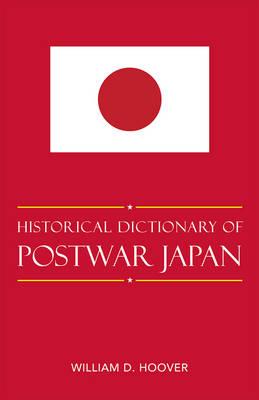
The fascinating and multifaceted history of Japan since WWII has found an expert summarizer in Hoover, professor emeritus at the University of Toledo (Ohio) after a 40-year teaching career there. This entry in Scarecrow's Historical Dictionaries of Asia, Oceania, and the Middle East covers the high points of politics, economics, business and industry, education, science and technology, sports and entertainment, literature and the arts, the major cities, and relations with key countries. Following a format similar to other titles in the series, Historical Dictionary of Postwar Japan will be of more intrinsic interest to a wide audience than most, which often deal with countries whose interactions with American culture are far less well-known (which is not to say well-understood).Abbreviations and acronyms as well as a map follow other front matter. The 38-page and chronology begins with Japan's surrender on August 14, 1945, and ends with the loss of the Democratic Party of Japan's majority on July 11, 2010. It is reassuring to encounter an unfamiliar term (e.g., Zaibatsu) and find a main entry explaining it in the 345-page dictionary section. It is also reassuring that virtually every subject that this reviewer looked for is there: the major authors, film directors, architects, and composers; the famous corporations; Hello Kitty and Pokemon; terms such as Bullet Train (Shinkansen), Bunraku, Burakumin, etc. English main entry terms are followed by romaji (transliteration of the Japanese hiragana or katakana) and by the hiragana or katakana symbols themselves. Fourteen appendixes chart everything from prime ministers, 1945-2010, to birth and death rates, 1950-2008. A 50-page bibliography, extensively subdivided by topic and limited largely to scholarly books, begins with a bibliographic essay. Highly recommended for academic and larger public libraries. Booklist Written for general readers in high school and academic libraries, this contains more than 500 entries on key people, organizations, activities, and events, with a minimum of Japanese terms and expressions. Names are entered in the Japanese fashion of family name first, although organizations and other groups are entered using the English name followed by the Japanese one and often by Japanese characters. A professor of Japanese history for more than 40 years, Hoover prefaces the dictionary entries with a map, a lengthy and detailed chronology from 1945 through 2010, and a list of abbreviations and acronyms. Bolded cross-references where appropriate will assist readers in easily finding more information on a desired topic. A list of prime ministers from 1945-2010 and 13 tables, charts, and graphs covering various issues in Japan close the presentation. This is a valuable, unbiased starting point for finding brief information quickly. Library Journal 20110801 The beginning of the book contains two useful, reader-friendly features: three pages of abbreviations and acronyms and a map of present-day Japan with names of main cities and the seas surrounding the country. Throughout the book, most entries of Japanese people's names appear with the surnames and first names in that order, first in roman letters, with the Japanese characters following. The names of companies and institutions also appear with roman letters first, and Japanese characters following. Some entry names are written in English only, including those for the constitution, foreign policy, labor organizations, literature, and women. The book gives ample information about post-World War II Japan and it is recommended for college and university libraries as well as large public libraries American Reference Books Annual It is a solid volume, well-bound to cope with the rigors of reference use, and its cover is simple and attractive: plain white except for a red sun representing the Japanese flag. This book will be most useful in a library whose users have an informed interest in Japan. Emerald Reference Reviews
The fascinating and multifaceted history of Japan since WWII has found an expert summarizer in Hoover, professor emeritus at the University of Toledo (Ohio) after a 40-year teaching career there. This entry in Scarecrow's Historical Dictionaries of Asia, Oceania, and the Middle East covers the high points of politics, economics, business and industry, education, science and technology, sports and entertainment, literature and the arts, the major cities, and relations with key countries. Following a format similar to other titles in the series, Historical Dictionary of Postwar Japan will be of more intrinsic interest to a wide audience than most, which often deal with countries whose interactions with American culture are far less well-known (which is not to say well-understood).Abbreviations and acronyms as well as a map follow other front matter. The 38-page and chronology begins with Japan's surrender on August 14, 1945, and ends with the loss of the Democratic Party of Japan's majority on July 11, 2010. It is reassuring to encounter an unfamiliar term (e.g., Zaibatsu) and find a main entry explaining it in the 345-page dictionary section. It is also reassuring that virtually every subject that this reviewer looked for is there: the major authors, film directors, architects, and composers; the famous corporations; Hello Kitty and Pokemon; terms such as Bullet Train (Shinkansen), Bunraku, Burakumin, etc. English main entry terms are followed by romaji (transliteration of the Japanese hiragana or katakana) and by the hiragana or katakana symbols themselves. Fourteen appendixes chart everything from prime ministers, 1945-2010, to birth and death rates, 1950-2008. A 50-page bibliography, extensively subdivided by topic and limited largely to scholarly books, begins with a bibliographic essay. Highly recommended for academic and larger public libraries. * Booklist * Written for general readers in high school and academic libraries, this contains more than 500 entries on key people, organizations, activities, and events, with a minimum of Japanese terms and expressions. Names are entered in the Japanese fashion of family name first, although organizations and other groups are entered using the English name followed by the Japanese one and often by Japanese characters. A professor of Japanese history for more than 40 years, Hoover prefaces the dictionary entries with a map, a lengthy and detailed chronology from 1945 through 2010, and a list of abbreviations and acronyms. Bolded cross-references where appropriate will assist readers in easily finding more information on a desired topic. A list of prime ministers from 1945-2010 and 13 tables, charts, and graphs covering various issues in Japan close the presentation. This is a valuable, unbiased starting point for finding brief information quickly. * Library Journal * The beginning of the book contains two useful, reader-friendly features: three pages of abbreviations and acronyms and a map of present-day Japan with names of main cities and the seas surrounding the country. Throughout the book, most entries of Japanese people's names appear with the surnames and first names in that order, first in roman letters, with the Japanese characters following. The names of companies and institutions also appear with roman letters first, and Japanese characters following. Some entry names are written in English only, including those for the constitution, foreign policy, labor organizations, literature, and women. The book gives ample information about post-World War II Japan and it is recommended for college and university libraries as well as large public libraries * American Reference Books Annual * It is a solid volume, well-bound to cope with the rigors of reference use, and its cover is simple and attractive: plain white except for a red sun representing the Japanese flag. This book will be most useful in a library whose users have an informed interest in Japan. * Reference Reviews *
The fascinating and multifaceted history of Japan since WWII has found an expert summarizer in Hoover, professor emeritus at the University of Toledo (Ohio) after a 40-year teaching career there. This entry in Scarecrow's Historical Dictionaries of Asia, Oceania, and the Middle East covers the high points of politics, economics, business and industry, education, science and technology, sports and entertainment, literature and the arts, the major cities, and relations with key countries. Following a format similar to other titles in the series, Historical Dictionary of Postwar Japan will be of more intrinsic interest to a wide audience than most, which often deal with countries whose interactions with American culture are far less well-known (which is not to say well-understood).Abbreviations and acronyms as well as a map follow other front matter. The 38-page and chronology begins with Japan's surrender on August 14, 1945, and ends with the loss of the Democratic Party of Japan's majority on July 11, 2010. It is reassuring to encounter an unfamiliar term (e.g., Zaibatsu) and find a main entry explaining it in the 345-page dictionary section. It is also reassuring that virtually every subject that this reviewer looked for is there: the major authors, film directors, architects, and composers; the famous corporations; Hello Kitty and Pokemon; terms such as Bullet Train (Shinkansen), Bunraku, Burakumin, etc. English main entry terms are followed by romaji (transliteration of the Japanese hiragana or katakana) and by the hiragana or katakana symbols themselves. Fourteen appendixes chart everything from prime ministers, 1945--2010, to birth and death rates, 1950--2008. A 50-page bibliography, extensively subdivided by topic and limited largely to scholarly books, begins with a bibliographic essay. Highly recommended for academic and larger public libraries. Booklist Written for general readers in high school and academic libraries, this contains more than 500 entries on key people, organizations, activities, and events, with a minimum of Japanese terms and expressions. Names are entered in the Japanese fashion of family name first, although organizations and other groups are entered using the English name followed by the Japanese one and often by Japanese characters. A professor of Japanese history for more than 40 years, Hoover prefaces the dictionary entries with a map, a lengthy and detailed chronology from 1945 through 2010, and a list of abbreviations and acronyms. Bolded cross-references where appropriate will assist readers in easily finding more information on a desired topic. A list of prime ministers from 1945--2010 and 13 tables, charts, and graphs covering various issues in Japan close the presentation. This is a valuable, unbiased starting point for finding brief information quickly. Library Journal 20110801
The fascinating and multifaceted history of Japan since WWII has found an expert summarizer in Hoover, professor emeritus at the University of Toledo (Ohio) after a 40-year teaching career there. This entry in Scarecrow's Historical Dictionaries of Asia, Oceania, and the Middle East covers the high points of politics, economics, business and industry, education, science and technology, sports and entertainment, literature and the arts, the major cities, and relations with key countries. Following a format similar to other titles in the series, Historical Dictionary of Postwar Japan will be of more intrinsic interest to a wide audience than most, which often deal with countries whose interactions with American culture are far less well-known (which is not to say well-understood).Abbreviations and acronyms as well as a map follow other front matter. The 38-page and chronology begins with Japan's surrender on August 14, 1945, and ends with the loss of the Democratic Party of Japan's majority on July 11, 2010. It is reassuring to encounter an unfamiliar term (e.g., Zaibatsu) and find a main entry explaining it in the 345-page dictionary section. It is also reassuring that virtually every subject that this reviewer looked for is there: the major authors, film directors, architects, and composers; the famous corporations; Hello Kitty and Pokemon; terms such as Bullet Train (Shinkansen), Bunraku, Burakumin, etc. English main entry terms are followed by romaji (transliteration of the Japanese hiragana or katakana) and by the hiragana or katakana symbols themselves. Fourteen appendixes chart everything from prime ministers, 1945-2010, to birth and death rates, 1950-2008. A 50-page bibliography, extensively subdivided by topic and limited largely to scholarly books, begins with a bibliographic essay. Highly recommended for academic and larger public libraries. Booklist Written for general readers in high school and academic libraries, this contains more than 500 entries on key people, organizations, activities, and events, with a minimum of Japanese terms and expressions. Names are entered in the Japanese fashion of family name first, although organizations and other groups are entered using the English name followed by the Japanese one and often by Japanese characters. A professor of Japanese history for more than 40 years, Hoover prefaces the dictionary entries with a map, a lengthy and detailed chronology from 1945 through 2010, and a list of abbreviations and acronyms. Bolded cross-references where appropriate will assist readers in easily finding more information on a desired topic. A list of prime ministers from 1945-2010 and 13 tables, charts, and graphs covering various issues in Japan close the presentation. This is a valuable, unbiased starting point for finding brief information quickly. Library Journal 20110801 The beginning of the book contains two useful, reader-friendly features: three pages of abbreviations and acronyms and a map of present-day Japan with names of main cities and the seas surrounding the country. Throughout the book, most entries of Japanese people's names appear with the surnames and first names in that order, first in roman letters, with the Japanese characters following. The names of companies and institutions also appear with roman letters first, and Japanese characters following. Some entry names are written in English only, including those for the constitution, foreign policy, labor organizations, literature, and women. The book gives ample information about post-World War II Japan and it is recommended for college and university libraries as well as large public libraries American Reference Books Annual
Author Information
William D. Hoover became fascinated with Japan as an undergraduate at Muskingum College and did his M.A. in Japanese Studies and his Ph.D. in history at the University of Michigan. He has devoted his life to the study of Japan by researching, writing, and teaching Japanese history and culture at the University of Toledo for 40 years.