Overview
The term ""French theater"" evokes most immediately the glories of the classical period and the peculiarities of the Theater of the Absurd. It has given us the works of Corneille, Racine, and Moliere. In the Romantic era there was Alexander Dumas and surrealist works of Alfred Jarry, and then the Theater of the Absurd erupted in rationalistic France with Samuel Beckett, Eugene Ionesco, and Jean-Paul Sartre. The Historical Dictionary of French Theater relates the history of the French theater through a chronology, introduction, bibliography, and over 400 cross-referenced dictionary entries on authors, trends, genres, concepts, and literary and historical developments that played a central role in the evolution of French theater.
Full Product Details
Author: Edward Forman
Publisher: Scarecrow Press
Imprint: Scarecrow Press
Volume: 39
Dimensions:
Width: 14.90cm
, Height: 2.60cm
, Length: 22.80cm
Weight: 0.569kg
ISBN: 9780810849396
ISBN 10: 0810849399
Pages: 336
Publication Date: 27 April 2010
Audience:
General/trade
,
General
Format: Hardback
Publisher's Status: Active
Availability: Manufactured on demand

We will order this item for you from a manufactured on demand supplier.
Reviews
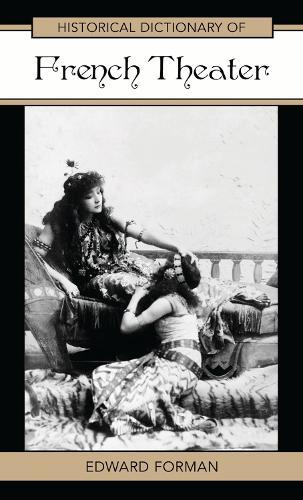
This new addition to the relatively recent series Historical Dictionaries of Literature and the Arts attempts to put the whole of French theater into the dictionary format. The author's introductory essay is concise and straightforward, outlining the important periods and highlighting the major themes and people. The dictionary begins with a chronology, starting with a performance in 1283 and ending with new productions in 2009. The span of dates underscores the importance of the topic. The dictionary itself covers authors, actors, plays, themes, and concepts. More than 400 entries vary in length from a paragraph to up to three pages and contain cross-references. Entries for theater conventions such as Aside and Chorus are defined with particular attention to how they are used in the French theater. The volume finishes with an extensive bibliography divided by time periods and by concepts within the time periods. An excellently presented volume. Recommended for academic and large public libraries. Booklist With this singular reference, Forman (French, Univ. of Bristol) reassesses French theater, which is frequently overshadowed by Shakespeare's literary production. After a chronology extending from 1283 to 2009, Forman goes on to narrate an accessible and absorbing if condensed history of French drama, punctuated by helpful chronological subheadings. The 400 alphabetized and fully cross-referenced entries that follow profile subject-relevant authors, movements, genres, concepts, historical figures, significant events, and production locations. While illustrations, like that on the cover, might offer another powerful didactic facet to the work, their omission certainly does not detract from this volume's consequence. Library Journal This short dictionary of the French theater, edited by Forman (Univ. of Bristol, UK), is long overdue. It briefly examines playwrights, actors, and the plays themselves. The chronological history opens with Adam de la Halle's Le Jeu de Robin et Marion, performed in 1283, and ends with 2009's plays at the Comedie-Franeaise such as Moliere's L'Avare and even Shakespeare's The Merry Wives of Windsor. Forman correctly cites the French theater's three periods of success: the 1660s, the 1830s, and the 1950s. He observes that all enthusiasts of French culture describe the theater as central to their intellectual and artistic heritage. The historical chronology dates plays, playwrights, actors, and more, including Moliere, the most treasured playwright in the emergence of French theater in the 17th century. Other important figures are Corneille and Jean Racine, important to theater's development during the reign of Louis the XIV. Readers will learn that in the 18th century only Beaumarchais and Marivaux had some success. Romantic drama emerged in the 19th century, followed by realistic and naturalistic drama, and then surrealist drama and the theater of the absurd. This volume will be useful in all university reference departments. Summing Up: Recommended. Choice This book can be of great value as an introduction to the French theater, which can make for pleasant reading and lead to further research. It is an informative read. American Reference Books Annual, May-August 2010 The dictionary is a fine demonstration of the author's wide-ranging knowledge and his understanding of what is important for the study of the subject at undergraduate level...The dictionary's coverage is broadly spread across the history of French theatre from Adam de la Halle to Yasmina Reza...The dictionary provides some fascinating information. Reference Reviews
This new addition to the relatively recent series Historical Dictionaries of Literature and the Arts attempts to put the whole of French theater into the dictionary format. The author's introductory essay is concise and straightforward, outlining the important periods and highlighting the major themes and people. The dictionary begins with a chronology, starting with a performance in 1283 and ending with new productions in 2009. The span of dates underscores the importance of the topic. The dictionary itself covers authors, actors, plays, themes, and concepts. More than 400 entries vary in length from a paragraph to up to three pages and contain cross-references. Entries for theater conventions such as Aside and Chorus are defined with particular attention to how they are used in the French theater. The volume finishes with an extensive bibliography divided by time periods and by concepts within the time periods. An excellently presented volume. Recommended for academic and large public libraries. * Booklist * With this singular reference, Forman (French, Univ. of Bristol) reassesses French theater, which is frequently overshadowed by Shakespeare's literary production. After a chronology extending from 1283 to 2009, Forman goes on to narrate an accessible and absorbing if condensed history of French drama, punctuated by helpful chronological subheadings. The 400 alphabetized and fully cross-referenced entries that follow profile subject-relevant authors, movements, genres, concepts, historical figures, significant events, and production locations. While illustrations, like that on the cover, might offer another powerful didactic facet to the work, their omission certainly does not detract from this volume's consequence. * Library Journal * This short dictionary of the French theater, edited by Forman (Univ. of Bristol, UK), is long overdue. It briefly examines playwrights, actors, and the plays themselves. The chronological history opens with Adam de la Halle's Le Jeu de Robin et Marion, performed in 1283, and ends with 2009's plays at the Comedie-Franeaise such as Moliere's L'Avare and even Shakespeare's The Merry Wives of Windsor. Forman correctly cites the French theater's three periods of success: the 1660s, the 1830s, and the 1950s. He observes that all enthusiasts of French culture describe the theater as central to their intellectual and artistic heritage. The historical chronology dates plays, playwrights, actors, and more, including Moliere, the most treasured playwright in the emergence of French theater in the 17th century. Other important figures are Corneille and Jean Racine, important to theater's development during the reign of Louis the XIV. Readers will learn that in the 18th century only Beaumarchais and Marivaux had some success. Romantic drama emerged in the 19th century, followed by realistic and naturalistic drama, and then surrealist drama and the theater of the absurd. This volume will be useful in all university reference departments. Summing Up: Recommended. * CHOICE * This book can be of great value as an introduction to the French theater, which can make for pleasant reading and lead to further research. It is an informative read. * American Reference Books Annual, May-August 2010 * The dictionary is a fine demonstration of the author's wide-ranging knowledge and his understanding of what is important for the study of the subject at undergraduate level....The dictionary's coverage is broadly spread across the history of French theatre from Adam de la Halle to Yasmina Reza....The dictionary provides some fascinating information. * Reference Reviews * The dictionary is a fine demonstration of the author's wide-ranging knowledge and his understanding of what is important for the study of the subject at undergraduate level. * Reference Reviews *
This new addition to the relatively recent series Historical Dictionaries of Literature and the Arts attempts to put the whole of French theater into the dictionary format. The author’s introductory essay is concise and straightforward, outlining the important periods and highlighting the major themes and people. The dictionary begins with a chronology, starting with a performance in 1283 and ending with new productions in 2009. The span of dates underscores the importance of the topic. The dictionary itself covers authors, actors, plays, themes, and concepts. More than 400 entries vary in length from a paragraph to up to three pages and contain cross-references. Entries for theater conventions such as Aside and Chorus are defined with particular attention to how they are used in the French theater. The volume finishes with an extensive bibliography divided by time periods and by concepts within the time periods. An excellently presented volume. Recommended for academic and large public libraries. * Booklist * With this singular reference, Forman (French, Univ. of Bristol) reassesses French theater, which is frequently overshadowed by Shakespeare's literary production. After a chronology extending from 1283 to 2009, Forman goes on to narrate an accessible and absorbing if condensed history of French drama, punctuated by helpful chronological subheadings. The 400 alphabetized and fully cross-referenced entries that follow profile subject-relevant authors, movements, genres, concepts, historical figures, significant events, and production locations. While illustrations, like that on the cover, might offer another powerful didactic facet to the work, their omission certainly does not detract from this volume's consequence. * Library Journal * This short dictionary of the French theater, edited by Forman (Univ. of Bristol, UK), is long overdue. It briefly examines playwrights, actors, and the plays themselves. The chronological history opens with Adam de la Halle's Le Jeu de Robin et Marion, performed in 1283, and ends with 2009's plays at the Comédie-Franeaise such as Molière's L'Avare and even Shakespeare's The Merry Wives of Windsor. Forman correctly cites the French theater's three periods of success: the 1660s, the 1830s, and the 1950s. He observes that all enthusiasts of French culture describe the theater as central to their intellectual and artistic heritage. The historical chronology dates plays, playwrights, actors, and more, including Molière, the most treasured playwright in the emergence of French theater in the 17th century. Other important figures are Corneille and Jean Racine, important to theater's development during the reign of Louis the XIV. Readers will learn that in the 18th century only Beaumarchais and Marivaux had some success. Romantic drama emerged in the 19th century, followed by realistic and naturalistic drama, and then surrealist drama and the theater of the absurd. This volume will be useful in all university reference departments. Summing Up: Recommended. * Choice Reviews * This book can be of great value as an introduction to the French theater, which can make for pleasant reading and lead to further research. It is an informative read. * American Reference Books Annual * The dictionary is a fine demonstration of the author’s wide-ranging knowledge and his understanding of what is important for the study of the subject at undergraduate level....The dictionary’s coverage is broadly spread across the history of French theatre from Adam de la Halle to Yasmina Reza....The dictionary provides some fascinating information. * Reference Reviews * The dictionary is a fine demonstration of the author's wide-ranging knowledge and his understanding of what is important for the study of the subject at undergraduate level. * Reference Reviews *
Author Information
Edward Forman is senior lecturer in French in the School of Modern Languages at the University of Bristol. He has collaborated with Merlin Thomas as musical director for a number of his French-language productions (Le Cid and Le Mariage de Figaro) and has continued involvement with such performances at Bristol.