Overview
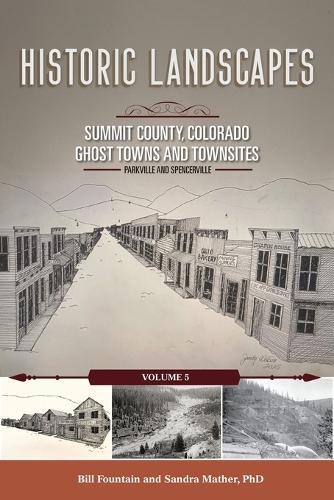
Why Historic Landscapes, Summit County, Colorado? Bill Fountain first considered writing about the historic towns of Summit County, including those found from Hoosier Pass north to the confluence of the Blue and Swan rivers, west to the Ten Mile Range, and east to the headwaters of the north and south forks of the Swan River, several years ago. Using photographs from a variety of sources and information taken from first-hand accounts, mining district logbooks, Summit County Clerk and Recorder's record books, and newspapers, he tells the story of more than 25 historic towns that supported the mining economy of the greater Breckenridge area. Of particular interest in this volume is Parkville, Summit County's first seat of government and considered by some as one of the most active mining camps in Colorado. While exploring the vault of the Summit County Courthouse in Breckenridge, Fountain discovered the ""long-lost"" record book of the first Summit County Clerk and Recorder, which provided details of Parkville's very consequential role in the mining economy of the county. Using the logbook and maps, Fountain confirmed the exact location of Parkville-on the southwestern side of the road going to Georgia Pass-not on the banks of the Swan River. The variety of businesses along Colorado Street attested to the importance of Parkville. They provided a full range of services; one saloon even had a tenpin alley. For a time, Parkville played a more important role in the county's economy than Breckenridge. By the 1870s, debris from hydraulic mining completely covered both Parkville and Spencerville, erasing all evidence that they existed. The record book revealed long-forgotten information about Parkville's unplatted neighbor, Spencerville, home of the famous Gayosa Hall, which became a bustling venue for several theatre companies. Following the death of W.W. Spencer, a little more than a year after he founded it, Spencerville became Upper Parkville. Using data from the logbook, Fountain located the town accurately and identified the businesses lining the main street. With photographs and maps in hand, Fountain traveled back in time, imagining what life would have been like in the mid-1800s. He hopes that you, the reader, will be able to do the same.
Full Product Details
Author: Bill Fountain ,
Sandra Mather
Publisher: Summit Historical Society Press
Imprint: Summit Historical Society Press
Dimensions:
Width: 15.20cm
, Height: 0.80cm
, Length: 22.90cm
Weight: 0.213kg
ISBN: 9781943829774
ISBN 10: 1943829772
Pages: 154
Publication Date: 03 January 2026
Audience:
General/trade
,
General
Format: Paperback
Publisher's Status: Active
Availability: Available To Order

We have confirmation that this item is in stock with the supplier. It will be ordered in for you and dispatched immediately.