Overview
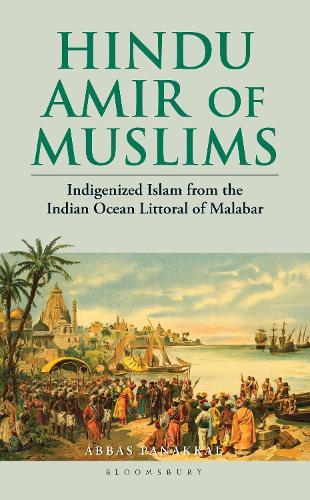
This book explores the pivotal role of integration in shaping Indigenized Islam in 16th-century Malabar, a region along the Indian Ocean's coastal fringes. Through a detailed examination of popular traditions, primary texts, and archaeological and architectural artifacts, this study seeks to unravel the historical processes that facilitated the fusion of Islam within the local vernacular context. Among the diverse Muslim ethnic groups of Malabar, indigenous customs and traditions were intricately woven into their religious identity, contributing to a distinctive, inclusive character. The study highlights phenomena such as the recognition of the Hindu King Zamorin of Calicut as the Amir of the Muslims and the advocacy by Muslim scholars and leaders for military Jihad to protect non-Muslim rulers' sovereignty. These elements reflect the complex nature of Indigenized Islam. Central to this localized practice was the veneration of indigenous shrines and the organization of ceremonial processions to Sufi enclaves, marking a departure from conventional Arab Cultural Islam. These practices illustrate the dynamic interplay between local elements and the evolving Islamic framework. The introduction of Islam to the Indian subcontinent was significantly shaped by natural rhythms and commercial dynamics, resulting in a unique trajectory within Islamic history. Muslim communities in the Indian Ocean's bustling port cities embraced this trajectory, disseminating core tenets of faith and transforming distinct confessional entities into integrated collectives. This volume navigates the various pathways through which Malabar Islam emerged as a unique blend of indigenous cultural expressions within the broader Islamic heritage. It enhances our understanding of historical interactions, cultural fusion, and religious dynamics, offering a nuanced portrayal of the transformative forces shaping Islamic practices and identities.
Full Product Details
Author: Dr Abbas Panakkal (University of St Andrews, United Kingdom)
Publisher: Bloomsbury Publishing India Pvt Ltd
Imprint: Bloomsbury Academic India
Dimensions:
Width: 14.20cm
, Height: 2.20cm
, Length: 22.20cm
Weight: 0.460kg
ISBN: 9789361319150
ISBN 10: 9361319159
Pages: 280
Publication Date: 30 December 2025
Audience:
Professional and scholarly
,
Professional & Vocational
Format: Hardback
Publisher's Status: Forthcoming
Availability: Not yet available

This item is yet to be released. You can pre-order this item and we will dispatch it to you upon its release.
Author Information
Abbas Panakkal is a historian currently affiliated with the School of History at the University of St Andrews, UK. He serves on the advisory board of the Religious Life and Belief Centre at the University of Surrey and is also a Fellow at the Edward Cadbury Centre for the Public Understanding of Religion at the University of Birmingham. Panakkal is engaged in a research project exploring integration and indigenization processes within vernacular communities. His recent publications include Musaliar King (Bloomsbury, 2024), Southeast Asian Islam (2024), Matrilineal, Matriarchal, and Matrifocal Islam (2024), and South Asian Islam (2023). He holds directorial roles at the Ibn Battuta International Centre for Intercultural Studies and the International Interfaith Initiative. Previously, he was a fellow at Griffith University, Australia. His research spans a wide range of topics, including language, religion, law, indigenization, integration, interreligious engagement, and intercultural cooperation.