Overview
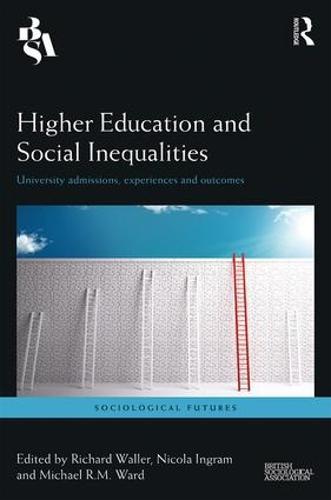
A university education has long been seen as the gateway to upward social mobility for individuals from lower socio-economic backgrounds, and as a way of reproducing social advantage for the better off. With the number of young people from the very highest socio-economic groups entering university in the UK having effectively been at saturation point for several decades, the expansion witnessed in participation rates over the last few decades has largely been achieved by a modest broadening of the base of the undergraduate population in terms of both social class and ethnic diversity. However, a growing body of evidence exists in the continuation of unequal graduate outcomes. This can be seen in terms of employment trajectories in the UK. The issue of just who enjoys access to which university, and the experiences and outcomes of graduates from different institutions remain central to questions of social justice, notably higher education’s contribution to social mobility and to the reproduction of social inequality. This collection of contemporary original writings explores these issues in a range of specific contexts, and through employing a range of theoretical and methodological approaches. The relationship between higher education and social mobility has probably never been under closer scrutiny. This volume will appeal to academics, policy makers, and commentators alike. Higher Education and Social Inequalities is an important contribution to the public and academic debate.
Full Product Details
Author: Richard Waller (University of the West of England, UK) ,
Nicola Ingram (University of Bath, UK) ,
Michael Ward (Open University, UK)
Publisher: Taylor & Francis Ltd
Imprint: Routledge
Weight: 0.660kg
ISBN: 9781138212886
ISBN 10: 1138212881
Pages: 270
Publication Date: 31 July 2017
Audience:
College/higher education
,
Postgraduate, Research & Scholarly
,
Undergraduate
Format: Hardback
Publisher's Status: Active
Availability: In Print

This item will be ordered in for you from one of our suppliers. Upon receipt, we will promptly dispatch it out to you. For in store availability, please contact us.
Reviews
This is a hugely important addition to the literature on higher education and social mobility. Through a series of thought-provoking chapters the prevailing assumption that a university experience is both equally experienced and automatically confers advantage on its recipients is meticulously unpicked, interrogated and dismantled. This must-read book makes a significant contribution to debates on widening participation and social justice at a time of heightened marketisation and stratification of global HE. - Jacqueline Stevenson, Head of Research, Sheffield Institute of Education, Sheffield Hallam University, UK This is an important book that brings together many key scholars on the sociology of higher education. It explores, in a detailed manner, the ways in which social factors (and particularly class) - continue to shape access to higher education, and students' experiences both during their degree and as they move into the labour market. - Rachel Brooks, Professor of Sociology, University of Surrey, UK. This book provides a most important contribution to the field of equity by interrogating assumptions about the relationship between university access and social mobility. It casts a much-needed light on significant questions of transitional processes through and beyond higher education and the ways that inequities play out in relation to graduate outcomes. - Penny Jane Burke, Professor and Global Innovation Chair of Equity Director, University of Newcastle, Australia
This is a hugely important addition to the literature on higher education and social mobility. Through a series of thought-provoking chapters the prevailing assumption that a university experience is both equally experienced and automatically confers advantage on its recipients is meticulously unpicked, interrogated and dismantled. This must-read book makes a significant contribution to debates on widening participation and social justice at a time of heightened marketisation and stratification of global HE. - Jacqueline Stevenson, Head of Research, Sheffield Institute of Education, Sheffield Hallam University, UK This is an important book that brings together many key scholars on the sociology of higher education. It explores, in a detailed manner, the ways in which social factors (and particularly class) - continue to shape access to higher education, and students' experiences both during their degree and as they move into the labour market. - Rachel Brooks, Professor of Sociology, University of Surrey, UK. This book provides a most important contribution to the field of equity by interrogating assumptions about the relationship between university access and social mobility. It casts a much-needed light on significant questions of transitional processes through and beyond higher education and the ways that inequities play out in relation to graduate outcomes. - Penny Jane Burke, Professor and Global Innovation Chair of Equity Director, University of Newcastle, Australia This is a hugely important addition to the literature on higher education and social mobility. Through a series of thought-provoking chapters the prevailing assumption that a university experience is both equally experienced and automatically confers advantage on its recipients is meticulously unpicked, interrogated and dismantled. This must-read book makes a significant contribution to debates on widening participation and social justice at a time of heightened marketisation and stratification of global HE. - Jacqueline Stevenson, Head of Research, Sheffield Institute of Education, Sheffield Hallam University, UK This is an important book that brings together many key scholars on the sociology of higher education. It explores, in a detailed manner, the ways in which social factors (and particularly class) - continue to shape access to higher education, and students' experiences both during their degree and as they move into the labour market. - Rachel Brooks, Professor of Sociology, University of Surrey, UK. This book provides a most important contribution to the field of equity by interrogating assumptions about the relationship between university access and social mobility. It casts a much-needed light on significant questions of transitional processes through and beyond higher education and the ways that inequities play out in relation to graduate outcomes. - Penny Jane Burke, Professor and Global Innovation Chair of Equity Director, University of Newcastle, Australia Waller, Ingram and Ward have produced a timely and critical text challenging the assumption that widening participation is achieved at the point of admission. Through a thoughtful presentation of the higher education journey, we are presented with an empirically rich and theoretically-driven account of the complex and durable relationship between social class and higher education. This book is essential reading for those concerned with social justice and higher education; it has added a prominent voice to the on-going widening participation debate. - Ciaran Burke, Lecturer in Sociology, Plymouth University, UK
Author Information
Dr Richard Waller has taught sociology in higher education since 1995, and is currently Associate Professor of the Sociology of Education at the University of the West of England, Bristol. He has published widely on higher education and social class, and is currently co-writing a sociology of education textbook for Routledge and co-editing an international handbook of lifelong education for Palgrave (both due for publication in 2017). At present he is working on the second three-year phase of the Leverhulme Trust funded Paired Peers project which followed a cohort of undergraduate students studying at Bristol’s two universities. Richard was co-convenor of the BSA’s Education Study Group (2009-2013) and is on the editorial board of four journals including the British Journal of Sociology of Education. Dr Nicola Ingram is a lecturer in Education and Social Justice in the Department for Educational Research at Lancaster University and co-convenor of the British Sociological Association’s Bourdieu and Education study groups. Her research is broadly focused on social inequalities in education and she is particularly interested in issues of identity, class, gender and ethnicity in young people’s transitions. She has published widely on these areas. Since 2010 Nicola has been working on the Paired Peers project (with, amongst others, Richard Waller), and this was the source of the co-authored 2016 Palgrave book Higher Education, Social Class and Social Mobility: The Degree generation. Dr Michael R.M. Ward is a lecturer in Applied Social Sciences at Swansea University. His work centres on the performance of working-class masculinities within and beyond educational institutions and he is the author of the award winning 2015 book From Labouring to Learning, Working-class Masculinities, Education and De-industrialization (Palgrave MacMillan). He is also the editor of Gender Identity and Research Relationships in the Studies in Qualitative Methods book series (Emerald). Mike is co-convenor of the BSA Education Study Group and editorial board member for Sociological Research Online and the Journal of Boyhood Studies.