Overview
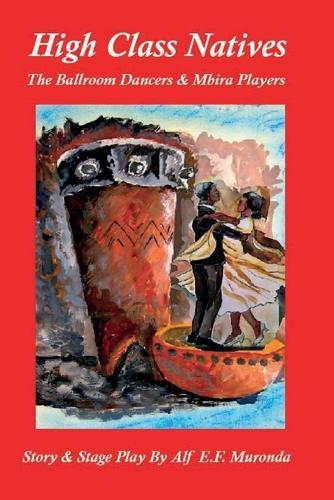
Set in the charged twilight of 1970s Rhodesia, High Class Natives is a sweeping musical stage play that brings to life the inner struggles of the Choto family-torn between ancestral roots and Western aspirations, tradition and modernity, resilience and ambition. At its center is Majasi, a recently widowed elder whose rural homestead in Mhondoro African Reservation was set ablaze by Rhodesian Army forces. His wife was brutally killed, punished for the simple act of feeding guerrilla fighters who came seeking a warm meal and brief sanctuary. Displaced, grieving, and carrying the heavy weight of a crumbling world, Majasi finds refuge in Beatrice Cottages-the modest yet socially ambitious home of his eldest son, Rwizi. Beatrice Cottages, an enclave of relative prosperity within Salisbury's African township, is a symbol of mobility and fragile hope-where lawn manicures and ballroom dancing lessons serve as armor against a society built on exclusion. But within the Choto home, fault lines begin to rupture. Rwizi's wife, Sally, elegant and refined, sees herself as ascending into a higher social caste-one shaped by European etiquette and sensibilities. In a moment of candor whispered across their bedroom, she makes her intentions plain: Majasi and his youngest son, Andrew, are not to overstay their welcome. Their presence, she insists, is disruptive to her vision of raising their six-year-old son, John, as a polished and cultured young man, free from the perceived backwardness of village life and tribal custom. Caught between his reverence for tradition and the pressures of modern domestic life, Rwizi is paralyzed. His heart belongs to his father, the man who sold most of the family's cattle to put him through school, and who later loaned him the money to buy the very house Sally now seeks to keep free of ""rural clutter."" Yet his loyalty to his wife and child-and to the aspirational, middle-class respectability they represent-is equally strong. What unfolds is a slow-burning domestic drama, steeped in cultural tension, political fear, and the aching dissonance of identity in transition. Laced with stirring music that dances between the elegance of European ballroom and the soulful cadence of the Shona mbira, High Class Natives is not merely a story of a family in conflict-it is an excavation of memory, belonging, and the legacy of colonialism. It asks, with grace and power: What happens when the past we carry threatens the future we desire? Who do we become when the music of our ancestors plays in a room where no one listens?
Full Product Details
Author: Alf E F Muronda
Publisher: Masaka
Imprint: Masaka
Dimensions:
Width: 15.20cm
, Height: 1.00cm
, Length: 22.90cm
Weight: 0.236kg
ISBN: 9781965398296
ISBN 10: 1965398294
Pages: 172
Publication Date: 30 April 2025
Audience:
General/trade
,
General
Format: Paperback
Publisher's Status: Active
Availability: Available To Order

We have confirmation that this item is in stock with the supplier. It will be ordered in for you and dispatched immediately.
Reviews
""Bold, stirring, and unflinchingly intimate-this play doesn't just confront the legacy of colonialism, it sings through it."" ""High Class Natives is a masterwork of emotional archaeology, excavating generational fractures with grace, music, and rare insight."" ""In Majasi's silence and Rwizi's indecision, we witness the quiet war of belonging-where the home is both refuge and battlefield.""